How to Properly Brew and Enjoy Italian Blend Coffee Beans - Flavor and Taste Characteristics of Espresso Beans
Espresso has long been known as the "soul of coffee." Its rich taste and intense flavor can feel hard to accept at first, but once you get used to it, you discover a charm all its own. Espresso is also a coffee that puts both bean quality and barista skill to the test.
Since espresso is loved by so many people, it must have real appeal. So let FrontStreet Coffee walk you through what espresso is all about.
Espresso Coffee
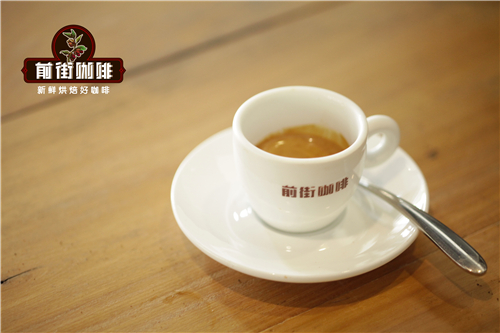
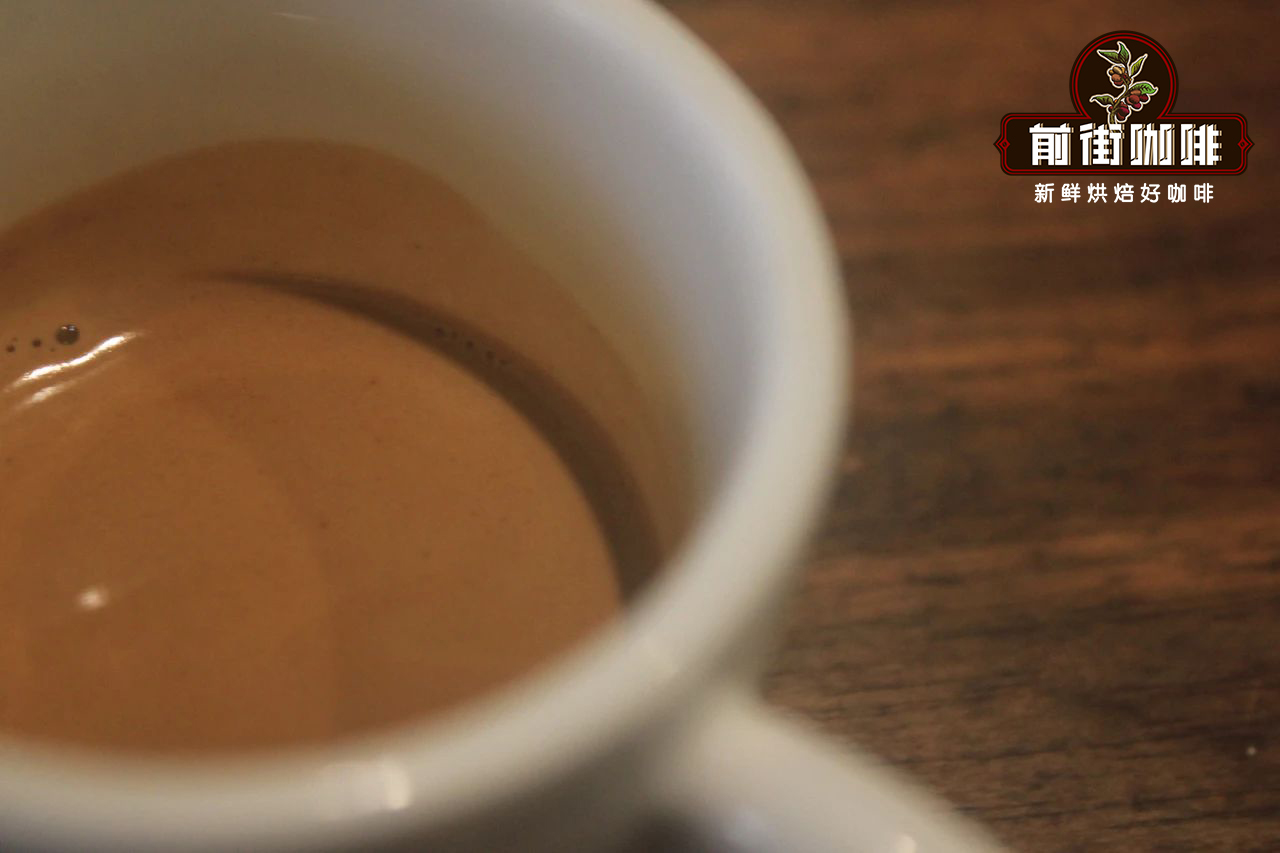
A freshly extracted espresso carries a beautiful layer of golden crema. The appearance of crema is inseparable from those 9 bars of pressure. Water in a heated and pressurized state extracts soluble material from the coffee bed, and in the process emulsifies the oils naturally present in the coffee. At the same time, freshly roasted beans still hold carbon dioxide, and during extraction that carbon dioxide is forced into the coffee under pressure.
How to Taste Espresso Coffee?
Smell
Generally, the first thing we do with a cup of espresso is smell it. You will catch nut and caramel aromas. If the roast is not too dark, you may even find fruity sweet-and-sour notes.
Observe
After the aroma, we look at the color and thickness of the crema, because from that we can usually tell how the cup was made.
Drink
Espresso is a very small cup of coffee, usually served with a glass of ice water. Take a sip of the ice water to rinse your mouth, then drink the espresso in one gulp, feeling the cream-like sensation it leaves in the mouth along with the strong caramel and nut flavors.
Are there other ways to drink it? Of course. Some people cannot handle the stimulating punch of a straight espresso, so they pour in a small amount of milk, which makes the coffee smoother and less bitter and highlights the charm of caramel and chocolate.
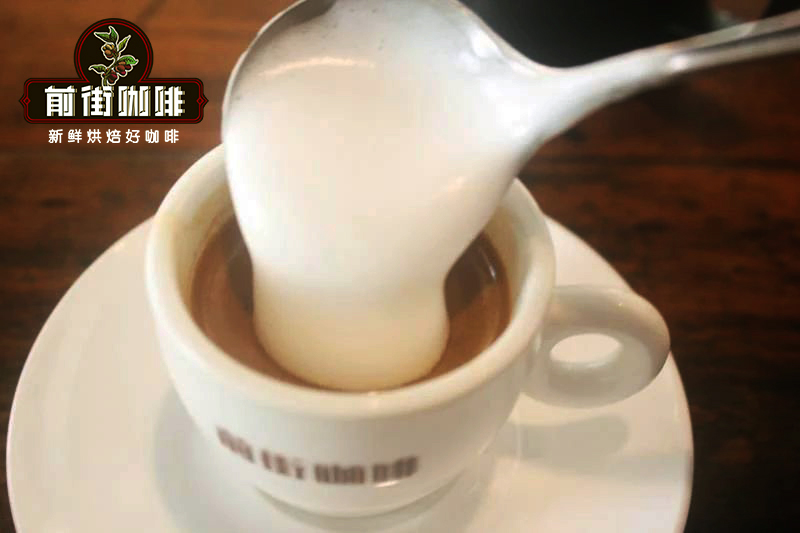
If you still find it too strong, you can dilute it with an appropriate amount of water, though that loses the original charm of espresso.
Which Espresso Coffee Beans Make Good Espresso?
FrontStreet Coffee Sunshine Blend: Aimed at creating espresso beans with wine aroma. Natural Red Cherry: Sherry, ratio 3:7, post-roast blend.
Natural Red Cherry
The Red Cherry Project is a coffee-quality improvement initiative from the Dutch green-coffee company Trabocca. At the time, Ethiopian coffee was inconsistent in quality, there was little room to raise prices, and farmers' incomes were very low. To help them substantially, the company worked with local farmers to launch the project and solve the quality problem at its source. Using manual hand-picking, only fully ripe cherries are selected and bought at higher prices, which raises farmers' quality standards and grows better coffee. FrontStreet Coffee believes that natural processing of fully ripe cherries yields beans with obvious fruit aroma, full acidity, and a thick mouthfeel. Natural Red Cherry lends this fermented quality and soft fruit acidity to FrontStreet Coffee's blend.
Whiskey Barrel Fermented Sherry
Sherry beans carry a very strong whiskey-barrel flavor because whiskey barrels are used in their production. The aroma is intoxicatingly wine-like, with rich vanilla cream in the mouth and a persistent chocolate-liqueur note in the aftertaste. Freshly picked coffee cherries first undergo a refined washed processing, then are placed in sherry barrels for long, low-temperature fermentation lasting 30 to 40 days (at roughly 15 to 20 degrees Celsius), and finally the beans are sun-dried. Sherry barrels are the casks used by sherry bodegas, and the whisky trade also ages spirit in them. Sherry wine itself must go through the Solera System, a process of blending and aging sherries of different vintages after fortification, which is exactly what forms sherry's unique character. Sherry contributes whiskey-barrel aroma and a nut-and-chocolate aftertaste to FrontStreet Coffee's blend.
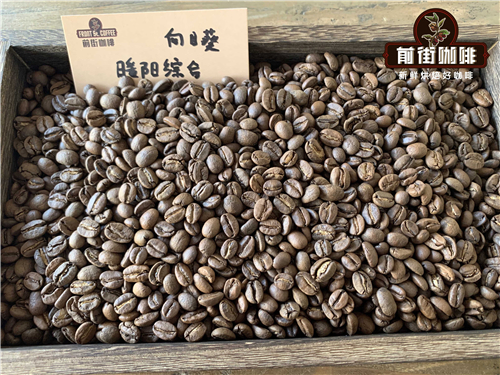
Through blending and then adjusting grind setting and extraction, FrontStreet Coffee produces an espresso with obvious fruit acidity, a lingering hint of berry, rich wine and chocolate flavors, and a comfortable sweet aftertaste.
FrontStreet Coffee Artisan Espresso Blend Coffee Beans: Aimed at creating espresso beans with nut cocoa aroma. Colombia: Brazil, ratio 3:7, post-roast blend.
Colombia Huila Region
Located in southwestern Colombia, Huila is one of the country's main coffee-growing areas. Colombian coffee generally grows at altitudes of 1,500 to 1,800 meters, mostly Bourbon and Caturra varieties, washed processed, with relatively high density, uniform bean size, and full beans that are thick from core to surface. Because famous growing areas are spread throughout Huila, the names of various small districts have become brand names in circulation. Although the growing conditions here are very good, the farm infrastructure and surrounding facilities are not well developed, and drying equipment and washing facilities are still incomplete, which is a real shame. Coffee from Huila has a strong taste and heavier texture. FrontStreet Coffee chose Huila coffee for this blend because its beans carry nut, chocolate, and caramel aromas with suitable acidity, making it a good base for a blend.
Through cupping comparison, FrontStreet Coffee finds Colombian Huila beans rich and solid in taste, with pleasant acidity, fragrant aroma, moderate acidity, and a rich sweetness that is very appealing. Because of the low price and small beans, they suit blended coffee. The coffee has a strong taste and heavier texture, and its nut, chocolate, and caramel aromas with suitable acidity are considered quality specialty coffee, suitable both as a single origin and as an espresso blend base.
Brazil Cerrado Region
Brazilian coffee generally grows at altitudes of 1,000 to 1,300 meters, so its density is relatively low. Mostly Bourbon varieties using semi-natural processing, it has moderate moisture content and a soft bean texture that is thin from surface to core, so it does not take well to very high roasting temperatures: the heat of the roaster's inner wall will scorch the bean surface and create bitterness. To express nuts, milk chocolate, and good body while serving as a blend base, FrontStreet Coffee's roaster charges with medium heat, maintains heat through the dehydration stage, and makes fine adjustments as the temperature rises after first crack begins, promoting a more complete caramelization reaction, then discharges the beans when the temperature approaches second crack. Through cupping comparison, FrontStreet Coffee finds this Brazil Cerrado comfortable and bittersweet, extremely smooth in the mouth, with a faint grassy aroma, a fresh fragrance carrying a slight bitterness, and a sweet, smooth, pleasant aftertaste.
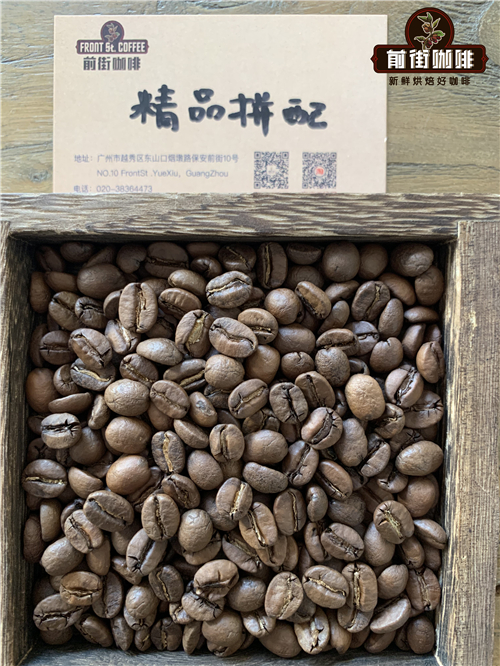
Through blending and then adjusting grind setting and extraction, FrontStreet Coffee produces an espresso with soft, slight acidity, clear sweetness, and a nutty aftertaste; the overall impression is not too stimulating but peaceful, with medium crema.
FrontStreet Coffee Commercial Espresso Blend Coffee Beans: Aimed at creating Italian-style coffee beans with nut cocoa as the main tone and rich mouthfeel. Colombia: Brazil: Robusta; ratio 3:6:1, pre-roast blend.
Robusta Variety
Robusta has strong resistance to disease and pests and high yield. It is usually less acidic than Arabica and often carries a slight woody aroma. Its caffeine content is 2.2%, higher than Arabica's 1.2%, and its chlorogenic acid content is also higher, making it quite bitter. It is usually used in commercial beans, which are cheaper than Arabica. As a single bean, commercial beans produce coffee far inferior to specialty beans, so they are generally chosen for blending; once blended, they can still produce very good-tasting coffee suitable for lattes, cappuccinos, and other espresso drinks. Because of the Robusta in FrontStreet Coffee's commercial blend, the espresso has richer crema, a classic taste, caramel sweetness, nut and cocoa and dark-chocolate flavors, a balanced sweet-and-sour profile with a slight bittersweet edge, and a persistent aftertaste.
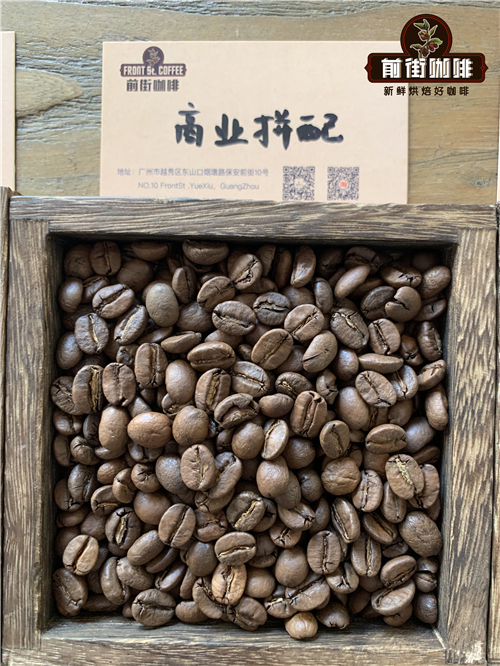
Through blending and then adjusting grind setting and extraction, FrontStreet Coffee produces an espresso with caramel sweetness, nut and cocoa and dark-chocolate flavors, a balanced sweet-and-sour profile with a slight bittersweet edge, and a persistent aftertaste.
FrontStreet Coffee Recommendation
If the blends above sketch out the range of espresso, FrontStreet Coffee's wider lineup fills in the rest. For traditional Americanos and lattes, the Classic Blend and FrontStreet Coffee's Commercial Blend both start from an old-school Italian recipe with a touch of Robusta, giving butter, nut, spice, dark-chocolate, and toast aromas, a wild and full body, and a golden crema that makes latte art easy. For those drawn to almond, walnut, and hazelnut, the Boutique Blend and the Black Cacao base blend carry a large share of Brazilian coffee for a comfortable bittersweet, creamy-peanut smoothness, with the Black Cacao adding the ripe-plum acidity of Yunnan small-bean.
For a more origin-focused shot, FrontStreet's SOE range is worth exploring. The Natural Huakui SOE, grown at 2,300 meters in Guji Hambela, Ethiopia and medium roasted, delivers a creamy-strawberry character with a whisper of floral and black-tea notes. The Costa Rica Blackberry SOE is honey processed and medium roasted, turning out bright and refreshing as an americano and showing cranberry-cookie, raisin, and nut flavors with milk. And the Brazil Queen Estate SOE, a rare yellow Bourbon roasted medium-dark, brings butter-cookie, macadamia, and toasted-bread creaminess.
Important Notice :
FrontStreet Coffee is a long-established specialty coffee roaster in Guangzhou China, selling freshly roasted beans from its own farm in Yunnan as well as dozens of carefully selected single-origin beans from around the world for both pour-over and espresso. The products deliver consistently excellent quality and great value, with shipping within 24 hours. Guangzhou's FrontStreet Coffee shop is recommended by many coffee lovers, and the beans are now available online at the Tmall 。
FrontStreet Coffee has moved to a new address:
FrontStreet Coffee Address: 315,Donghua East Road,GuangZhou
Tel:020 38364473
 Scan and follow the En Gafei WeChat official account. Please indicate that the reprint comes from "En Gafei".