Hartmann Red Wine Process Coffee Beans Market Performance and Which Hartmann Coffee Brand is Best

Flavor Expectations
Acetic acid fermentation: cleaner and livelier acidity with a brighter, more citric edge
Lactic acid fermentation: a rounder mouthfeel and fuller body, though less clean than acetic acid fermentation, with malic and tartaric acidity
For generations, processing stations relied on methods handed down by hand and by habit — even biting a bean to judge how far fermentation had gone. That approach is unpredictable and varies from lot to lot.
Controlled fermentation, by contrast, tracks progress through pH measurement. The outcome is repeatable, and every batch comes out consistent.
About Caturra
Caturra is a single-gene variant of Bourbon, discovered in Brazil in 1937. Its yield and disease resistance both beat Bourbon's, and its shorter stature makes harvesting easier. Unfortunately, it inherits Bourbon's problem of biennial yield cycles. What it does offer is strong adaptability: it needs no shade trees and thrives directly under intense sunlight, which is why it earned the name "sun coffee." It tolerates high-density planting but demands more fertilizer, which raises costs — one reason early farmers were slow to accept it.
In the 1970s, however, soaring coffee prices drove farmers to plant Caturra for its higher yields. With vigorous promotion from Brazilian and Colombian authorities, the results were fruitful. Farmers' acceptance of Caturra brought a major transformation in cultivation technique. Brazil and Colombia moved to high-yield, high-density sun-grown systems, and by 1990 a million hectares could harvest 14 million bags of coffee beans — a 60 percent increase in productive capacity. No wonder this high-yielding, high-quality Caturra became a variety that producing countries came to rely on.
Caturra suits cultivation from altitudes as low as 700 meters up to 1700 meters, showing remarkable altitude adaptability. The higher it is grown, the better the flavor — and the lower the yield. Such is the fate of specialty coffee beans. Some in academia call Caturra the intensive, sun-grown version of Bourbon, and the description fits. A yellow Caturra variant (Caturra Amarello) also exists in Central and South America, though it never earned the reputation of Yellow Bourbon.
Lightly roasted, Caturra shows an obvious aromatic acidity and an overall bright character. Handled well, it can perform beautifully on sweetness, but its body is lighter than Bourbon's and the cleanliness of its mouthfeel is somewhat lacking.
Caturra cherries are usually red, though in extremely rare areas yellow ones appear. Hawaii, for example, grows a very small amount of yellow Caturra.
Coffee Details
Country: Panama
Grade: SHG
Region: Volcán Region
Altitude: 1250-1700 Meters
Processing Method: Wine Process
Variety: Caturra
Estate: Hartmann Estate
Flavor: Smoked wood spices, berries, fruit wine aroma
Panama Hartmann Estate Caturra Wine Process
Manufacturer: FrontStreet Coffee | Address: No. 10, Bao'an Front Street, Yuexiu District, Guangzhou | Contact: 020-38364473 | Ingredients: In-house roasted | Shelf life: 30 days | Net weight: 227g | Packaging: Bulk | Taste: Neutral | Coffee bean raw/cooked degree: Roasted coffee beans | Contains sugar: No sugar | Origin: Panama | Coffee type: Other | Roast degree: Medium roast
Hartmann Estate Introduction
Hartmann's story is as legendary as its coffee. Hartmann Estate sits in Santa Clara, Chiriquí Province. Its founder was Mr. Alois St. Hartmann (Luis Hartmann). Born on June 20, 1891, in the Moravia region of Austria-Hungary — now the Czech Republic — he died on May 25, 1970, at the age of 78.
After World War I began, he was abandoned as a small boy. Thanks to his mother, he survived by hiding aboard a ship bound for Pennsylvania, USA. Both of his brothers joined the military and died in the war. Luis Hartmann traveled with his friends through several countries until he reached Panama in 1911, settling in Chiriquí Province in 1912 and spending most of his time in the Candelaria area, where he built the first small cabin in this primeval forest.
Today's Hartmann Estate is a family enterprise, founded by Ratibor Hartmann (son of Elias) in 1940. In 1966, Ratibor married Dinorora Zúñiga from Costa Rica. They had five children: Ratibor Jr., Allan, Alexander, Alice, and Kelly. Each family member takes on different responsibilities, from coffee growing management to harvesting, processing, and estate tours. A family estate that has been growing coffee for over 100 years is itself a legendary story.
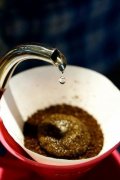
Hand-pour Hartmann. 15g powder, medium grind (Fuji ghost tooth blade 4 grind), V60 filter cup, 88-89°C water temperature, first pour 30g water, bloom for 27 seconds, pour to 105g water then stop, wait until the water level drops to half before pouring again, slowly pour until reaching 225g water, avoid the tail section, water-to-coffee ratio 1:15, extraction time 2:00.
This family enterprise runs a state-level cupping laboratory and sample roasting room, and cups every batch of coffee cherries it buys. That rigor safeguards the stable quality of Hartmann Estate coffee and drives its constant pursuit of improvement. A scientific approach to coffee, backed by nearly 100 years of family experience, guarantees their excellent output.
This lot is wine-processed Caturra. From the moment you grind it, an extremely rich fruit wine aroma rises, joined by fresh smoked wood spice notes and the special berry sweetness that natural processing brings. Smell its fragrance and you are already intoxicated. On the palate come rich tropical fruit flavors — like a cocktail carefully mixed from passion fruit, mango, orange, and berry juices with peach wine. No, this is a cocktail from nature itself.
Among all the coffee-producing regions on Earth, very few have successfully experimented with wine-like processing. After years of testing, this method can finally control the acidity structure in coffee. Coffee fermented this way greatly enhances sweetness, cleanliness, and the multi-layered yet elegant complexity of its acidity. The technique markedly improves both the quality and the uniqueness of the output.
The wine processing method is also called controlled fermentation, or lactic/acetic acid fermentation.
The experimental team is led by American Felipe Sardi and consists of biological scientists and ecologists who apply technologies such as solar energy to cultivation and green bean processing.
The specialized hand-picking team is trained and strictly follows the picking requirements for specialty coffee beans: unripe cherries < 2%, defective beans < 3%, floaters < 5%.
Acetic Acid Fermentation Method—Aerobic Fermentation
Lactic Acid Fermentation Method—Anaerobic Fermentation
FrontStreet Coffee Recommendation
At the heart of FrontStreet's lineup is the Brazil Cerrado Red Bourbon, a classic single-origin Brazilian bean. Cerrado is one of the country's best-known growing regions, prized for high-quality coffee, and this lot carries the red Bourbon variety common across South America. Roasted to a medium level, it releases a rich aroma of creamy peanut, toast, caramel, and hazelnut, with a round, mellow body, low acidity, and a faint bitter note. It works just as well for pour-over as it does in a moka pot, as an espresso SOE, in a siphon, or in a French press.
Also worth tasting is FrontStreet's Brazil Queen's Farm Yellow Bourbon, grown in Mogiana near South Minas, where fertile red volcanic soil feeds the cherries and builds a full, generous aroma. Local farms split between traditional practice and modern, standardized management, and the cup reflects that improvement. The rare Yellow Bourbon here is a genetic mutation of Red Bourbon with cleaner fruit tones; through pour-over, moka pot, or a home espresso machine you can taste a sugarcane-like sweetness rarely found in other origins, alongside fruit and chocolate notes.
Brazil also anchors many of FrontStreet's espresso blends. The country's low acidity, balanced profile, and approachable price make it a first choice for reputable espresso recipes. Whether it is the rich-crema classic blend, the nutty premium blend, or the well-balanced, barista-favored dark cocoa blend, Brazilian beans supply chocolate and cream aromas, a soft sweet-sour-bitter interplay, and an even temperament that helps keep extraction stable.
Important Notice :
FrontStreet Coffee is a long-established specialty coffee roaster in Guangzhou China, selling freshly roasted beans from its own farm in Yunnan as well as dozens of carefully selected single-origin beans from around the world for both pour-over and espresso. The products deliver consistently excellent quality and great value, with shipping within 24 hours. Guangzhou's FrontStreet Coffee shop is recommended by many coffee lovers, and the beans are now available online at the Tmall 。
FrontStreet Coffee has moved to a new address:
FrontStreet Coffee Address: 315,Donghua East Road,GuangZhou
Tel:020 38364473
 Scan and follow the En Gafei WeChat official account. Please indicate that the reprint comes from "En Gafei".