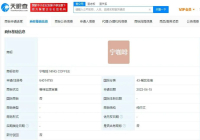
A Popular Coffee Shop Fined 25,000 Yuan for Using Coffee Beans from Unverified Sources
Recently, the market supervision bureau of Yuecheng District in Shaoxing City legally investigated and penalized an internet-famous coffee shop for the illegal act of selling imported coffee beans without a legitimate source.
According to reports from Shaoxing Evening News, when the market supervision bureau of Yuecheng District in Shaoxing City carried out a regulatory inspection of an internet-famous coffee shop based on a lead, it discovered that the "ETHIOPIA Guji G1" coffee beans being used by the shop lacked Chinese labels, and the shop could not provide evidence proving a legitimate source for the beans. At the same time, the shop was also illegally selling "Lamarzocoo" coffee machines and "Victoria Arduino" grinders without Chinese labels.
According to the Zhejiang Province Anti-Smuggling Comprehensive Management Regulations and the Food Safety Law of the People's Republic of China, the market supervision bureau of Yuecheng District imposed an administrative penalty of a 25,000 yuan fine and confiscation of the coffee beans on the party involved.

The article notes that an "ETHIOPIA Guji G1" coffee bean used in the shop carried no Chinese label, nor could evidence proving its legitimate source be provided. If the product is not an imported food, that would indicate these coffee beans fall into the category of "three-no" products: no manufacturer name, no manufacturer address, and no food production license code.
If the product is an imported food, it should carry Chinese labels. Units or individuals engaged in the business of imported goods should also request or duplicate proof of legitimate source for imported goods, establish voucher archives, and implement systems for recording purchases and sales. Proof of legitimate source for imported goods must be kept for no less than two years.
According to Article 97 of the Food Safety Law of the People's Republic of China, imported pre-packaged foods and food additives should carry Chinese labels; if they should legally have instructions, they should also carry Chinese instructions. Labels and instructions should comply with this law, other relevant laws and administrative regulations of our country, and the requirements of food safety national standards, and should indicate the origin of the food as well as the name, address, and contact information of the domestic agent. Pre-packaged foods without Chinese labels or Chinese instructions, or with labels and instructions that do not meet the regulations, shall not be imported.
On merchant sales, according to Article 9 of the Measures for the Supervision and Administration of Food Safety in the Distribution Process, food operators are prohibited from operating (among a list of 12 categories) imported pre-packaged foods without Chinese labels or Chinese instructions, or with Chinese labels and instructions that do not comply with Article 66 of the Food Safety Law.
According to the Product Quality Law of the People's Republic of China, imported products sold in the domestic market must carry Chinese labels. Therefore, beyond pre-packaged foods and food additives, other non-food commodities must also carry Chinese labels. Selling without Chinese labels constitutes illegal behavior.
A responsible person from the market supervision bureau of Yuecheng District stated: "Many small coffee shop operators attract consumers with promotions like 'coffee ground from imported beans from a certain country,' but the channels for imported coffee beans are chaotic, operators have weak awareness of requesting certificates and invoices, and even illegal acts such as false advertising and trademark infringement occur." They added that the market supervision bureau will continue to crack down hard to clean up the chaos in food safety and false advertising in the coffee industry and safeguard the legitimate rights and interests of consumers.
In specialty coffee shops, the problem of coffee sources without proper qualifications is very common. One type is the lack of corresponding labels described in the case above, where coffee shop owners may use beans from their own roasting or supplied by familiar roasters without complete product labels. Another situation is that externally purchased coffee beans are roasted by the coffee shop itself, which does not hold complete food production qualifications.
According to China's food laws and regulations, coffee bean raw materials used by coffee shops need food business licenses or food production licenses, and production enterprises need production licenses and product qualification inspection reports. Both issues above are common operational risks for coffee shops. Market supervision departments have recently been strengthening supervision and inspection of the food industry, and operators are advised to self-inspect for risks.
Image Source: Network
FrontStreet Coffee Recommendation
Sourcing with confidence matters, and a properly labeled single origin is the easiest place to start. FrontStreet's Washed Yirgacheffe is an entry-level Ethiopian coffee that shows clear jasmine florals and bright citrus acidity. Yirgacheffe is a small town in southern Ethiopia where thousands of coffee trees thrive in cool, misty, humid conditions, giving the cup its trademark floral and fruit acidity with a light, elegant body and a tea-like quality, like a clean glass of lemon tea.
For a washed coffee with even more clarity, FrontStreet's Gutiti Cooperative coffee is processed by removing the pulp before drying, which makes its inherent aroma clearer and more transparent, with citrus and lemon character and elegant white florals. Either bean is a reliable, traceable choice for a cafe or a home brewer.
Important Notice :
FrontStreet Coffee is a long-established specialty coffee roaster in Guangzhou China, selling freshly roasted beans from its own farm in Yunnan as well as dozens of carefully selected single-origin beans from around the world for both pour-over and espresso. The products deliver consistently excellent quality and great value, with shipping within 24 hours. Guangzhou's FrontStreet Coffee shop is recommended by many coffee lovers, and the beans are now available online at the Tmall 。
FrontStreet Coffee has moved to a new address:
FrontStreet Coffee Address: 315,Donghua East Road,GuangZhou
Tel:020 38364473
 Scan and follow the En Gafei WeChat official account. Please indicate that the reprint comes from "En Gafei".