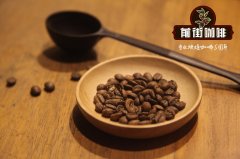
El Salvador Catracha Coffee Introduction to El Salvador Catracha Black Honey Process Coffee

FrontStreet Coffee - El Salvador Guarumal Estate Caturra Black Honey Process
El Salvador Black Honey
Estate: Finca El Guarumal
Variety: Caturra
Altitude: 1250m
Processing Method: Black Honey Process
Grade: SHB
El Salvador is known as the "Land of Volcanoes." It sits between Honduras and Guatemala with the Pacific Ocean to the south, and its terrain is mostly mountains and plateaus. Those volcanic zones are rich in minerals, which is a real advantage for coffee: volcanic soil feeds high-quality coffee trees.
El Salvador has five main coffee-producing regions: Apaneca, Central Belt, Chichontepec, and the Tecapa and Cacahuatique Mountain Range. They generally sit on high mountain slopes or plateau areas above 1,200 meters, covered in volcanic ash. Most of the coffee is grown under shade. The benefit is that the cherries ripen evenly, mucilage content rises, bean weight increases, and there are more opportunities for sweet polyphenols to form, so the beans develop their full character. Coffee trees exposed to too much sun develop curled leaf edges and lose moisture, which hurts photosynthesis, reduces carbon dioxide uptake and lowers sugar formation.
The main coffee varieties cultivated in El Salvador are Typica, Bourbon, Pacas and Pacamara.
Variety
Caturra is a natural mutation of Bourbon, discovered in Brazil in 1937. It is shorter and smaller than Bourbon, which makes harvesting easier. It adapts well and does not need shade trees, thriving directly under strong sunlight, which is why it is commonly called "sun coffee." It carries Bourbon's lineage and therefore has relatively weak disease resistance, but it outyields Bourbon.
Caturra suits elevations from 700 meters up to 1700 meters. Its altitude tolerance is broad, but the higher it is grown, the better the flavor, even as yields drop.
Processing Method
Honey processing first appeared in Costa Rica in Central America. It began largely because some high-altitude areas there lacked water, so after the cherries went through a pulping machine they were dried in the sun with the mucilage still attached. It sits between the natural (sun-dried) method and the washed method.
It keeps the cleanliness of a washed coffee while the mucilage, dried along with the bean, greatly boosts sweetness and caramel notes. This method can also soften a coffee's acidity and bring out more delicate aromas.
Depending on how much mucilage is removed, how long the coffee is dried in the sun (or how thickly it is spread) and how often it is turned, honey processing is further divided into black honey, red honey, orange honey, yellow honey and white honey.
Based on the degree of mucilage removal:
Black Honey: Almost no mucilage is removed, so it takes the longest to dry, requiring more than 14 consecutive days. To keep it from drying too fast, covers are used to block excess sunlight, allowing a more thorough sugar conversion.
Red Honey: 25% of the mucilage is removed (specific practices vary between estates), it is sun-dried for about 12 days, and shade covers may also be used along the way.
Yellow Honey: 40% of the mucilage is removed, it is dried with maximum sun exposure, and the process lasts about 8 days.
FrontStreet Coffee Recommendation
If this black honey coffee appeals to you for its sweetness and caramel depth, FrontStreet Coffee's Brazil offerings are a natural companion. Brazil is where Caturra itself was first discovered in 1937, and Brazilian beans are prized for moderate acidity and a well-balanced mix of sweetness, bitterness and body that takes beautifully to a medium roast.
FrontStreet Coffee's Cerrado Red Bourbon is a classic Brazilian single origin. Grown in the well-known Cerrado region and medium-roasted, it shows creamy peanut, toast, caramel and hazelnut aromas with a round, low-acid cup and a light bitterness. It works just as well in a pour-over as it does in a moka pot, an espresso SOE, a siphon or a French press.
For a sweeter and more distinctive option, FrontStreet Coffee's Queen Estate comes from Mogiana, near South Minas, where fertile red volcanic soil lets the fruit develop a fuller aroma. Its rare Yellow Bourbon variety, a mutation of Red Bourbon, gives a cleaner fruit character, with the sugarcane-like sweetness, fruit and chocolate notes that few other regions can match.
Important Notice :
FrontStreet Coffee is a long-established specialty coffee roaster in Guangzhou China, selling freshly roasted beans from its own farm in Yunnan as well as dozens of carefully selected single-origin beans from around the world for both pour-over and espresso. The products deliver consistently excellent quality and great value, with shipping within 24 hours. Guangzhou's FrontStreet Coffee shop is recommended by many coffee lovers, and the beans are now available online at the Tmall 。
FrontStreet Coffee has moved to a new address:
FrontStreet Coffee Address: 315,Donghua East Road,GuangZhou
Tel:020 38364473
 Scan and follow the En Gafei WeChat official account. Please indicate that the reprint comes from "En Gafei".