What Variety is the Kachira Coffee Bean? Pour-Over Kachira Coffee Brewing Methods, Flavor Profile, and Taste Description
The Rising Popularity of Flower Champion Coffee
Luckin Coffee is a well-known coffee brand in China, and when it announced that the 90 tons of Flower Champion beans it had purchased were nearly consumed within just 10 days—leaving many stores sold out—the news rippled through the coffee world and pushed Flower Champion beans into the spotlight.
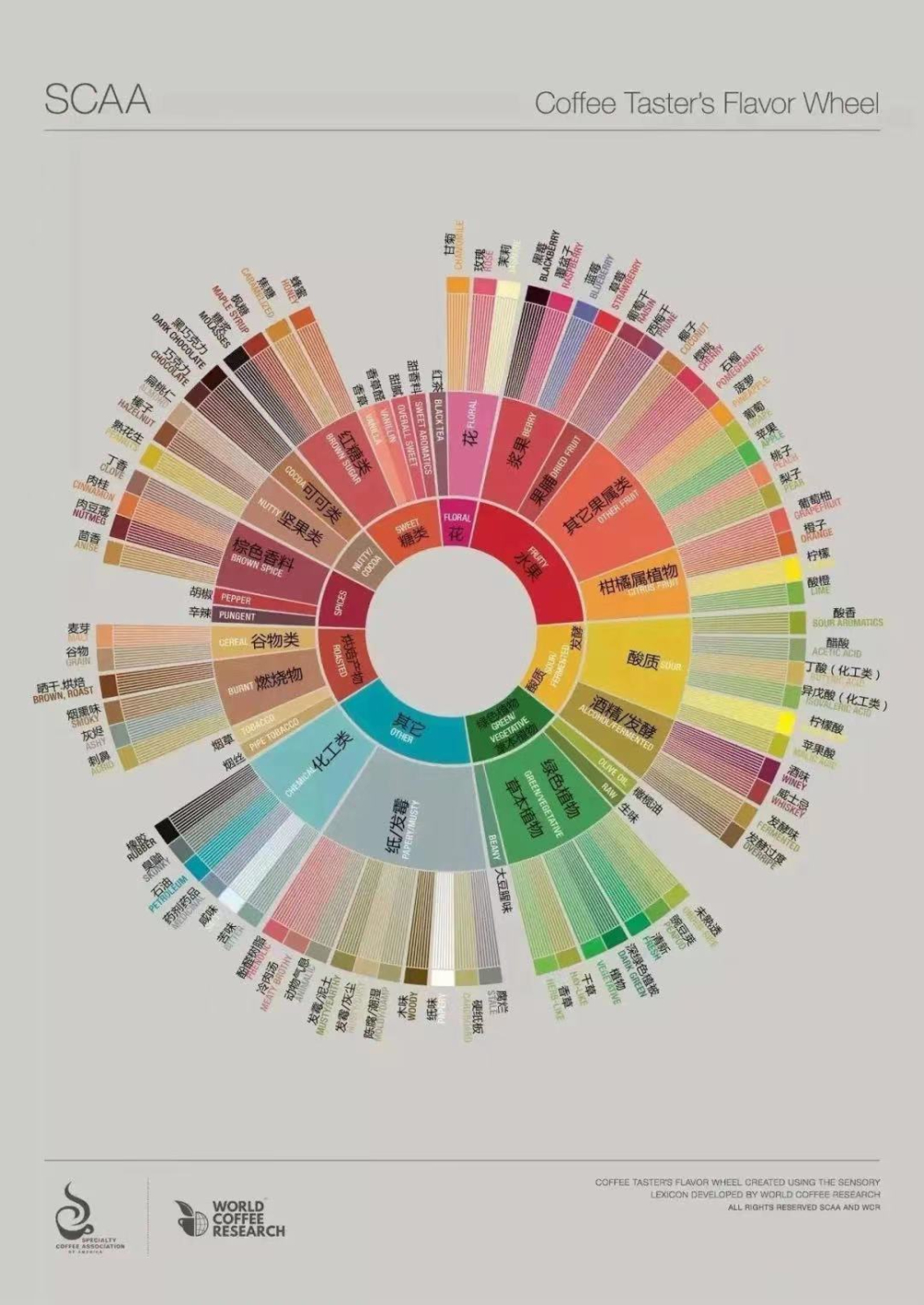
So why has Flower Champion become so popular? Luckin's Flower Champion SOE has been extraordinarily well received, drawing in drinkers who seek it out specifically and find it tastier than any coffee they have had before, with a flavor profile all its own. FrontStreet Coffee would like to offer some context here: the distinctive flavor you are tasting actually has a technical term—"coffee flavor." Read literally, "Flower Champion" sounds like a bean "overflowing with floral aromas," but that is not quite the case. FrontStreet Coffee's Flower Champion carries only a modest floral note; its fruit aromas are far more prominent—passion fruit, strawberry, mango, jackfruit, citrus, and others. These fruit aromas are common flavor descriptors for coffee beans, typically found on the right-hand side of the SCAA Coffee Taster's Flavor Wheel.
Understanding Flower Champion's Unique Characteristics
At this point, many people wonder why Flower Champion has fruit aromas. Are additives being used in these beans? FrontStreet Coffee can say definitively: of course not. This is the natural flavor of the beans themselves. FrontStreet Coffee's Flower Champion beans are in fact produced in the Hambella sub-region of Ethiopia's Sidamo region. Coffee names generally derive from their growing area and origin. Whether translated into English or into Ethiopia's Amharic language, Hambella does not mean "Flower Champion"—the leader among flowers. There is a story behind this.
In the coffee world, one bean enjoys an exceptional reputation and outstanding quality and appears frequently in world-class competitions—the Geisha coffee bean. This star variety rose to fame at the 2004 Panama BOP competition. Its English name is "Geisha." When Taiwan introduced the bean, it was translated as "Geisha" because Geisha is pronounced the same as the Japanese word for geisha, and Taiwan's coffee culture at the time took its cues from Japan. When the bean reached mainland China, it was named "Guixia." The naming of Flower Champion is closely tied to the Geisha coffee bean.
The Origin Story of Flower Champion
At the 2017 TOH (Taste of Harvest) green bean competition, a lot from the Sidamo Hambella region stood out with its rich strawberry and cream aromas, winning the championship in Ethiopia's TOH natural-processing category with a high score of 88.21. That same year, the barista Li Jianfei used this lot at the World Brewers Cup, defeating competitors' Geisha coffees and taking the China regional championship. The Beijing green bean importer who brought this Ethiopian coffee in was thrilled—this Sidamo Hambella bean had beaten the perennial champion Geisha; was it not the leader among flowers? So the bean was named "Flower Champion," and under that name the Hambella coffee gradually won over domestic coffee enthusiasts.
Terroir and Growing Region
Now that you know how Flower Champion got its name and rose to fame, you are probably curious about this legendary bean—most of all about its flavor. Coffee, after all, is the fruit and seed of a shrub. Discovered by humans and domesticated and cultivated over thousands of years, it has become an agricultural product much like rice or soybeans. It is consumed by roasting, grinding, and brewing, and it has become a beverage that offers stimulation and refreshment. As an agricultural product, coffee is deeply shaped by variety, climate, and soil. FrontStreet Coffee has researched and compiled the terroir information for this region.
FrontStreet Coffee's Flower Champion is produced in Ethiopia's Guji region, the country's largest coffee-producing area, and comes from one of its sub-regions, Hambella. As noted earlier, coffee flavor is influenced by many factors, and even within a single producing region different flavors can emerge. Sidamo's coffee flavors are therefore very diverse: different soil compositions, regional microclimates, and countless native coffee varieties create significant differences and character from one town area to the next.
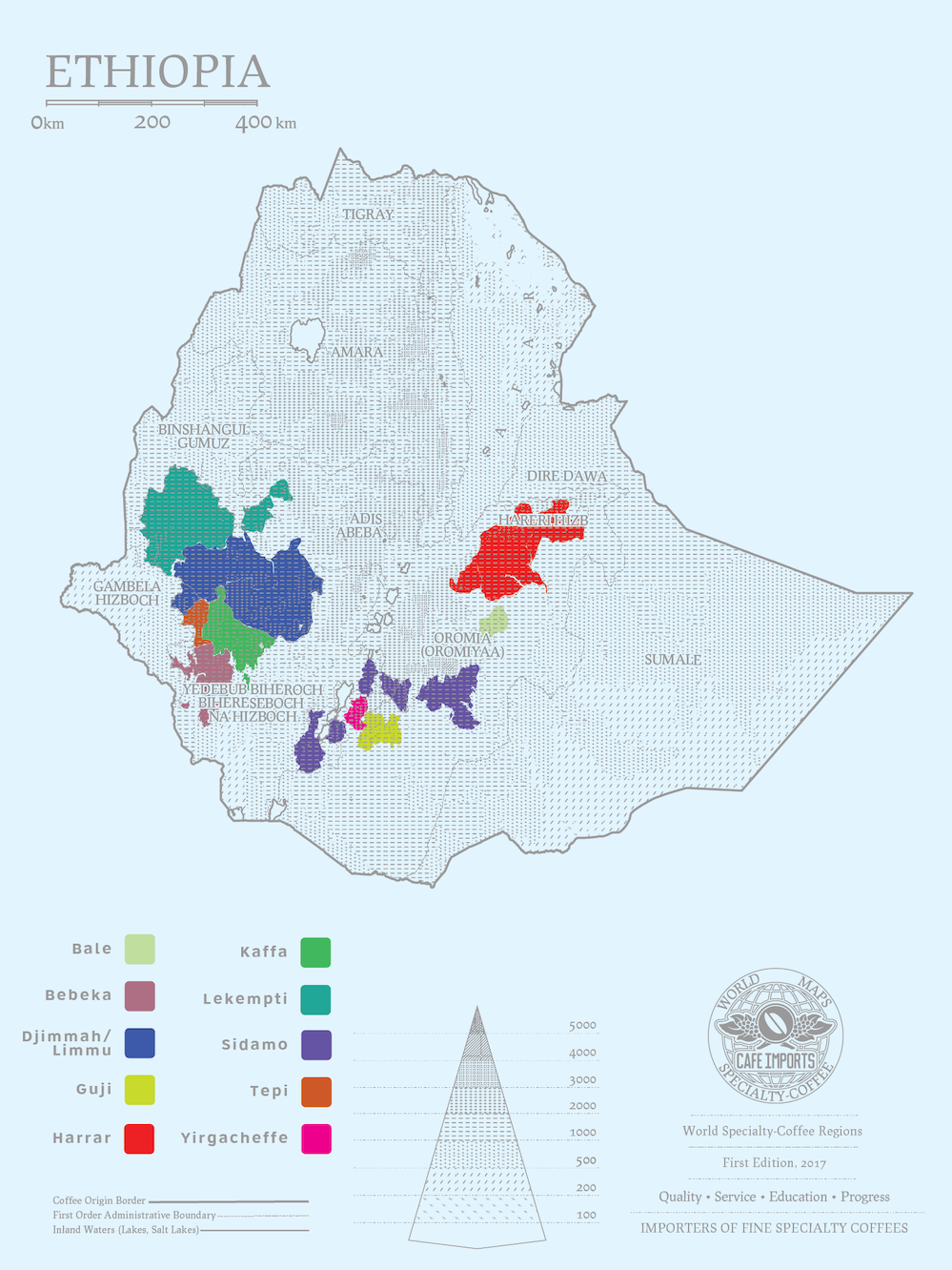
The Sidamo region lies in southern Ethiopia, where agriculture dominates and coffee-growing areas are clustered around the East African Rift Valley. Hambella is administered by Oromiyaa, Ethiopia's southernmost administrative state. To its west, across the mountains, lies the Kochore sub-region of the Yirgacheffe region; to the east is Shakiso; to the south, Uraga; and to the north, Kercha. Shakiso, Uraga, and Kercha are all sub-regions of the Guji region.
According to statistics, Hambella has about 20 processing plants, distributed across different villages and estates of the sub-region and varying in scale. DW Coffee Export, to which Flower Champion belongs, has a core producing area called Dimtu in Hambella with an annual coffee production of about 1,100 tons. Within the Dimtu area there are four estate processing plants: Buku Abel, Buku Saysay, Haro Soresa, and Tirtiro Goye. Only the natural-processed coffee from Buku Abel's production and processing is "Flower Champion," which is why Flower Champion is always seen appearing alongside Buku Abel.

Varieties and Processing Methods
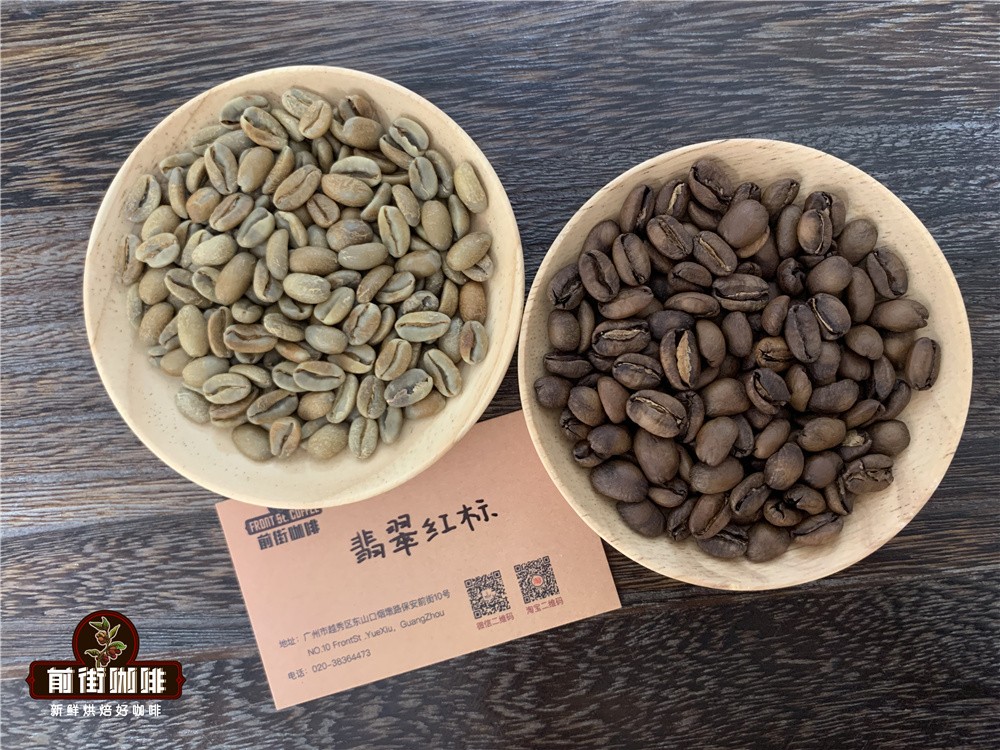
The variety of FrontStreet Coffee's Flower Champion beans is native heirloom varieties—meaning the coffee trees have been rooted in Hambella for so long that distinguishing between varieties is difficult. Long-term growth under the same soil and water conditions has caused the coffee flavors to converge toward a regional profile, so these trees are collectively called native varieties. Local people also name certain distinctly different varieties according to the characteristics of the coffee trees and cherries. For example, the small-bean Flower Champion variety is called "dega," referring to a type of tree that is short, has small leaves, is dense, and produces small coffee beans. The X.0 series is less particular—among Flower Champion beans we can still find beans of varying sizes.
Beyond terroir, coffee as a unique agricultural product is also deeply influenced by field management and post-harvest processing. In the narrow sense, Flower Champion beans refer specifically to natural-processed beans from the Hambella Buku Abel processing plant. Of course, shaped by diverse market demand, washed Flower Champion beans later became available, but we will not discuss those here.
Natural Processing Details
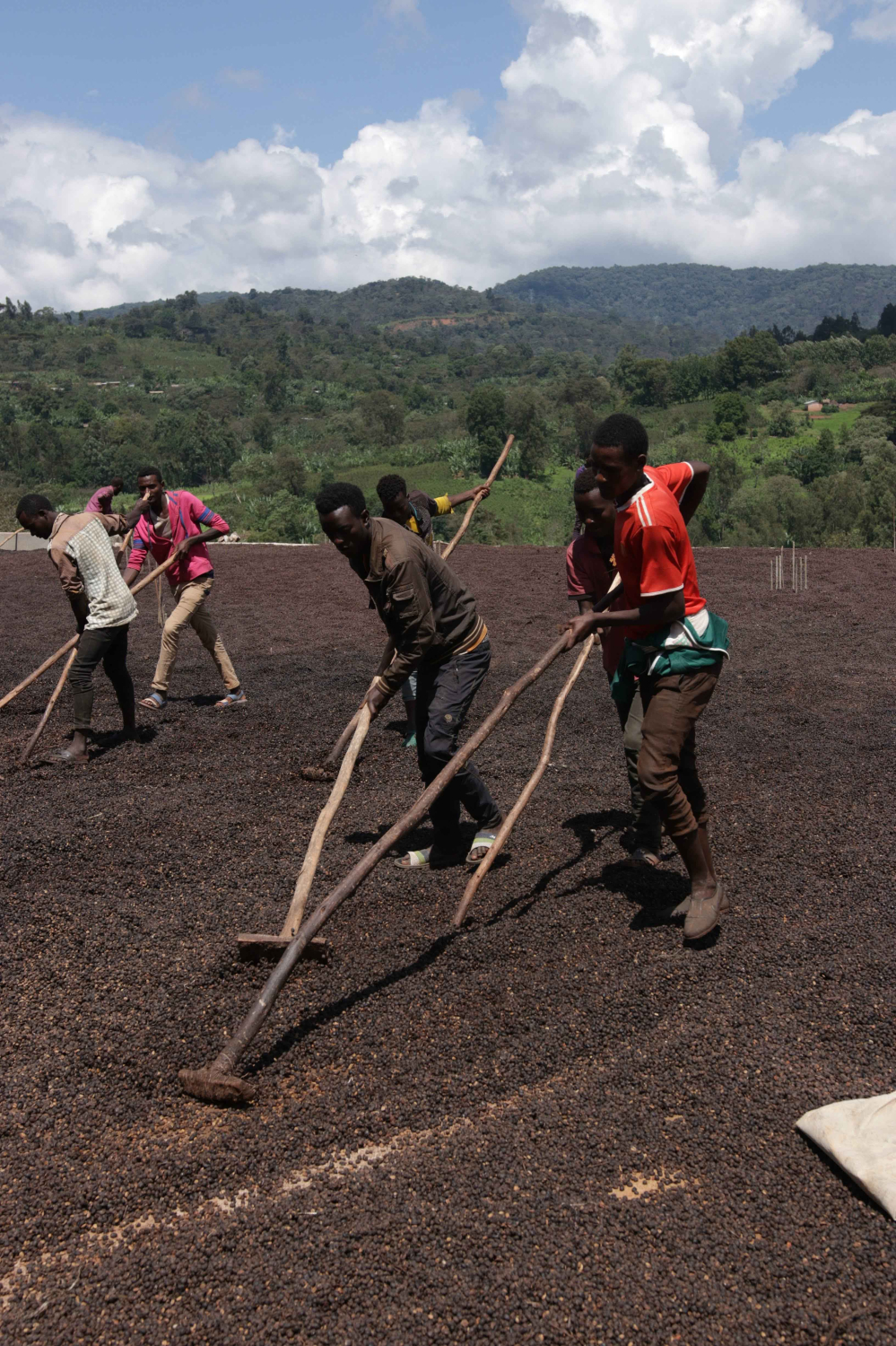
During the annual harvest and processing season (December to January), the mountains are covered with red coffee cherries. Farmers are required to harvest red cherries with a sugar content above 30 before beginning harvesting and natural processing. For the first two days of natural processing, the humidity of the red cherries must be maintained so their fructose can fully begin fermenting. Meanwhile, the high-altitude location lets the processing plant's nighttime temperature fall to around 12 degrees Celsius, preventing over-fermentation odors caused by high temperatures. When temperatures rise at noon, farmers promptly provide shade to protect the red cherries from sun damage. At night, thick plastic sheets are used to guard against sudden rain. This allows the red cherries to ferment and dehydrate at relatively low temperatures.
After 18 days of natural processing, once the green coffee beans' moisture content drops to around 13%, the natural processing is stopped. The beans are packed into jute bags and placed in warehouses under natural conditions of 12-22 degrees Celsius and 45-55% humidity for about 50 days of resting and further dehydration. When the green bean moisture content reaches around 11%, they are transported to the processing plant for hulling, screening, and sale. Coffee processed through Buku Abel's refined natural processing has a unique strawberry cream flavor.
Evolution and Development of Flower Champion
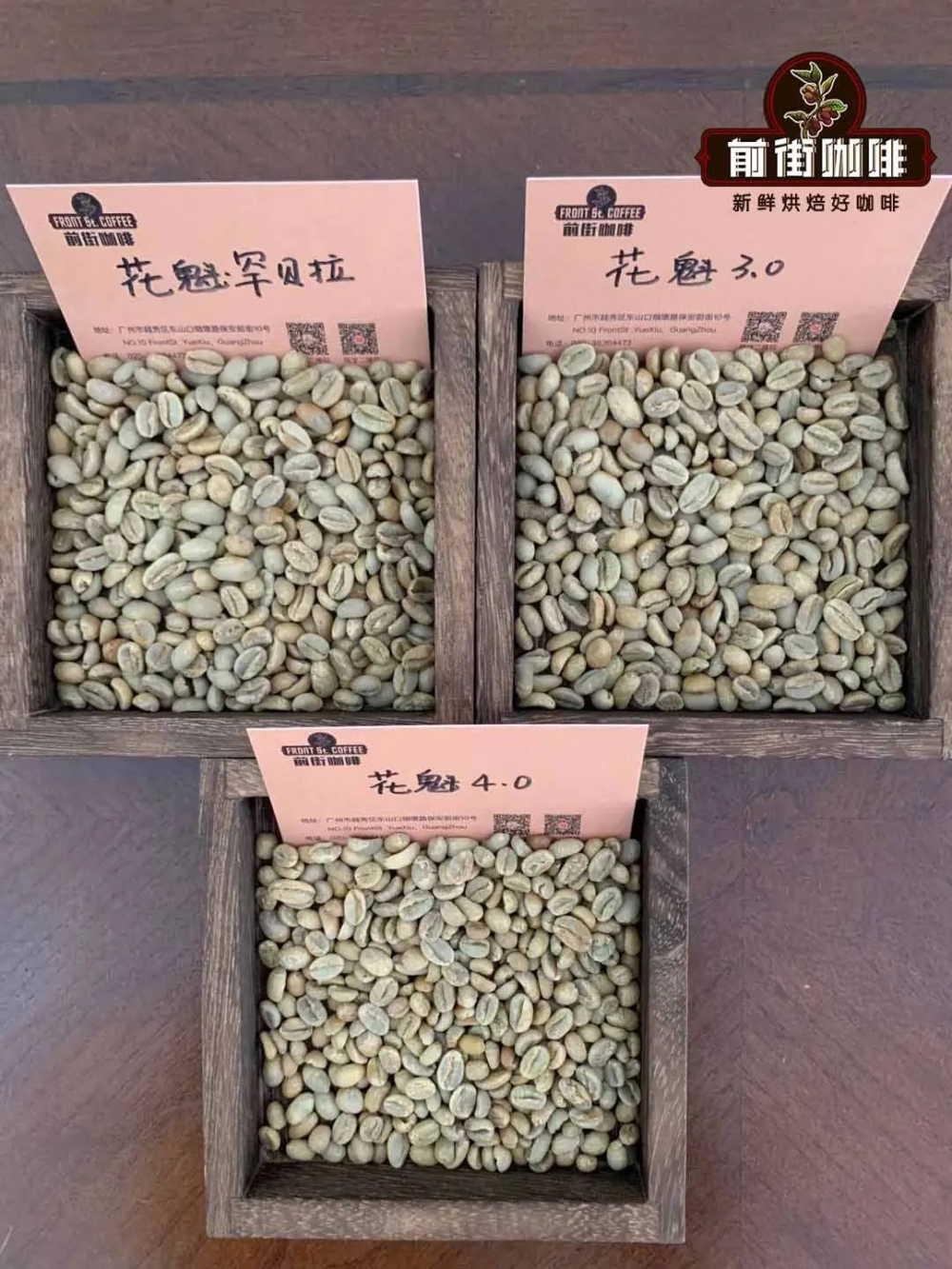
After Flower Champion revealed its excellence in 2017, domestic coffee enthusiasts imported it annually, and FrontStreet Coffee was no exception. After 2017, Flower Champion beans used the X.0 series to distinguish harvest seasons. Flower Champion 2.0 was launched in 2018, Flower Champion 3.0 and 3.1 in 2019, and so on. Those familiar with FrontStreet Coffee's Flower Champion may also have noticed that starting in 2020 this coffee from Hambella was divided into two types: FrontStreet Coffee's Flower Champion 4.0 and FrontStreet Coffee's Small Bean Flower Champion (to avoid confusion with Arabica small-bean varieties, the words "Small Bean" were later dropped from Small Bean Flower Champion). You can order and compare the differences between FrontStreet Coffee's X.0 and FrontStreet Coffee's Flower Champion at FrontStreet Coffee stores or on Taobao—the latter is significantly smaller in shape than the former, and the flavors differ as well.
As mentioned, Flower Champion beans first gained popularity in 2017 for their rich strawberry cream flavor. However, FrontStreet Coffee's baristas tasted flavors similar to the 2017 Flower Champion in the 2018 and 2019 vintages, though the body and aftertaste were not as good as the 2017 Flower Champion. Coffee is an agricultural product whose flavor shifts slightly each year with changes in regional soil, climate, and precipitation, as well as processing methods. FrontStreet Coffee previously wrote an article introducing the taste profile of FrontStreet Coffee's Flower Champion, but also found that many coffee lovers who enjoyed the 2017 flavor were confused by these changes. Where exactly did the problem lie?
FrontStreet Coffee reviewed samples of FrontStreet Coffee's Flower Champion beans and observed green beans from the new harvest season. By comparing different batches of Flower Champion, it became more apparent in the 2018 and 2019 vintages—sometimes a few bags of similar small beans would appear among ten jute bags. We then realized that the main source of the 2017 Flower Champion's aroma was some particularly small bean varieties within the Flower Champion coffee. So in 2019, FrontStreet Coffee fed this information back to the green bean supplier, and afterward the Small Bean Flower Champion was separated out each year and became its own category.

This year (2024), Flower Champion still commands high popularity and welcomes its 8th version—FrontStreet Coffee's Flower Champion 8.0. FrontStreet Coffee extracted it through cupping, pour-over, cold brew, ice drip, SOE, and other methods, finding that its tropical fruit notes are particularly prominent and its flavor complexity high, making it a coffee well worth tasting.
Brewing Recommendations
FrontStreet Coffee generally recommends a Hario V60 dripper for pour-over brewing of light roast beans, using 15 grams of coffee powder at a 1:15 coffee-to-water ratio, a water temperature of 90-93 degrees Celsius, and a medium-fine grind (judged by an 80% pass rate through a Chinese #20 standard sieve). (Brewing parameters can be scanned from the QR code on the coffee bean packaging.)
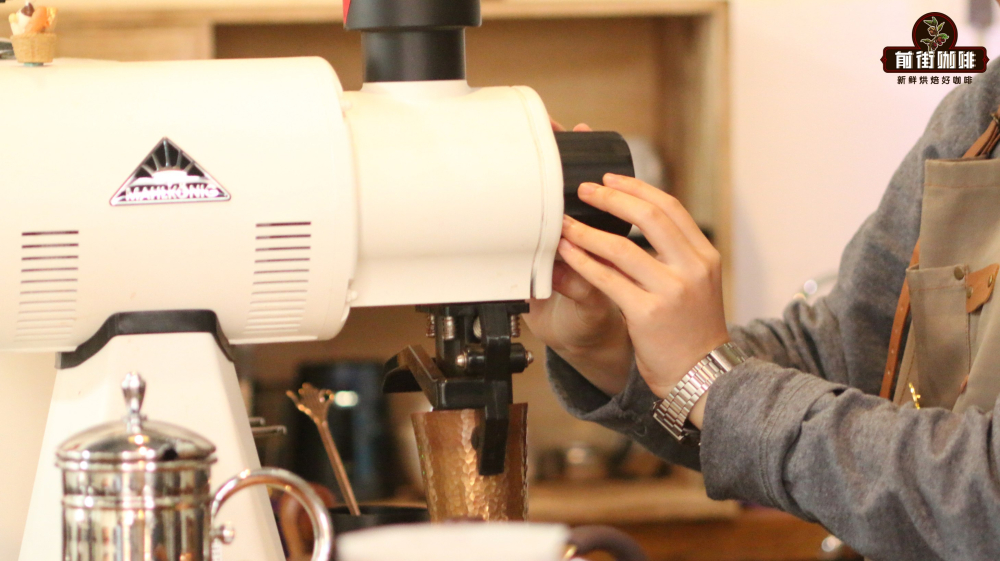
Next, use a three-stage extraction. First, bloom with twice the amount of water as coffee powder—that is, 30 grams of water for a 30-second bloom. Then, with a small stream, pour in circles to 125 grams for the segmentation. When the water level drops to one-third, continue pouring to 225 grams and stop. (Timing starts from the bloom.) The extraction time is 2'00".
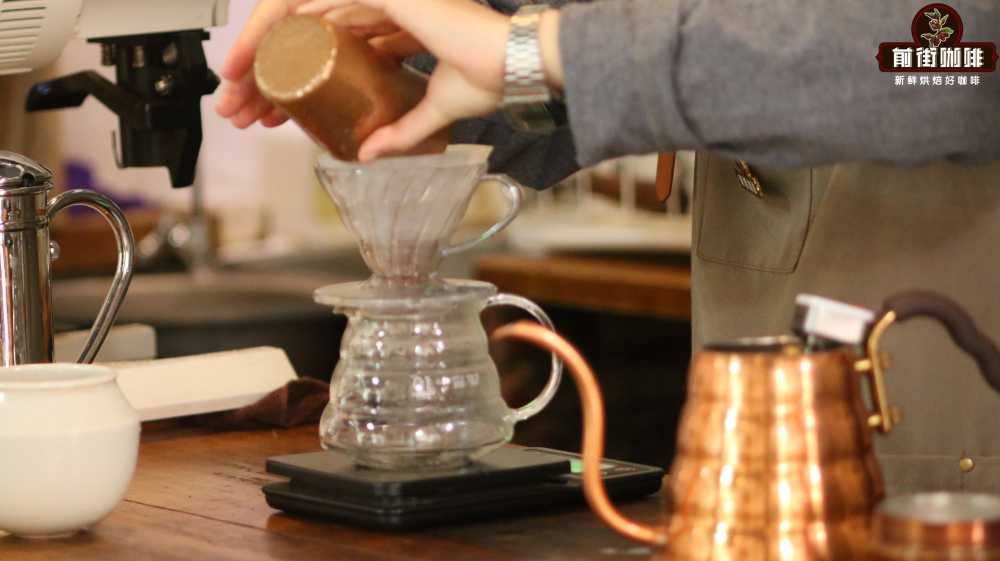
After extraction, gently shake, then divide into cups or pour into your favorite cup for tasting. FrontStreet Coffee recommends that you first smell to experience the front-end aromatic compounds of FrontStreet Coffee's Flower Champion, then slurp to take in its flavors fully. Some may find the slurping sound inelegant, but once mastered you can experience the "blooming" sensation in the mouth that coffee experts describe.

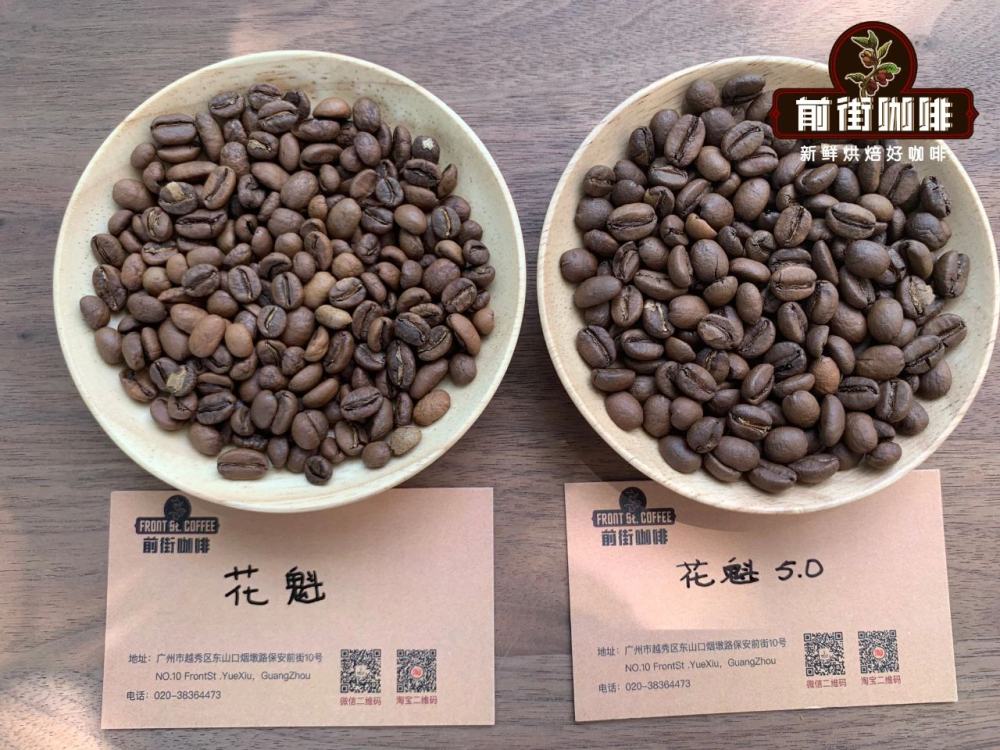
FrontStreet Coffee's Flower Champion has distinct melon and fruit aromas when smelled, with soft fruit acidity on entry, a smooth mouthfeel, and flavors of passion fruit, jackfruit, strawberry, and berry. FrontStreet Coffee's Flower Champion 5.0 features prominent citrus and berry flavors with slight tropical fruit notes and an obvious juice-like mouthfeel. Which one would you prefer?
FrontStreet Coffee Recommendation
If this article has you curious about Ethiopia's signature fruit-forward profile, FrontStreet Ethiopia Flower Champion is the place to start. It is built around a tropical fruit core—strawberry, passion fruit, jackfruit, and lychee-like notes—with pronounced sweetness, very little bitterness, and a smooth, juice-like body. Many drinkers describe it as "the coffee that does not taste like coffee," which makes it an easy recommendation for anyone who finds traditional coffee too bitter.
For brewing, FrontStreet favors the Hario V60 dripper. Its 60° cone and single large hole let the water travel to the center before dropping, extending contact with the grounds so that the floral and fruit aromas are fully extracted; the flow speed depends largely on the brewer's pour control, which shows up directly in the cup. FrontStreet's resin V60 is the house favorite: resin insulates heat well, and in mass production it is the easiest material to mold with the least variance, while the geometry stays the same as ceramic, glass, copper, or steel versions.
Brew it as a light roast: 15 g of coffee, a 1:15 ratio, 90-93 degrees Celsius, and a medium-fine grind. With the V60's fast drainage, a segmented pour helps lengthen the extraction and keeps the bright fruit acidity and clear sweetness at the front of the cup.
Important Notice :
FrontStreet Coffee is a long-established specialty coffee roaster in Guangzhou China, selling freshly roasted beans from its own farm in Yunnan as well as dozens of carefully selected single-origin beans from around the world for both pour-over and espresso. The products deliver consistently excellent quality and great value, with shipping within 24 hours. Guangzhou's FrontStreet Coffee shop is recommended by many coffee lovers, and the beans are now available online at the Tmall 。
FrontStreet Coffee has moved to a new address:
FrontStreet Coffee Address: 315,Donghua East Road,GuangZhou
Tel:020 38364473
 Scan and follow the En Gafei WeChat official account. Please indicate that the reprint comes from "En Gafei".