Introduction to Indonesian Mandheling Coffee Origin Wet-Hulling Method - Characteristics and Differences Between Aged Mandheling and Golden Mandheling

Introduction
In earlier articles, FrontStreet Coffee has explained the importance of fresh coffee beans and the difference between new-crop and old-crop beans. There is one exception, however: Aged Mandheling. What makes it so special that it attracts enthusiasts despite its reputation as an "expired" coffee?
What is Aged Mandheling?
You could call it the result of an accident. The story goes back to the Dutch colonial period in Indonesia. Sumatra was one of the world's major coffee-producing regions at the time, and its coffee had to supply the huge demand of European consumer countries. Indonesia shipped beans to Europe continuously. To ensure a steady supply, the coffee was stored carefully. But because of long transport distances and exposure to sea breezes, the voyage took too long. By the time the beans reached Europe they had developed a unique flavor that European connoisseurs eagerly pursued.

People discovered that aging processed beans for several years causes the acidity to fade gradually, leaving a solid aftertaste and a sweet returning character, with a flavor as captivating as Pu-erh tea. We cannot, however, rely on "accidental" methods to produce aged beans, since that would add uncertain risk to bean quality. One point must be clear: aged beans are not simply beans left in a warehouse for several years. Beans left too long can spoil, or even grow moldy or infested. Those are not aged beans but spoiled beans. Over time, the production model for Aged Mandheling became standardized and mature.
Aging Process for Mandheling
First, freshly picked cherries undergo regular processing. FrontStreet Coffee's Aged Mandheling, for example, is processed using the wet-hulled method. In this process, good beans (plump, large screen size, defect-free) are carefully selected for aging. Once selected, the beans are stored in warehouses to age.

Aging must be done in the country of origin, in warehouses with temperature and humidity control or good ventilation. During the aging period the beans must be turned and checked regularly, for two reasons: first, to ensure even exposure to air and consistent moisture content; second, to check for moldy or infested beans and prevent a wider problem.

Aged Mandheling today usually ages for 2-3 years. During this period the acidity of the beans weakens gradually and converts to sugars, and the color deepens, becoming mostly yellowish-brown or dark brown, which makes it highly recognizable.
What is Golden Mandheling?
The fame of Mandheling coffee originated from Pawani Coffee Company (PWN) successfully launching Mandheling in the Japanese market. Unlike many local green bean suppliers in Indonesia, PWN is the exclusive supplier of high-grade Golden Mandheling, contracting the best Mandheling-producing regions in Indonesia, where the beans produced are all superior products.

The wet-hulled method saves a great deal of time and labor in green bean processing. The rapid process, however, also brings a higher defect rate, so only strict manual selection can eliminate defects that machines cannot screen out. PWN subjects purchased Mandheling green beans to one machine selection plus three manual selections, far exceeding Indonesia's local highest G1 grade and meeting PWN Golden Mandheling production standards, which require the following:
1. Green bean screen size: 18-19 screen or above after the first manual selection
2. Fewer than 3 defective beans in a 300-gram green bean sample
3. Green coffee bean grade: G1
4. Dark green color, uniform size, and regular shape

Before launching any bean, FrontStreet Coffee always evaluates it through cupping. Cupping assesses bean quality and flavor, and unified standards make it easier to identify objectively the strengths and weaknesses of the flavors the beans present. Through cupping, FrontStreet Coffee found that the Lintong Mandheling daily bean shows rich nutty notes with a hint of melon aroma in the finish, and as the temperature drops, herbal plant flavors emerge, with a mellow mouthfeel and saturated aroma. PWN Golden Mandheling has aromas of dark chocolate, nuts, and caramel, as well as herbal spice and pine flavors, with a dark chocolate aftertaste, plentiful lingering notes, high cleanliness, and light fruit acidity as the temperature drops.
Pour-over Parameters for Mandheling Coffee
Brewing water temperature: 87-88°C
Coffee grounds: 15 grams
Coffee-to-water ratio: 1:15
Dripper: KONO dripper
Grind size: Medium-coarse grind (70% pass-through rate with a China standard No. 20 sieve)
Brewing method: Three-stage pouring

Dark roasting makes the internal texture of the beans loose, so they can be crushed easily with a gentle pinch. This shows that the structure has changed significantly, and the beans absorb water strongly once ground. To avoid over-extraction after the grounds absorb water and release large amounts of bitter substances, FrontStreet Coffee uses a coarser grind than for light roast. Here a medium-coarse grind is used (70% pass-through rate with a China standard No. 20 sieve), with an EK43s setting of 11 in-store.
Roasting promotes caramelization and Maillard reactions. As the roast level deepens, non-enzymatic browning from the interaction and breakdown of monosaccharides and amino acids under heat increases, making it easier to release bitter, large-molecule substances. To avoid extracting too many off-flavors, FrontStreet Coffee lowers the water temperature slightly. Brewing water for light roast is 91-93°C, while FrontStreet Coffee recommends 87-88°C for dark roast beans.

For coffees with a mellow mouthfeel such as Indonesian Mandheling, Brazilian Queen's Estate, and Jamaican Blue Mountain, FrontStreet Coffee's baristas prefer the KONO dripper.
FrontStreet Coffee's baristas consistently use a three-stage pour. Splitting the pour into three stages better expresses the mellow mouthfeel and caramel sweetness of Golden Mandheling, while giving greater control over time and water volume.

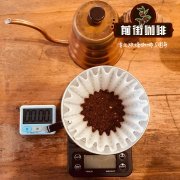
Wetting the KONO dripper lets the filter paper fit the dripper more closely. After pouring out the water from the server, add 15g of ground coffee and bloom with 30g of water for 30 seconds. This first pour completely wets the grounds for degassing, so that flavor compounds extract better in the following steps.
Some people extend the bloom to 45 or 50 seconds when extracting light roast to enhance the front-end aroma. For dark roast Mandheling, however, too long a bloom easily releases excessive woody and off-flavors, so FrontStreet Coffee chooses a 30-second bloom.
For the second stage, pour hot water slowly in small circles from the center until reaching 125g. The stream needs to be steady throughout. Too vigorous a flow easily disturbs the coffee bed and leads to uneven extraction.
When the bed drops to half the height of the dripper and reveals the coffee, begin the second stage with the same technique until reaching 225g. Once all dripping has finished, remove the dripper. The extraction time is two minutes, with a 10-second margin of error.

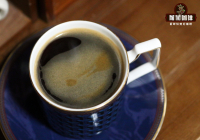
Finally, swirl the liquid in the server to mix it evenly, and the hand-poured Golden Mandheling is ready to taste. The brewed coffee enters with aromas of spices, dark chocolate, nuts, caramel, and pine, with a mellow yet clean mouthfeel, a noticeable aftertaste, and persistent lingering notes.
FrontStreet Coffee Recommendation
FrontStreet PWN Golden Mandheling. For the typical wet-hulled Mandheling experience, FrontStreet Coffee recommends the PWN Golden Mandheling. PWN buys only high-quality Mandheling green beans and sorts them with one machine selection and several manual selections, removing defects and yielding evenly sized, plump, bright beans with a low defect rate. Freshly roasted, it shows sandalwood, herbal, spice, roasted hazelnut, caramel, and dark chocolate notes, with a clean character, a mellow, sweet body, and a rich, lingering aroma.
Mandheling is grown on Sumatra, where wet weather and high year-round humidity make the wet-hulled process the local standard. It produces a heavy, low-acid cup with the wild herbal character that Mandheling is known for, and it suits those who prefer a less acidic coffee.
For pour-over, FrontStreet Coffee suggests a KONO dripper with 87-88°C water, 15g of coffee at a 1:15 ratio, and a medium-coarse grind of about 70% passing a China standard No. 20 sieve.
Important Notice :
FrontStreet Coffee is a long-established specialty coffee roaster in Guangzhou China, selling freshly roasted beans from its own farm in Yunnan as well as dozens of carefully selected single-origin beans from around the world for both pour-over and espresso. The products deliver consistently excellent quality and great value, with shipping within 24 hours. Guangzhou's FrontStreet Coffee shop is recommended by many coffee lovers, and the beans are now available online at the Tmall 。
FrontStreet Coffee has moved to a new address:
FrontStreet Coffee Address: 315,Donghua East Road,GuangZhou
Tel:020 38364473
 Scan and follow the En Gafei WeChat official account. Please indicate that the reprint comes from "En Gafei".