Which Organic Coffee Brands Are Good_Can You Eat Organic Coffee Beans Directly_Organic Coffee Bean Price List
Organic Coffee Bean Certification
Organic coffee beans are not only a healthy choice but also protect ecosystems and maintain the balance of the natural environment.
Professional organizations inspect every aspect annually - soil, coffee trees, roasting, shipping processes, and environmental conditions. Only when all conditions meet the standards can organic coffee bean certification be obtained.
Japan Organic & Natural Foods Association
Japan Organic & Natural Foods Association (JONA)
Since its establishment in 1991, the Japan Organic & Natural Foods Association (JONA) has been dedicated to the certification of organic agricultural products, organic processed foods, and other items. Through its organic food certification business, it promotes the development of organic agriculture, livestock, and aquatic products, with a mission to maintain and improve the natural and living environment.
Organic Crop Improvement Association International
The International Organic Crop Improvement Association (OCIA) is one of the global leaders in organic certification, functioning as a non-profit third-party organization. It provides various organic research, education, and certification activities, with its certification scope covering organic farmers, processed food manufacturers, and sellers across the United States, Africa, Europe, and Pacific Rim countries.
European Union Organic Certification ECOCERT (ECO)
ECOCERT is the most representative and authoritative organic agriculture certification body in Europe. Generally, when products are marked with "ECO," it indicates that their production process has been certified by the ECOCERT organization.
The ECOCERT F-32600 AB certification is a stricter standard than the aforementioned ones, commonly referred to as AB certification. It implements more comprehensive management systems for organic farms, ensuring greater security for the agricultural products produced.
The ECOCERT F-326000 certification represents the most stringent standard under ECO. Products must specify the percentage of organic ingredients they contain. Consequently, unless a manufacturer possesses the highest quality production processes and facilities, general products do not typically pursue this particular standard certification.
International Federation of Organic Agriculture Movement
The International Federation of Organic Agriculture Movements (IFOAM), established in 1972, is a non-profit third-party organization. With members spanning the globe, its objective is to promote the worldwide adoption of more environmentally conscious and ecologically balanced organic farming methods. It provides global members with channels for organic information exchange and promotion, while establishing the fundamental rules for authoritative global organic agriculture certification, effectively maintaining the quality and reliability of organic products worldwide.
Smithsonian Migratory Bird Center - Bird Friendly
After decades of research in Central America, the Smithsonian Migratory Bird Center "SMBC" discovered that coffee trees grown under shade provide habitat for many bird species. Balancing ecological conservation with agricultural development, they developed a model that minimizes the impact of human activities on nature. Shade-grown coffee receives the Bird Friendly label from the Smithsonian Institution if it meets certain growing conditions: the coffee must meet organic standards, canopy height and foliage coverage requirements, and support a certain number of birds, among other conditions.
The Smithsonian certification organization recognizes these standards and evaluates for Bird Friendly certification at the same time it inspects farms for organic standards. Farmers voluntarily pay for these inspections, which are unrelated to the Smithsonian Center. Farmers benefit by being able to charge higher prices for their coffee. Currently, 18 farms in North and South America are Bird Friendly approved.
Despite the benefits of participating in the program, the Bird Friendly label occupies a very small niche in the American coffee market, which is dominated by mass-market brands sold in grocery stores.
Bird Friendly coffee accounts for a small portion of organic coffee, which itself represents only about five percent of the specialty coffee market.
FrontStreet Coffee Recommendation
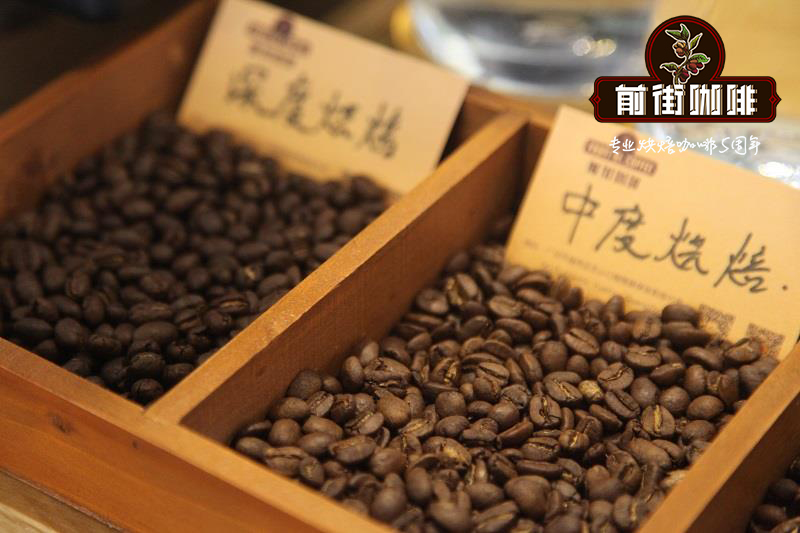
Roast level matters as much as certification when it comes to flavor: the darker the roast, the more bitter and heavy the cup; the lighter, the more acidic and delicate. For drinkers chasing balance, medium roasted beans are the natural starting point.
If you dislike both sourness and bitterness, try FrontStreet Coffee's Brazil Queen's Farm, a distinctive Yellow Bourbon from the world's largest coffee-producing country. Medium roasted, it shows cream peanut, chocolate, toast, and sugarcane aromas and sweetness, and it works just as well in a moka pot or espresso machine as it does in pour-over.
For a sweeter medium roast, FrontStreet Coffee's Strawberry Candy blend unites two famous origins - honey-processed Costa Rica and washed Panama Geisha - into a cup of orange-blossom honey and rounded sweetness, suited to cold brew, pour-over, or espresso. And for a classic option, FrontStreet Coffee's Jamaica Blue Mountain No.1, grown on Typica, is medium roasted to fuse its unique acidity, bitterness, sweetness, and body into an elegant whole: chocolate, roasted nuts, cream, and caramel from the very first sip.
Important Notice :
FrontStreet Coffee is a long-established specialty coffee roaster in Guangzhou China, selling freshly roasted beans from its own farm in Yunnan as well as dozens of carefully selected single-origin beans from around the world for both pour-over and espresso. The products deliver consistently excellent quality and great value, with shipping within 24 hours. Guangzhou's FrontStreet Coffee shop is recommended by many coffee lovers, and the beans are now available online at the Tmall 。
FrontStreet Coffee has moved to a new address:
FrontStreet Coffee Address: 315,Donghua East Road,GuangZhou
Tel:020 38364473
 Scan and follow the En Gafei WeChat official account. Please indicate that the reprint comes from "En Gafei".