How Many Different Types of Mandheling Coffee Exist in Indonesia - Golden Mandheling vs. Lintong Mandheling
The Origin of the Name Mandheling
In 1945, Japanese soldiers stationed on Sumatra tasted a coffee grown locally on the island and were struck by how delicious it was. Curious, they asked a vendor what the coffee was called.
The Story Goes Like This
Japanese soldier: "Umai! Kore doko kara?" (Delicious! Where is this from?)
The vendor, however, thought he was being asked where he himself had come from.
Vendor: "Sahaja? Dari Mandailing, Tuan..." (Sir, I am from Mandailing.)
Japanese soldier: "E? Nani? Mandeeringgu?" (Huh? What? Mandailing?)
Vendor: "Ya tuan. Mandailing tuan." (Yes sir, from Mandailing.)
Japanese soldier: "Ah, sou..." (Ah, I see... nodding.)
Because of the language barrier, the vendor from the Mandailing ethnic group misunderstood the question and answered with the name of his homeland: Mandailing.
Several years later, a Japanese veteran returned to Sumatra to look into the possibility of exporting "Mandheling coffee" to Japan. Pawani Company became the first firm to ship 15 tons of Sumatra green beans to Japan. Thanks to that beautiful misunderstanding, "Mandheling" became a synonym for coffee from the island of Sumatra.
Golden Mandheling is produced by PWN, one of Indonesia's finest coffee companies. PWN is short for Indonesia's Pawani Company. Golden Mandheling from PWN is packed in 30 kg bags, each accompanied by a certificate of guarantee.
The English name "Golden Mandheling" has already been registered by Pawani Company in Indonesia.
Variety Characteristics
Golden Mandheling is harvested entirely by hand, processed with meticulous agricultural techniques, and finished with manual selection. Through four screenings and four selections, defective beans are weeded out to yield a high-quality lot. Mandheling from Sumatra generally carries some earthy flavors, a strong grassy aftertaste, and can turn bitter when roasted dark. Carefully selected Golden Mandheling, by contrast, offers plump, full beans and a rich aroma. Compared with regular Mandheling, its cup is richer, smoother, and more mellow, finishing with a faint sweetness. It is an excellent choice for anyone who likes to add milk. In the world of direct-trade coffee, Golden Mandheling could fairly be called unbeatable.
Where the Variety Comes From
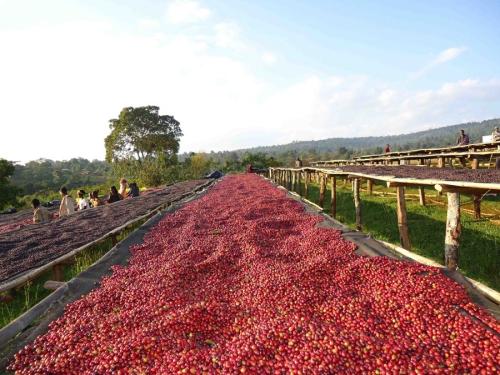
Sumatra is best known for the Arabica variety Mandheling, while its northern regions are also home to many Robusta production areas. Among the traditional Arabicas grown in northern Sumatra, the finest are sold under the names Lintong and Mandheling.
Lintong refers to coffee grown in a small area southwest of the Lake Toba administrative region. The growing zones there are scattered across a high, undulating clay plateau covered in ferns.
The Varieties We Carry
At FrontStreet Coffee, the variety that best suits popular tastes is undoubtedly PWN's Golden Mandheling. Its distinctive, rich, mellow aroma makes it a favorite among coffee lovers who enjoy full-bodied cups and dislike acidity. Golden Mandheling is the highest quality and the finest of all Mandheling varieties. Beyond Golden Mandheling, the store also carries Lintong Mandheling and Aged Mandheling.
FrontStreet Coffee Recommendation
If this story has you curious about Mandheling, start with FrontStreet Coffee's PWN Golden Mandheling. FrontStreet sources it from PWN, the Indonesian company that registered the Golden Mandheling name; PWN buys Mandheling green beans of 18 screen and larger, with fewer than three defective beans in a 300 g sample, which meets G1, the highest grade for Indonesian green beans. The beans are wet-hulled and given a medium-dark roast, so the cup stays low in acidity and leans into dark chocolate, caramel, and the wild herbal notes that make Mandheling so distinctive.
For an everyday pour-over, FrontStreet's Lintong Mandheling daily bean is the classic choice: also wet-hulled and graded G1, it delivers the conventional Indonesian Mandheling profile of deep chocolate, caramel sweetness, and a faintly savory, herbal edge. Because both lots are roasted medium-dark, they suit anyone who prefers a full body over bright fruit.
To get the most from a Golden Mandheling, FrontStreet recommends a pour-over with water at 87-88°C, 15 g of coffee, and a 1:15 ratio, ground to the texture of coarse sugar. Pour in three stages: a 30 ml bloom to wet all the grounds, then 100 ml, and finally a gentle 95 ml down the center. Splitting the pour this way draws out the coffee's thick, syrupy body along with its caramel sweetness and notes of chocolate and nuts.
Important Notice :
FrontStreet Coffee is a long-established specialty coffee roaster in Guangzhou China, selling freshly roasted beans from its own farm in Yunnan as well as dozens of carefully selected single-origin beans from around the world for both pour-over and espresso. The products deliver consistently excellent quality and great value, with shipping within 24 hours. Guangzhou's FrontStreet Coffee shop is recommended by many coffee lovers, and the beans are now available online at the Tmall 。
FrontStreet Coffee has moved to a new address:
FrontStreet Coffee Address: 315,Donghua East Road,GuangZhou
Tel:020 38364473
 Scan and follow the En Gafei WeChat official account. Please indicate that the reprint comes from "En Gafei".