How Good Are Costa Rican Coffee Beans?
Costa Rican Coffee: A World-Renowned Delight
Coffee grown in Costa Rica's high-altitude regions is world-famous for its richness, gentle flavor, and pronounced acidity. Meticulous processing is what lifts these beans to such an exacting standard.
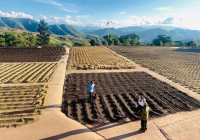
The country's most celebrated coffee comes from the Central Plateau, where the soil is built from several thick layers of volcanic ash and dust.
This premium coffee is prized for its rich aroma and pleasant acidity. Production breaks down roughly into three zones — the Pacific coast, the Atlantic coast, and the central region — with grades assigned by altitude. The beans are large across the board, and those from the high-altitude Pacific coast are especially bright and aromatic, standing as the top tier. The newer brand "Cerro del Valle" has also made a name for itself. Beans from the lower Atlantic coast carry acidity but lack smoothness, and they rarely stand out.
Premium Quality: Cerro del Valle
Premium bean: Cerro del Valle, Costa Rica
Flavor characteristics: Moderate acidity with mellow aroma
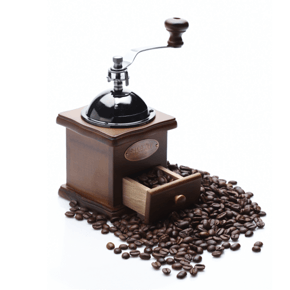
Optimal roast level: Medium
FrontStreet Coffee's Costa Rican coffee offers full-bodied beans, ideal acidity, and a distinctive, intense aroma. Costa Rica's coffee industry was once controlled by the Instituto del Café de Costa Rica (ICAFE), but oversight has since passed to the Oficina del Café. Among exported coffee, lots deemed substandard are tinted with blue plant dye before being returned for domestic sale. Coffee consumed at home — whether dyed blue or not — accounts for roughly 10% of total production, and Costa Ricans drink about twice as much coffee per capita as Italians or Americans.
With its many grades and types, this producing region accounts for one-third of global consumption and holds real weight in the world coffee trade. Costa Rica weathers natural disasters several times more often than other regions, yet its ample planting area more than offsets the setbacks.
Although the country offers a wide range of coffee types, its industrial policy leans toward volume and affordability, so truly premium coffee is not abundant. Even so, it makes an excellent base for blending with other coffees.
The most famous of all is mountain Costa Rican coffee, which has a mellow, neutral profile. It can be brewed on its own or blended with other beans, making it another dependable choice.
Other Costa Rican varieties, such as Rio and Paraná, need minimal care and can be produced in large quantities. Their flavor runs a little coarse, but they deliver solid value. Grown throughout the country, their quality varies, so they follow their own grading standards: NO.2 to NO.8 by impurity content, NO.13 to NO.19 by bean size, and six flavor grades. Nearly all Arabica varieties here are good quality with stable prices, and "Costa Rica" is the best known of them. It has long been an essential component of blended coffee and is widely recognized.
Exceptional Quality: "Strictly Hard Bean"
Costa Rica's finest coffee is called "Strictly Hard Bean," a grade that can grow above 1,500 meters. Altitude has always challenged coffee growers. The higher the elevation, the better the bean — not only because altitude raises the beans' acidity and thereby deepens flavor, but also because cooler nights at higher elevations slow the tree's growth, concentrating the coffee's flavor. In addition, the change in elevation brings abundant rainfall, which benefits the trees enormously.
Costa Rican coffee is exclusively Arabica, processed by the washed method, which gives FrontStreet Coffee's Costa Rican beans a bright style, a full aroma, and a crystal-clear quality like wind chimes swaying in a gentle breeze. It shows mild acidity and excellent sweetness. That sweetness keeps the coffee delicious even as it cools, which is a defining trait of Costa Rican coffee. When tasting FrontStreet Coffee's Costa Rican coffee, add only a little sugar and cream so you can enjoy its pure, delicate character to the fullest.
FrontStreet Coffee Recommendation
Costa Rica's balanced, gently sweet profile shows up beautifully in medium-roast coffees. These FrontStreet selections are well worth trying:
FrontStreet Strawberry Candy Geisha Blend
For a sweeter medium roast, start with FrontStreet Strawberry Candy, known for its fruit-forward character. It stands apart from other fruit-aroma coffees because it brings together two celebrated growing areas: a honey-processed coffee from Costa Rica and a washed Geisha from Panama. To highlight the best of both, FrontStreet roasts it to a medium level, so it pours with orange-blossom honey sweetness and a rounded fruitiness. It suits cold brew, pour-over, and espresso alike, and it feels refreshing from the first sip.
FrontStreet Brazil Queen Estate
If you dislike both sourness and bitterness, reach for FrontStreet Queen Estate. Grown in Brazil, the world's largest coffee producer, this is a distinctive local Yellow Bourbon variety. Clean and delicately sweet, it shows creamy peanut, chocolate, toasted bread, and sugarcane aromas and sweetness after a medium roast. It works for pour-over, and just as well in a Moka pot or espresso machine.
FrontStreet Jamaica Blue Mountain No. 1
Jamaica's Blue Mountain grows the Typica variety, a world-renowned fine Arabica, and its exceptional geography is essential to the balanced Blue Mountain flavor. FrontStreet Blue Mountain No. 1, often called the emperor of coffees, is given a medium roast so its distinctive acidity, bitterness, sweetness, and body fuse into a powerful, elegant aroma. The first sip brings chocolate, roasted nuts, cream, and caramel — a roast-driven character few other coffees can match.
Important Notice :
FrontStreet Coffee is a long-established specialty coffee roaster in Guangzhou China, selling freshly roasted beans from its own farm in Yunnan as well as dozens of carefully selected single-origin beans from around the world for both pour-over and espresso. The products deliver consistently excellent quality and great value, with shipping within 24 hours. Guangzhou's FrontStreet Coffee shop is recommended by many coffee lovers, and the beans are now available online at the Tmall 。
FrontStreet Coffee has moved to a new address:
FrontStreet Coffee Address: 315,Donghua East Road,GuangZhou
Tel:020 38364473
 Scan and follow the En Gafei WeChat official account. Please indicate that the reprint comes from "En Gafei".