Cost-Effective Home Manual Coffee Grinder Recommendations: Hario Hand Grinder Model Analysis
FrontStreet Coffee - Introduction to Hario Home Manual Coffee Grinders
For pour-over enthusiasts, the journey always starts with the beans. Bean quality matters, of course, but even the finest beans have to be ground before they can be extracted - which brings us to today's topic: manual coffee grinders!
Hario Acrylic Box
Practicality and Design:
This is perhaps the most interesting and unconventional grinder in Hario's lineup. First, it isn't round, so it isn't instantly recognizable as a grinder at all. The translucent gray case makes it look something like a cologne bottle, yet it carries a large metal handle. That odd handle seems like an add-on rather than part of the device, and the grinder anchors itself with a suction cup in its rubber base. It's an excellent grinder, just slightly confusing to set up for the first time. You also need to seat the glass lid properly, or the whole thing may come apart in your hands. Grind adjustment works the same way as on the Hario Skerton: you'll spend several minutes dialing in the adjustment screw to reach your target grind size, and you have to open the small drawer during grinding. Holding it from the sides gives you better control; if you'd rather not rely on the suction cup - or want a bit of a forearm workout - you can also clamp it between your knees.
Verdict:
I genuinely enjoy using this grinder. What wins me over overall is the combination of sturdiness, light weight, and above all the handsome looks. The moderate price fits most budgets, and I use it to grind beans for my own daily brews. The only real drawback is that it isn't easy to set up perfectly - reaching your ideal setting takes a number of fiddly little steps.
Knowledge Expansion: Coffee Grinder Burrs
Grinder burrs generally fall into three types: flat burrs, conical burrs, and ghost-tooth burrs.
FrontStreet Coffee Recommendation
Why the Hario V60 Pairs So Well With These Beans
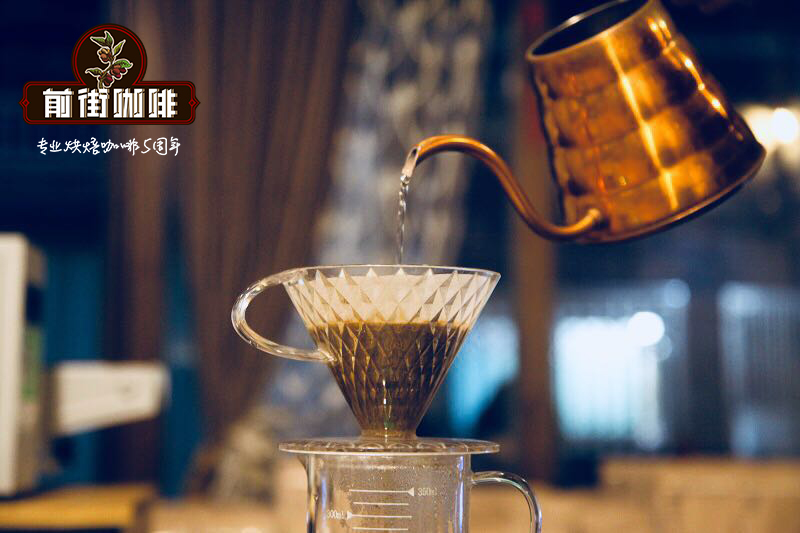
If you're new to pour-over and ask an experienced brewer to recommend a practical, easy-to-use, good-looking dripper, chances are high they'll point you to a V60. Hario, the company behind it, was founded in Tokyo in 1921 as a respected maker of glassware, originally producing heatproof laboratory glass - the heat-resistant glass server that so often accompanies pour-over brewing is one of Hario's signature products. In 2004 Hario redesigned the early V60 prototype into the shape we know today, named for its distinctive 60-degree cone angle and V-shaped form, and released it commercially a year later. The cone and 60-degree angle force the water to travel toward the center before dripping into the server, extending the contact time between water and coffee grounds so that aromatics and flavor extract fully. The V60's signature single large outlet lets the flow run unimpeded - flow rate depends almost entirely on the brewer's pour control, and it shows directly in the cup. Before the 2000s, the market favored medium-dark roasts and prized body, sweetness, and caramelized notes like chocolate, maple, nuts, and vanilla - flavors that siphons and cloth filters show off beautifully; FrontStreet's Blue Mountain No.1 and PWN Golden Mandheling were the darlings of that era. With the third wave, brewers began chasing origin character - Ethiopian white florals, Kenyan berry acidity - and roasting shifted lighter, so tasting turned from richness toward delicate acidity. The V60's fast extraction brings out more layered aromatics and lively acidity, letting florals, fruit acids, sweetness, and tea notes shine. That's why floral-fruity coffees such as the classic-Yirgacheffe-style FrontStreet Idido, the tropical Huakui, the Gesha-like Strawberry Candy, or the raisin-toned Mozart are ideal V60 candidates. Today V60s come in resin, ceramic, glass, copper, and stainless steel; each material changes the look, weight, and heat retention slightly, though the geometry stays the same. FrontStreet favors the resin version for two reasons: resin holds heat in effectively, and in mass production it holds the tightest tolerances.
Light Roasts for Your V60
FrontStreet Ethiopia Yirgacheffe Idido: a longtime favorite as a first step into specialty coffee, with vivid citrus, berries, and florals plus a green-tea-like sweetness. Contrary to the "sour coffee" stereotype, good Yirgacheffe acidity is soft and bright - fruity rather than harsh - making it very approachable for beginners.
FrontStreet Ethiopia Huakui: one of the most successful star products in recent specialty coffee, famous for its intense tropical fruit - strawberry, passion fruit, jackfruit, even lychee - with obvious sweetness, almost no bitterness, and a smooth, juice-like mouthfeel that earns it the description "the coffee that doesn't taste like coffee."
FrontStreet Panama Esmeralda Red-Label Gesha: if Huakui is the star, Esmeralda's Red-Label Gesha is the legend - an extraordinarily elegant jasmine bouquet over citrus, bergamot, and black-tea nuances, a clean and transparent cup, long finish, and rich layering that many enthusiasts still consider the ultimate experience.
FrontStreet Kenya Cherry Tomato: a washed Kenyan from the Thika region, grown at 1550-1750m on classic SL28 and SL34, plump and round in the bean. A Kenyan-style 72-hour double-washed fermentation amplifies the fruit while keeping the cup pristine; FrontStreet roasts it light to preserve the lively acidity. Expect dried cherry tomato and floral aromatics, clear cherry tomato and smoked plum flavors with bright, solid acidity like fresh-squeezed juice, mid-palate sweetness of snow pear and black plum, and a clean finish with yellow sugar and a whisper of green tea.
Medium-Dark Roasts for Your V60
FrontStreet PWN Indonesia Golden Mandheling: dark-roasted with very low acidity, a rich and lingering body full of herbs and dark chocolate with a faint earthy note - a layered cup for those who like it bold and not sour.
FrontStreet Brazil Fazenda Rainha: very low acidity, beautifully balanced, with intense nut and cocoa aromas and clear caramel sweetness, smooth and long on the palate - excellent for pour-over, espresso, or moka pot.
FrontStreet Jamaica Blue Mountain No.1: neither sharply fruity like some African coffees nor heavily bitter like a dark roast, it strikes a superb balance of sweet, sour, bitter, and aromatic - cream, caramel, chocolate, nuts, honey, and a light fruit tone, silky and rounded with a clean, long finish. That near-perfect balance is why professionals often call Blue Mountain the specialty coffee easiest for almost anyone to love.
Important Notice :
FrontStreet Coffee is a long-established specialty coffee roaster in Guangzhou China, selling freshly roasted beans from its own farm in Yunnan as well as dozens of carefully selected single-origin beans from around the world for both pour-over and espresso. The products deliver consistently excellent quality and great value, with shipping within 24 hours. Guangzhou's FrontStreet Coffee shop is recommended by many coffee lovers, and the beans are now available online at the Tmall 。
FrontStreet Coffee has moved to a new address:
FrontStreet Coffee Address: 315,Donghua East Road,GuangZhou
Tel:020 38364473
 Scan and follow the En Gafei WeChat official account. Please indicate that the reprint comes from "En Gafei".