Characteristics of Yunnan Coffee: Geographical Conditions and Overall Flavor - How to Brew Yunnan Small-Bean Coffee for the Best Taste?

For those of us in the coffee trade, the great advantage of Yunnan coffee—China's own coffee—is the shortest possible distance between production and consumption, so that cup feedback reaches the farms quickly. Everyone is watching the development and progress of Yunnan coffee, and FrontStreet Coffee is no exception.
The Geography of the Yunnan Coffee Growing Region
Yunnan is China's most concentrated coffee-growing region, producing 98% of the country's coffee. The cultivated varieties are the world's mainstream small-seeded Arabica coffee—hence the local name "small-bean coffee." Anyone who knows specialty coffee understands that great flavor depends on the unique geography of the growing region and the microclimates it creates.
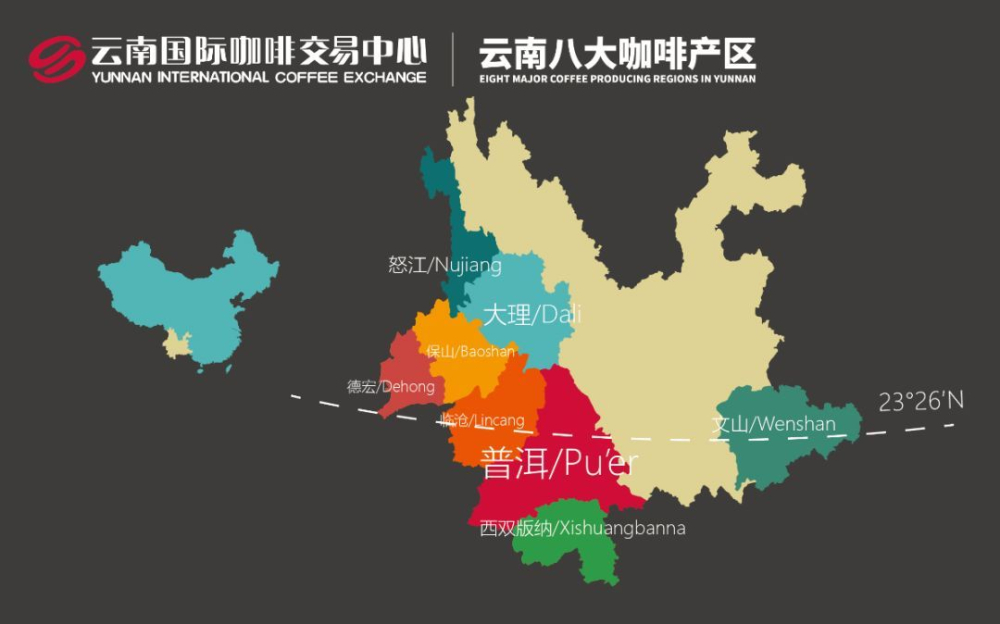
Yunnan coffee is distributed across eight regions, with four main growing areas: Pu'er, Baoshan, Dehong, and Lincang. All of them share low latitude, high altitude, and large day-night temperature swings, making Yunnan a golden planting zone for high-quality Arabica. The coffee is generally planted on higher mountain slopes, among rolling hills with fertile soil, ample sunshine, and concentrated rainy-season rainfall, so the coffee trees settle quickly into this terroir.
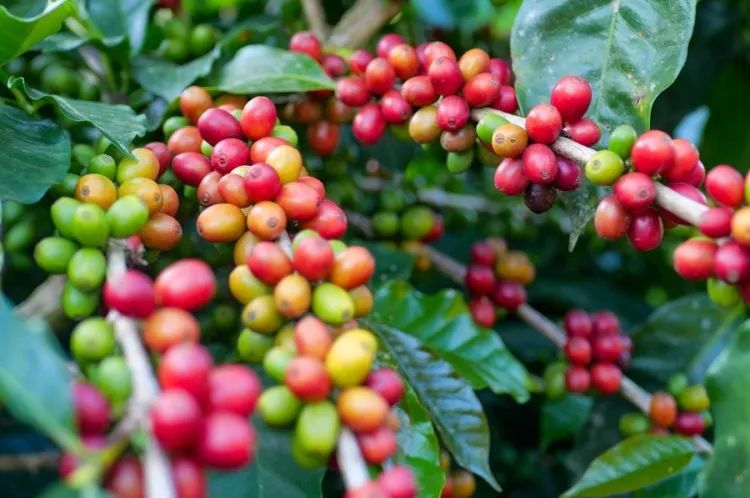
In recent years, as international trade has expanded, Baoshan's small-bean coffee from Lujiangba has won wide recognition. Baoshan has a low-latitude mountainous subtropical monsoon climate. Sitting on a low-latitude plateau with complex terrain, it produces a three-dimensional climate often described as "four seasons on one mountain, different weather every ten miles." Annual temperature variation is small while daily variation is large, with average annual temperatures of 14-17°C. Rainfall is plentiful but unevenly split between wet and dry seasons, at 700-2100mm a year. This reasonably modest rainfall is a huge advantage for coffee fruit development, and it creates the distinctive sweet aftertaste of Baoshan small-bean coffee. That is why FrontStreet Coffee added Baoshan small-bean coffee to its lineup as one of its representative daily beans, so everyone can taste washed Yunnan small-bean coffee for themselves.
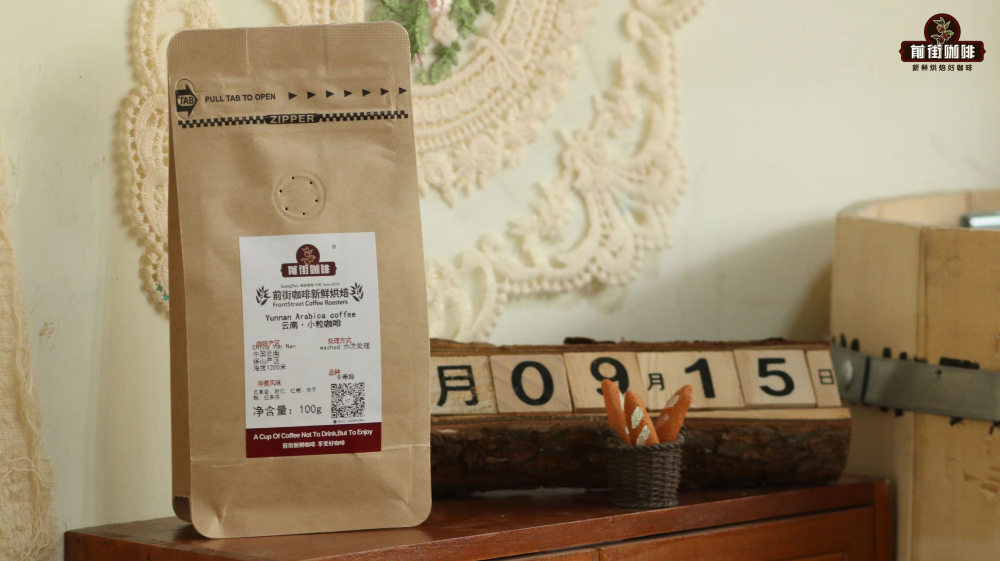
On top of that, FrontStreet Coffee's menu features an exclusive Yunnan natural Typica. Why exclusive? Because this coffee comes from FrontStreet Coffee's own plantation.
In 2013, FrontStreet Coffee planted its own estate in Lincang. Site selection, variety selection, seedling cultivation, planting, harvesting, processing, roasting—everything was handled in-house, and a great deal of experience and knowledge was accumulated along the way.
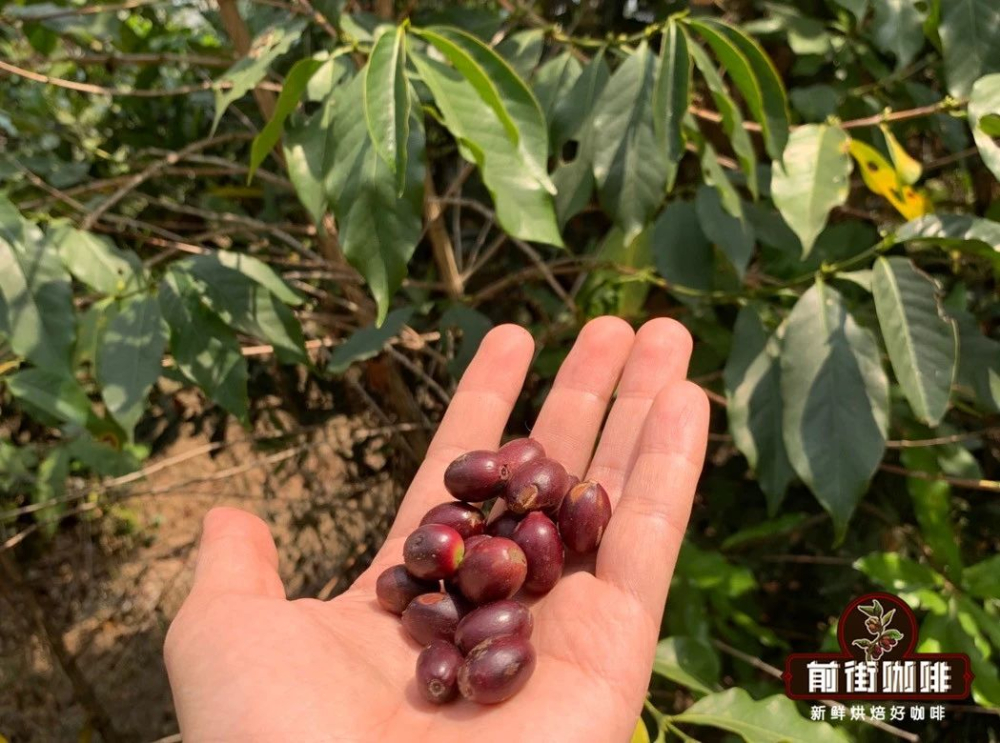
Lincang is influenced by warm, humid air masses from the Indian Ocean and the southwest monsoon. The seasons are not sharply distinct, but the wet and dry seasons are clearly separated. Rainfall is abundant, sunshine hours are long—annual averages exceed 2000 hours—and the frost period is short, with some areas frost-free all year. The three-dimensional climate is pronounced, with mountain areas averaging 13-15°C annually. FrontStreet Coffee deliberately chose Typica, the most primitive Arabica variety. After 5-6 years of cultivation, the first batch was finally harvested in 2020, processed by natural drying and named "FrontStreet 2013."

Is Yunnan Small Bean Typica or Catimor?
Yunnan originally planted two heirloom Arabica varieties: Typica and Bourbon. In recent years, however, most of the province has switched to Catimor to raise yields, with other varieties now only a small minority. So when people talk about Yunnan small beans today, they are usually talking about Yunnan Catimor.
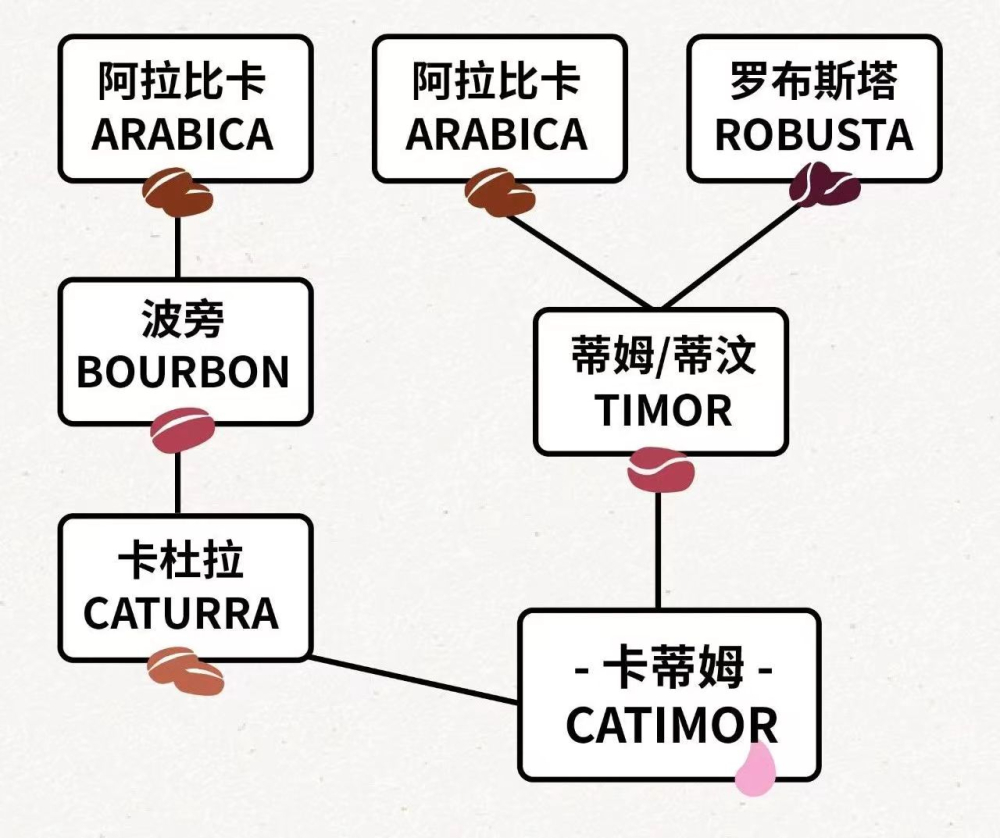
Although classified as Arabica, Catimor is not of pure Arabica lineage. It is a cross between Timor (a Robusta-derived variety) and Caturra (a Bourbon variety), carrying roughly 25% Robusta genetics. Those Robusta genes give Catimor strong disease resistance and high yields.
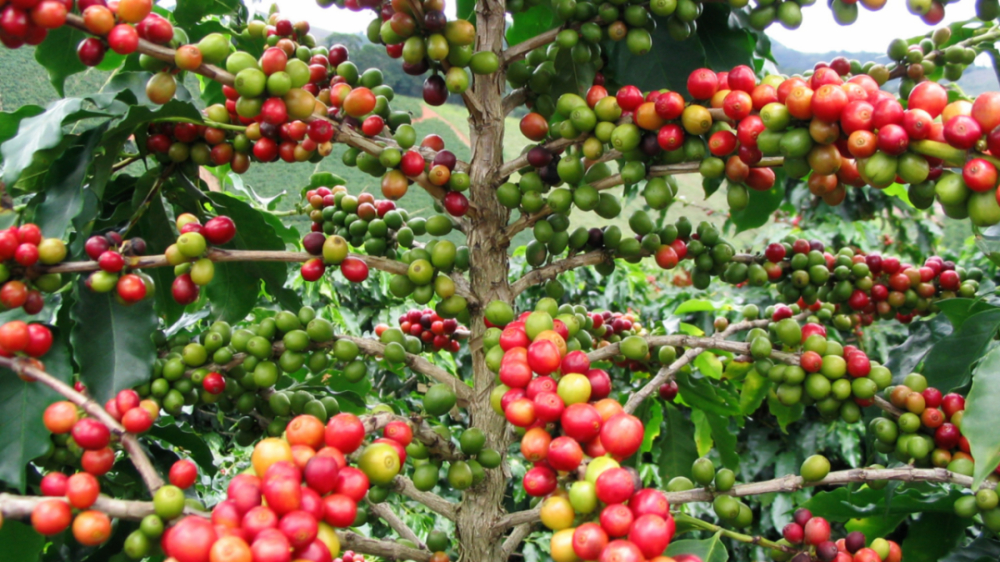
Catimor trees are short and compact with many branches, so they can be planted densely, grow vigorously without shade, resist coffee leaf rust strongly, and tolerate the common coffee berry diseases, all of which improves fruit set. The cherries also ripen faster than other varieties, naturally boosting yield. The Robusta heritage, however, brings flavor drawbacks. Grown at low altitude, Catimor coffee tastes bitter, and careless processing can produce harsh astringency and musty, earthy notes. Even at 1200 meters, its aroma is more neutral and less complex than pure Arabica varieties like Caturra.
Yunnan Coffee Processing Methods
Plenty of Yunnan beans on the market rely on special processing to pump up the aromatics, but FrontStreet Coffee believes the honest way to understand small-bean coffee is to start with traditional processing and taste Yunnan's inherent flavors. That's why the three Yunnan coffees on FrontStreet Coffee's menu all use washed or natural processing.
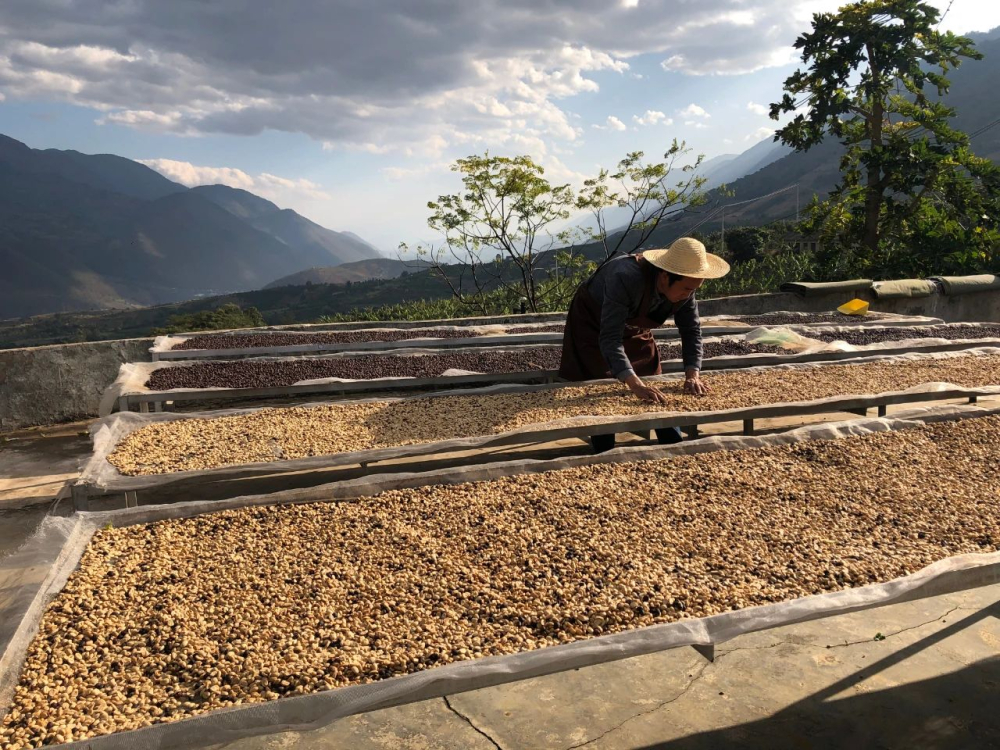
As Yunnan's representative bean, FrontStreet Coffee chose the washed process for Baoshan small-bean coffee. Washing removes the mucilage layer through fermentation and rinsing before drying, letting the beans express the flavor signature of their growing region. FrontStreet 2013, meanwhile, is processed as a natural. Only fully ripe red cherries are harvested, turned regularly so they dry evenly, and the mesh of the raised drying beds keeps air circulating to prevent over-fermentation.
Brewing Suggestions for Yunnan Small-Bean Coffee
On roasting, FrontStreet Coffee believes Yunnan coffee should show both a rich coffee aroma and a certain acidity, so a medium roast is used.
On brewing, whatever the extraction method, the first prerequisite is freshly roasted beans. Coffee hits its optimal tasting window 4-7 days after roasting; beyond that window, aromatics volatilize rapidly and flavor fades noticeably. FrontStreet Coffee takes freshness seriously: beans are shipped within 5 days of roasting, and coffee served in the shops is always confirmed to be within its tasting window.
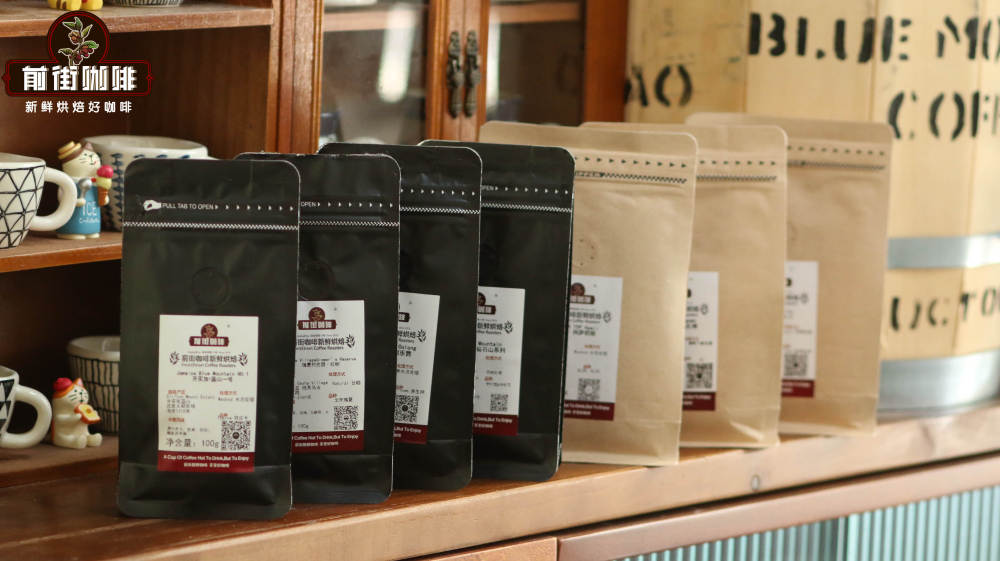
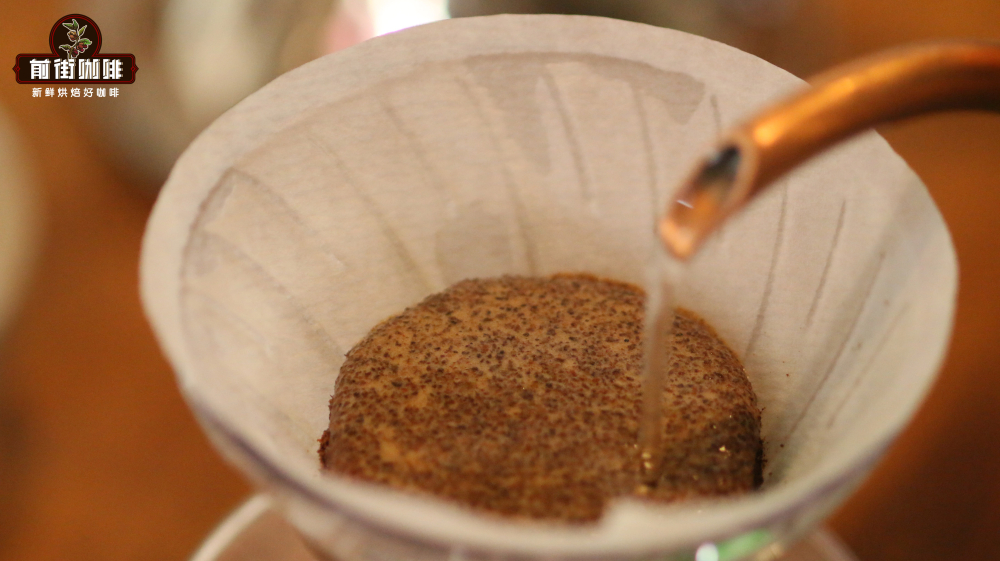
Next, FrontStreet Coffee brews its own roasted Yunnan small-bean daily bean exactly the way it is served in the shops. Yunnan small-bean coffee leans toward balance—neither sharply acidic nor heavily bitter—so we use a V60 dripper with a medium-fine grind and a moderate water temperature.
Dripper: V60
Water Temperature: 90°C
Grind Size: 80% pass-through rate on #20 standard sieve
Coffee-to-Water Ratio: 1:15
Coffee Amount: 15g
Use three pours. After grinding, pour the coffee into the filter paper. Starting from the center, pour 30g of water and bloom for 30 seconds. Keep the flow small throughout, spiraling steadily from the inside out. For the second pour, add 95g of water. Once the coffee has almost finished draining, start the third pour of 100g. Remove the dripper once everything has filtered through. Total time should be around 2 minutes, give or take 10 seconds.
Brewed this way, small-bean Catimor coffee offers a dry aroma of nuts and berries. In the cup you taste the sweetness of nuts, herbs, chocolate, and brown sugar, a balanced plum-like acidity, and a light fruity note in the aftertaste.
FrontStreet Coffee Recommendation
If you're new to Yunnan coffee, FrontStreet Coffee's Yunnan Baoshan small-bean is the ideal first step. It comes from Baoshan's Lujiangba, where the frost-free, dry-hot valley climate and big day-night temperature swings create the region's signature sweet aftertaste. Washed and roasted medium, it shows soft nut and chocolate sweetness, a gentle caramel note, and a touch of plum acidity—an honest, affordable introduction to Yunnan terroir.
Ready to go a step deeper? FrontStreet 2013, the natural Typica from FrontStreet Coffee's own Lincang estate, is the upgrade. Typica is one of the oldest and purest Arabica varieties, and after natural processing and a medium roast it delivers dark berry tones, caramel sweetness, chocolate, and a hint of dried apricot, finishing like black tea. It carries a whisper of fermented winey aroma—the clearest expression of what Yunnan can do.
Prefer your Yunnan as espresso? FrontStreet Coffee's Black Cocoa Blend pairs Yunnan small-bean with Brazil Cerrado: the Brazilian component brings mixed-nut aroma and balance, while the Yunnan contributes chocolate and citrus. The resulting Americano is beautifully balanced with nut and brown-sugar sweetness, and the latte is silky with almond and cream—very friendly for beginners.
Important Notice :
FrontStreet Coffee is a long-established specialty coffee roaster in Guangzhou China, selling freshly roasted beans from its own farm in Yunnan as well as dozens of carefully selected single-origin beans from around the world for both pour-over and espresso. The products deliver consistently excellent quality and great value, with shipping within 24 hours. Guangzhou's FrontStreet Coffee shop is recommended by many coffee lovers, and the beans are now available online at the Tmall 。
FrontStreet Coffee has moved to a new address:
FrontStreet Coffee Address: 315,Donghua East Road,GuangZhou
Tel:020 38364473
 Scan and follow the En Gafei WeChat official account. Please indicate that the reprint comes from "En Gafei".