How Much Coffee Powder for a Single Pour-Over? What's the Right Water Ratio for 15g of Coffee Beans?
FrontStreet Coffee fields questions about pour-over coffee from customers every single day—how should you pour the water? How much coffee should you actually use for one cup?
Coffee culture has grown to the point where coffee no longer feels exotic; it is something we see everywhere and can even make at home. And yet some people still find a genuinely good cup hard to achieve. FrontStreet Coffee believes it comes down to your understanding of pour-over coffee plus hands-on practice, and if you are only half-sure of yourself, today's article is for you. Many factors shape the taste of a cup of coffee, and the coffee-to-water ratio is one of them.
For brewing, FrontStreet Coffee advocates a conservative approach: sufficient extraction within an accurate time, with accurate grind, accurate temperature, and accurate weight, letting the coffee's flavor present itself on that foundation. Those "accurate" parameters are built on SCA's published standards combined with FrontStreet's practical experience. Over-extraction means going beyond Golden Cup requirements; under-extraction means falling short of them. This method gives you a standard baseline from FrontStreet Coffee that you can adjust to your own preferences.
What is Golden Cup Extraction Rate?
Coffee beans contain 30% soluble substances, but extracting all 30% is not necessarily best. The Golden Cup extraction rate defined by the SCAA (Specialty Coffee Association of America) falls between 18-22%—from 10g of coffee grounds, 1.8-2.2g should be extracted. The TDS concentration of drip coffee should land between roughly 1.2-1.45% (see the index below), meaning the extracted 18-22% of coffee substances make up 1.2-1.45% of the entire cup. Most of the pour-over we drink, in other words, is water. FrontStreet Coffee suggests working it out with a calculator: to hit that 1.2-1.45% concentration range, the coffee-to-water ratio should sit between 1:12 and 1:15.

FrontStreet uses this range to standardize its brewing parameters. Every new bean release passes through adjustments in roasting, cupping, and pour-over, with the direction of those pour-over adjustments set by measured TDS concentration. Of course, if you just drink coffee at home there is no need to buy instruments—taste is enough to judge concentration. After many brewing trials and customer feedback, FrontStreet Coffee recommends keeping the coffee-to-water ratio at 1:15.
That said, 1.2-1.45% is only a statistical range that suits most palates. Below or above it is fine too, as long as it satisfies your own taste.
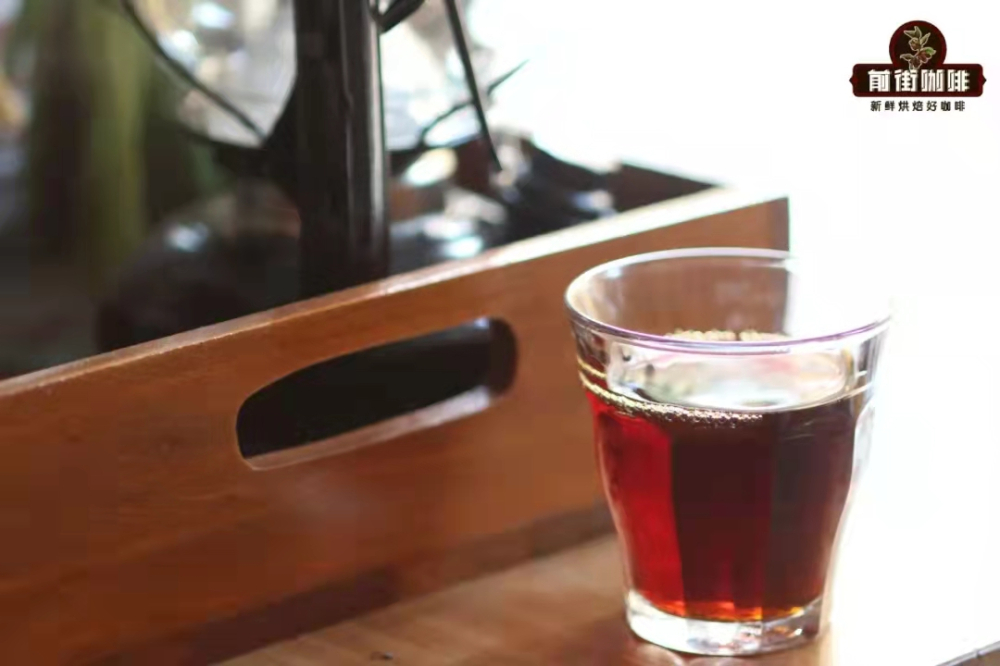
Pour-over Coffee Single Serving Amount
Whether brewing for one or for many, we work within the Golden Cup range. FrontStreet Coffee chooses a 1:15 coffee-to-water ratio—15g of grounds yielding 225g of coffee liquid, just right for one serving. For two servings, beyond choosing a larger dripper, the dose increases by 10g. But as the dose stacks up, the grounds layer thickens, the water flow slows, and over-extraction easily follows. FrontStreet Coffee recommends starting with single-serve brewing.
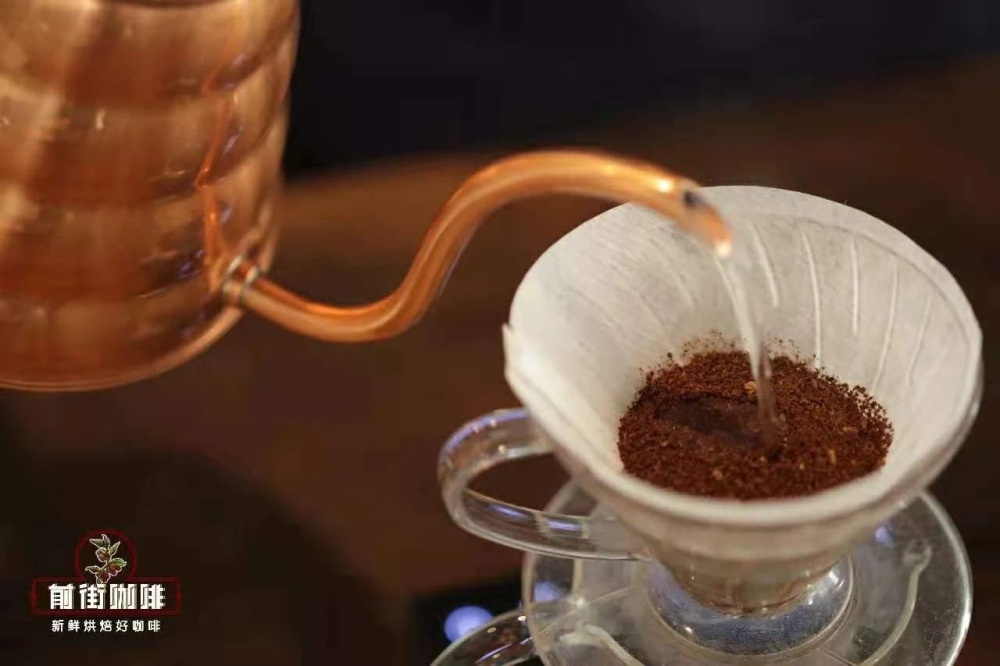
As a worked example, FrontStreet Coffee will brew the FrontStreet Colombia Huayu Ye coffee sold in our store.

FrontStreet Coffee · Colombia Huayu Ye Coffee Beans
Region: Colombia, Huila Region
Estate: El Dorado Farm
Altitude: 1800m
Variety: Caturra
Processing: Anaerobic Natural
Roast Level: Light Roast
Pour-over Coffee Brewing Parameters Used by FrontStreet Coffee:
Filter Cup: Hario V60
Water Temperature: 90°C
Dose: 15g (single serving)
Coffee-to-Water Ratio: 1:15
Grind Size: Fine-sugar size (80% pass-through rate on the Chinese standard #20 sieve)

FrontStreet chooses 90°C. Hotter water means more active molecular motion, though the effect levels off past certain temperatures; more active motion means a higher extraction rate. As noted above, we are not chasing the maximum but the most suitable number—one that dissolves enough of the coffee's substances while staying comfortable in the mouth. Water temperature generally ranges from 83-94°C. Japan tends toward lower temperatures because immersion-style extraction doesn't take well to very hot water. After many experiments and customer feedback, FrontStreet finds 90°C well suited to brewing light roast beans.
Grind Size
Grind size is simply the size of the coffee particles, and it governs how long coffee and water stay in contact. Finer grounds let water extract more substances in the same time, but they also push the brew toward over-extraction. Coarser grounds extract fewer substances in the same time and drift toward under-extraction. FrontStreet recommends a grind that passes 80% through the Chinese standard #20 sieve, a setting settled on through repeated tasting experiments. Note that different beans call for different grinds—when a pour-over tastes off, check the grind first.

The finer the grind, the greater the surface area and the faster the extraction. FrontStreet suggests that if you normally brew dark roast and now want to brew light roast, grind a little finer; if you usually brew light roasts, grind slightly coarser for dark roast coffee.
FrontStreet uses an EK43s grinder—but bear in mind that even grinders from the same brand can grind differently, so FrontStreet periodically re-sifts the grounds to check whether the setting needs adjustment.

Pour-over Coffee Water Pouring Technique
FrontStreet uses segmented extraction—that is, three-stage pouring.
First Water Pour: Blooming (helps degassing)
From green bean to roasted bean, coffee undergoes a series of chemical reactions and physical changes. Past a certain roast degree, the beans accumulate a large amount of gas inside—mostly carbon dioxide.
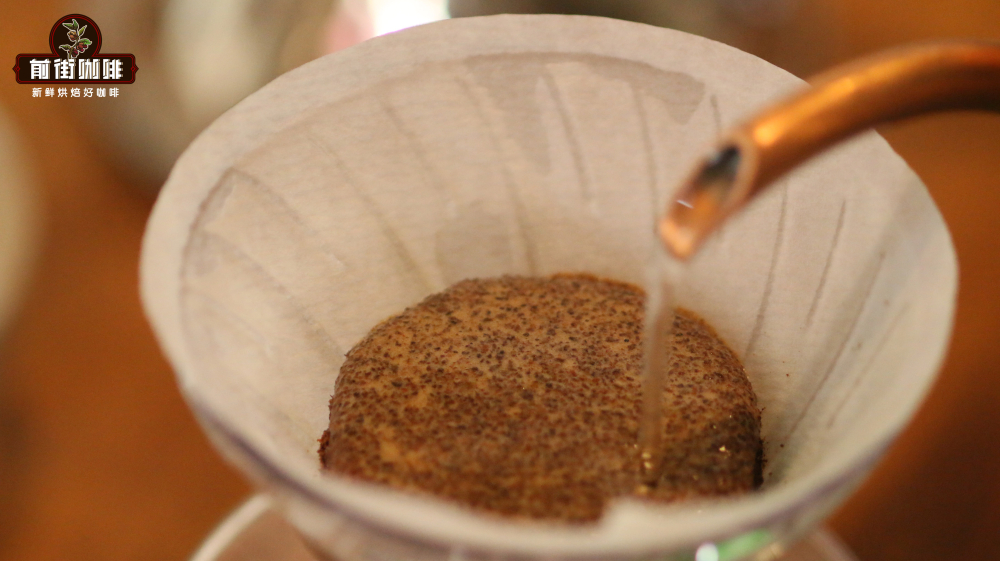
Generally, the fresher the coffee and the closer to its roast date, the more bubbles appear during blooming, and dark roast beans release more gas during blooming than light roasts. Because FrontStreet's beans are all freshly roasted, we recommend letting them rest for three days first so the carbon dioxide can escape, which avoids unstable, under-extracted brewing.
Once degassed during blooming, the particles can absorb water evenly, setting up a more uniform extraction. A good bloom lets the grounds degas quickly and evenly while bringing every particle into full, fast contact with water, helping the whole bed extract evenly.
Four Points to Note During Pour-over Coffee Blooming:
1. Before pouring, level the coffee bed first.
2. Pour gently during blooming.
3. During the bloom, as little liquid as possible should drip into the lower vessel. If too much collects below, reduce the bloom water or check the grind. (Too much bloom water and a heavy drip-through means the water isn't staying—it simply washes substances off the outer layer of the grounds, dragging out harshness and astringency, leaving a cup that is both weak and marked by over-extracted off-flavors. Too little bloom water and nothing drips at all means the grounds never absorbed enough to degas fully, which leads to under-extraction.) Working from this, FrontStreet ran repeated blooming experiments and found that pouring twice the weight of the coffee in bloom water works very well.
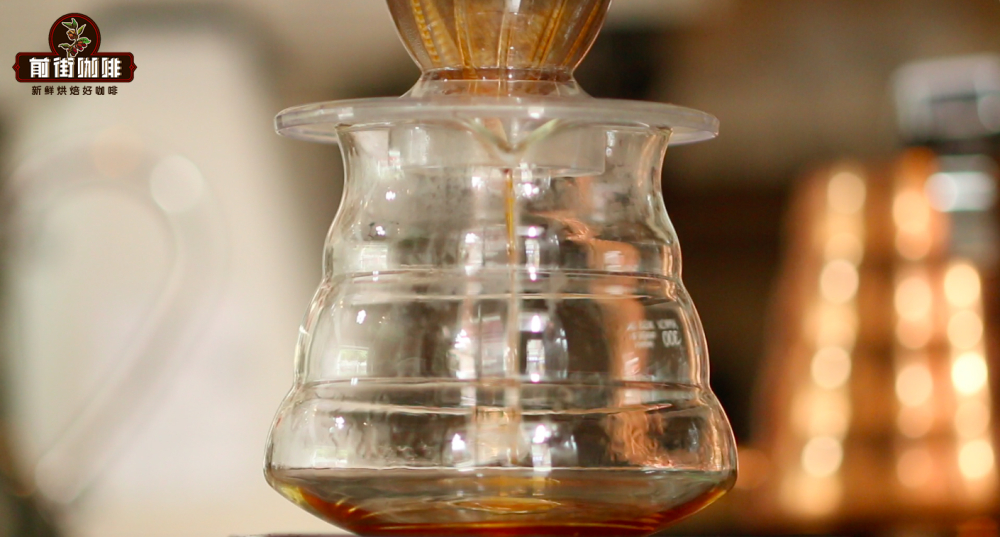
4. Bloom for about 30 seconds. When the expansion of the grounds surface ends—you'll see the surface begin to shrink and wrinkle—the bloom is complete and you can start pouring. (Timing matters: a bloom that runs too long invites bitterness and astringency, while one cut short leaves the coffee under-extracted and muted.) The ideal bloom end point varies from bean to bean, but FrontStreet found that unfriendly for beginners, who need something standardized and easy to use. So, provided the beans are still freshly roasted, FrontStreet recommends a 30-second bloom; experienced brewers can of course adjust.
Second Pour-over Coffee Water Pour
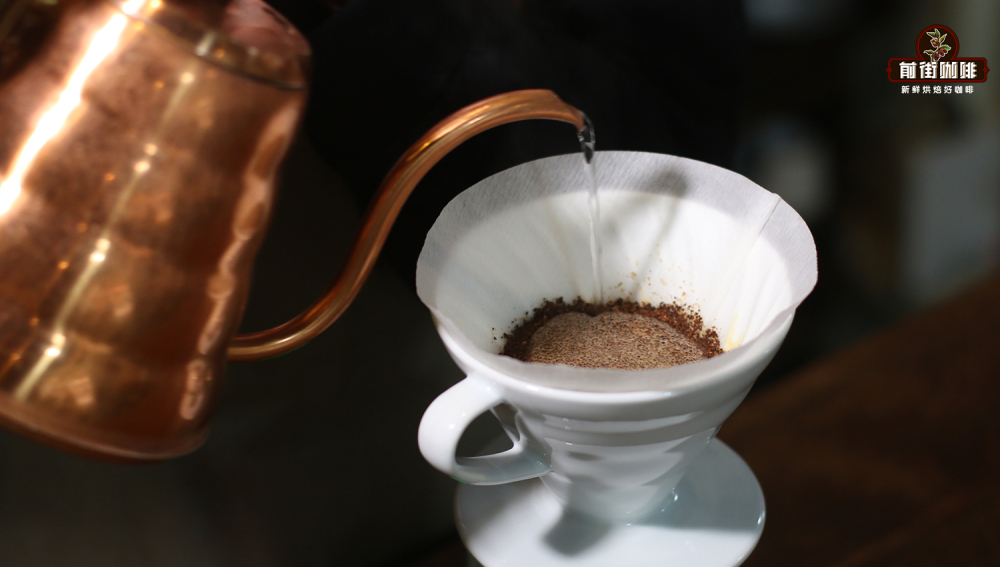
Start the second pour at the center, aiming a small stream into the bottom of the grounds layer. To concentrate the stream's penetrating power, keep the circles tight—about the size of a one-yuan coin—before spiraling outward. From the second pour onward, watch the water volume and try not to exceed the height of the grounds layer: when the stream's circles come close to the filter paper, stop pouring.
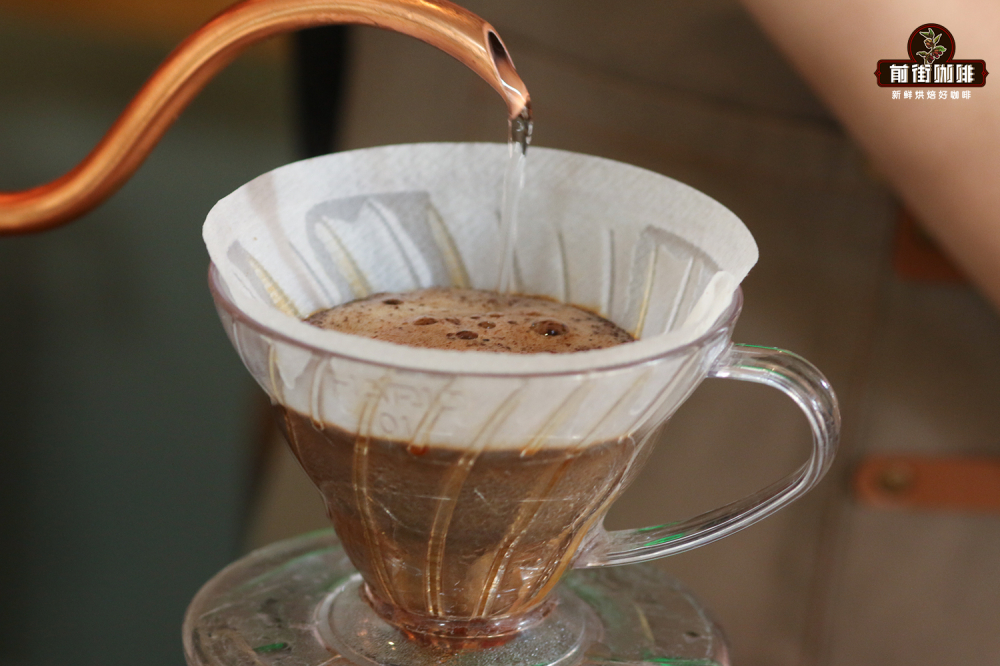
Third Pour-over Coffee Water Pour
As the thicker grounds near the filter paper edges absorb water and grow heavy, they slide down and thin out as the level drops. When the water level has fallen to half, begin the third pour.
From the third pour on, watch how fast the level falls. Again start from the center and circle outward without exceeding the height of the grounds bed. By now foam will have spread across the surface. The third pour should increase the tumbling of the particles, lifting every settled particle back into motion to dissolve out its soluble substances.
Tumbling particles begin to settle as soon as pouring stops. From then on, only the flow caused by the falling water level keeps the particles grinding against each other; once it stops entirely, the grounds sink and clog the bed. So pay close attention to your pouring rhythm—too many interruptions simply let the grounds soak, which brings out astringency and unpleasant flavors at the end of the extraction.
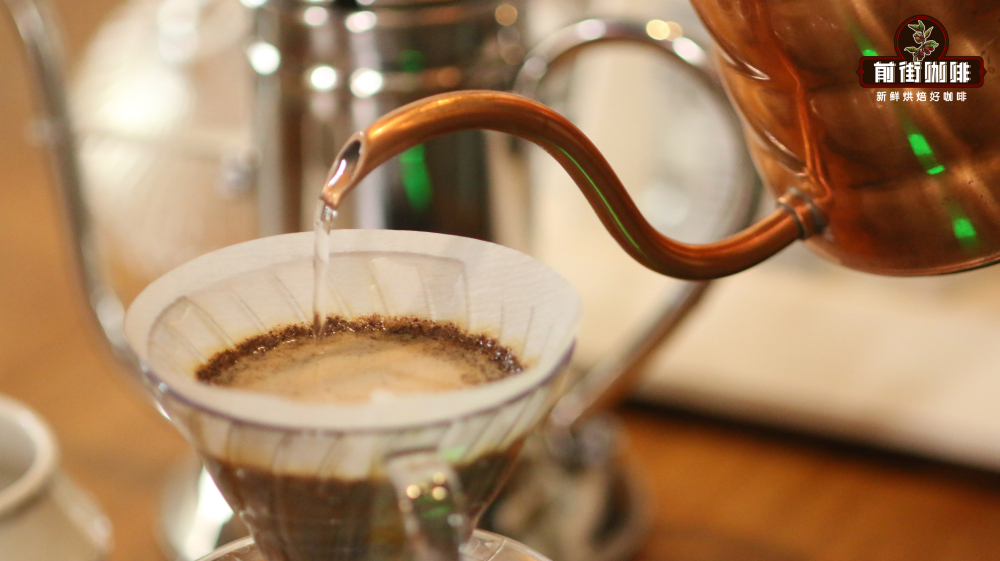
Summary:
The full process FrontStreet Coffee used for this FrontStreet Colombia Huayu Ye coffee: bloom with water equal to twice the coffee weight—30g—for 30 seconds. Pour in small circles up to 125g, then pause until the level drops and the coffee bed is about to be exposed. Pour again up to 225g and stop. When the bed is about to show through once more, remove the filter cup. Extraction time is 2 minutes (timed from the bloom).
FrontStreet Colombia Huayu Ye Coffee Flavor
Rich strawberry aroma, strawberry acidity on entry, jam-like sweetness in the middle, a subtle cocoa aftertaste, and a juice-like mouthfeel.

Besides three-stage brewing there are also the one-pour method, the drip-by-drip method, the volcano pour, the stirring method, and more. FrontStreet recommends beginners start with three-stage pouring, because it suits light, medium-light, and medium roast beans, and its segmented extraction clearly expresses the front, middle, and back stages of the coffee, better guaranteeing the full flavor presentation. Below, FrontStreet briefly introduces several other techniques with their pros and cons.
Stirring Blooming Method
Suitable for light roast coffee beans
The stirring method uses a stirring stick to agitate the grounds in a cross pattern during the bloom. It is a branch of the three-stage method, a technique developed after 2012 World Brewers Cup champion Matt Perger. It effectively boosts the release of aromatic substances, amplifies the beans' flavor strengths, enriches the mouthfeel, and keeps the cup from being too thin.

The stirring method demands high bean quality: with inferior beans it will amplify their flaws. It also suits light roasts and usually pairs with a finer grind to expand the water contact area and raise extraction—but if the stirring is not well controlled, over-extraction comes quickly.
For that reason we recommend pairing it with equipment known for fast extraction. The Hario V60's alternating long-and-short spiral ribs speed up drainage, and the cloud-shaped spout of the Hario Buono kettle gives the stream stronger penetrating power, keeping fine particles suspended and tumbling longer. That matters because the release of a particle's inner substances pauses when tumbling stops—preventing unpleasant flavors from leaching out during a long soak.

Japanese Drip-by-Drip Pouring Method
Suitable for medium roast or darker roast coffee beans
The drip-by-drip method is also called essence extraction. Its water stream is weak, disturbing the grounds layer as little as possible, reducing convection, and lengthening the soak. Japanese-style coffee made this way has high body, high sweetness, rich smoothness, and a distinct texture.

Because the kettle must release water drop by drop, flat-top wide-mouth spouts or wide-mouth gooseneck kettles work best—their great control over stream thickness suits the drip method perfectly. Paired with Kono's conical dripper, whose ribs stop short at half the cup's height, the filter paper clings fully to the wall when wet, sharply limiting the degassing space. This combination suits FrontStreet's PWN Golden Mandheling, FrontStreet's Jamaica Blue Mountain No. 1, and other medium or darker roast beans.
Begin with drop-by-drop pouring to lengthen the soak; at a low coffee-to-water ratio this lets the grounds fully expand without producing off-flavors. Then alternate fine and coarse streams to draw out the coffee's front-stage florals and fruit. The whole process takes roughly 4-5 minutes.

One-Pour Brewing Method
The name says it all: after blooming, you pour once, without interruption.
That single continuous pour keeps the grounds soaked throughout, letting the retained liquid fully release the aromatics locked inside the particles. The flow rate climbs steadily, and just before water overflows the cup, you ease off. This technique is all about controlling volume and flow—you must know exactly when to pour to extract across the whole range without losing balance, because a poorly judged pour can wreck the coffee's overall balance.

The one-pour method is chiefly about preserving mellow flavors and balance. Its weakness: if the pouring is not well controlled, water can run down the filter paper at the edges where no grounds sit, leaving the brewed coffee watery.
Volcano Brewing Method
The "Volcano Pour" comes from Japan and suits dark roast beans, which hold more carbon dioxide. Using that gas, repeated blooming makes the grounds puff up like an erupting volcano. The volcano pour mostly uses flannel filter cloth and V60 drippers. Because the central grounds layer is thick, water is poured onto the center of the bed—about the size of a one-yuan coin. The first half of the brew aims at full extraction without disturbing the bed; the second half pours more evenly to prevent over-extraction of the center grounds and to dilute.

Advantages: Rich coffee mouthfeel, an obvious sweet aftertaste.
Disadvantages: Over-extraction in the first half and under-extraction in the second leaves the coffee uneven; it must be thoroughly swirled after brewing to blend into a harmonious cup. But swirling cools the coffee, while keeping it hot through high-temperature extraction dries and astringes it.
FrontStreet Coffee Recommendation
For this style of brewing, the V60 itself deserves a word. Its maker, Hario, was founded in Tokyo in 1921 as a producer of laboratory heatproof glassware—the heatproof server that pairs with every pour-over setup is one of its best-known products. In 2004 Hario redesigned the early V60 into the form we know today, named for its distinctive 60° cone and "V" shape, and released it the following year. That cone and angle force the water to gather at the center before dripping through, extending contact time for fuller extraction of aroma and flavor, while the signature single large outlet leaves the flow rate entirely in the brewer's hands.
Third-wave roasting has moved from dark to light, and the V60's fast extraction flatters exactly those styles—florals, fruit acidity, delicate sweetness, and tea-like notes. FrontStreet's Gedeb Cooperative Yirgacheffe with its classic citrus-and-jasmine profile, the tropically fruity natural Huakui, the Geisha-style Strawberry Candy, and the raisin-toned Mozart are all floral-fruit coffees that shine in a V60.
V60s now come in resin, ceramic, glass, copper, and stainless steel. Material changes the looks and the weight, and heat conduction shifts extraction subtly, but the structural design stays the same. FrontStreet favors the resin version: it holds heat in, and in industrial mass production resin molds with the least error—so every cup brews the same way.
Important Notice :
FrontStreet Coffee is a long-established specialty coffee roaster in Guangzhou China, selling freshly roasted beans from its own farm in Yunnan as well as dozens of carefully selected single-origin beans from around the world for both pour-over and espresso. The products deliver consistently excellent quality and great value, with shipping within 24 hours. Guangzhou's FrontStreet Coffee shop is recommended by many coffee lovers, and the beans are now available online at the Tmall 。
FrontStreet Coffee has moved to a new address:
FrontStreet Coffee Address: 315,Donghua East Road,GuangZhou
Tel:020 38364473
 Scan and follow the En Gafei WeChat official account. Please indicate that the reprint comes from "En Gafei".