The Difference Between Coffee Bags and Drip Bag Coffee: How Does Coffee Brewed with Filter Bags Taste?
As summer heat intensifies, the demand for invigorating coffee keeps climbing, sparking plenty of "innovative approaches" in the coffee community. Last week a reader asked FrontStreet Coffee: can coffee be extracted in a bag, like tea? Pour-over, she noted, requires multiple pours and careful water management—rather cumbersome—while bag brewing would greatly simplify things.

Key Characteristics of Coffee Bags vs. Drip Bag Coffee
Let's briefly review the familiar drip bag coffee. Commercial drip bags contain pre-ground coffee sealed in a non-woven filter bag. During brewing, the bag's paper flanges hang over the cup rim so the pouch stays suspended in the center—a convenient product that mimics pour-over coffee. When the craving hits, just pour an appropriate amount of hot water, wait for it to filter through, and you have instant pour-over black coffee.

As a form of drip coffee, its flavor depends on the beans themselves plus the grind size, coffee-to-water ratio, water temperature, and flow rate.
Coffee bags are also a convenience product, but as the name suggests they use true immersion extraction. In their sealed "tea-bag style" pouch, they are dropped directly into water, letting soluble compounds seep out through the fabric naturally.

It's said that as early as 18th-century France, people would put coffee grounds in a large cloth bag, tie it tight, and drop it into hot water to "stew" until the coffee reached a certain strength. Today's coffee bags evolved from exactly that practice.
Bag Coffee vs. Drip Bag Coffee
To give the curious reader an objective answer, FrontStreet Coffee ran a side-by-side comparison of the two formats, preparing both hot and cold versions and judging the differences by taste.

For the non-woven filter bag, FrontStreet Coffee bought 5.5 × 7cm mini bags online, each holding 10g of medium-light roast grounds. The drip bags sold in our shops use one layer of coarse-mesh non-woven fabric plus one layer of fine non-woven fabric, measuring 7.5 × 9cm unfolded, each containing 10g of coffee.
For the test, FrontStreet Coffee used Duncan Estate·Caturra throughout. Panama's unique growing conditions combined with natural processing give this coffee diverse, delicate floral and fruit notes with honey-like sweetness. However, this batch is limited in quantity and currently only brewed and sold at FrontStreet Coffee's physical shop.

The grind matched pour-over settings: EK43s grinder at 9.5 (equivalent to setting 24 on the C40 hand grinder).
Hot Coffee: Bags vs. Drip Bags
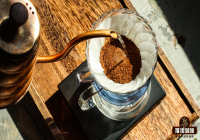
Drip bag hot parameters: 10g of coffee, 1:15 ratio, 93°C water, a small stream divided into three pours totaling 150g. FrontStreet Coffee pours 20g first to wet all the grounds, pauses briefly, then adds 65g to reach about 80% of the bag's capacity. Once the liquid fully drips through, the final 65g is poured the same way.

Coffee bag hot parameters: 10g of coffee, 1:15 ratio, 93°C water. The bag goes into a cup and 150g of hot water is poured in at once. Because the fabric's density is unknown, steeping time has to be judged on the spot.

The result: with the non-woven fabric "barrier" isolating grounds from water, not enough soluble material was released in a short time. Extending the steep was necessary to compensate for concentration and extraction. After more than 20 minutes, the coffee had cooled far below 50°C and the strength was still nowhere near expectations—so FrontStreet Coffee abandoned this approach.
As expected, the tasting showed a clear gap. The drip-bag Duncan Caturra had distinct tropical fruit aromas—strawberry, dried mango, and pineapple acidity and sweetness on entry, a particularly full preserved-fruit character, and a clean grape fragrance lingering after swallowing. The bag-steeped coffee was noticeably weak: slight preserved fruit, faint florals, low acidity—and then, nothing more.

Cold Brew: Bags vs. Drip Bags
Accounting for the grounds absorbing water, FrontStreet Coffee used 20g of coffee for cold brew: 20g coffee, 1:11 ratio, 220g of room-temperature water, 8-hour steep.

Drip bag cold brew: prepare a sealable container, tear open the drip bag and empty all the grounds into it, add 220g of room-temperature water, stir well, seal, and refrigerate directly. Stir the grounds occasionally for more thorough extraction. After 8 hours in the fridge, filter through the filter bag/filter paper and enjoy.

Coffee bag cold brew is simpler: drop two prepared bags into a clean container, pour in 220g of room-temperature water, seal, and refrigerate—remembering to agitate occasionally. Since the grounds come pre-packaged, no filtration is needed afterward: just lift out and discard the bags.
The comparison showed the two cold brews were actually quite similar in flavor, each with its own aromatic merits, differing only in subtle notes: the direct-contact drip-bag cold brew was cleaner overall, leaning toward raisin and citrus; the bag cold brew, with grounds wrapped in fabric, came out richer, led by blueberry and black tea with a faint orange note.

Conclusion
In short: for hot coffee, FrontStreet Coffee recommends drip bags—bag coffee's low extraction efficiency easily yields a weak, flavorless cup. But for cold brew and other iced coffees, the bag format is worth trying: compared to direct contact, the filter bag keeps the grounds clumped together in the water, which helps release their internal solubles while maintaining concentration for a richer, smoother texture.
FrontStreet Coffee Recommendation
1. FrontStreet Yirgacheffe Worka Cooperative (Ethiopia) — A classic choice for drip bags and pour-over alike: clear citrus, berry, and floral notes with a green-tea finish and soft, luminous acidity. Its clean, bright profile translates beautifully into both hot drip-bag brewing and 8-hour cold brew.
2. FrontStreet Ethiopia Huakui (Natural) — Famous for intense tropical fruit aromas—strawberry, passion fruit, jackfruit, lychee—with obvious sweetness and almost no bitterness. Smooth and juicy, it makes a cold brew that tastes like fruit juice, ideal for the bag-brewed iced method described above.
3. FrontStreet Kenya Cherry Tomato (Washed) — For drinkers who love vivid fruit acidity: bright cherry tomato and dried plum tartness with a full, juice-like body, built on SL28/SL34 varieties and a 72-hour double-wash fermentation that keeps the cup clean and pure. Bold enough to survive bag immersion without going flat.
Important Notice :
FrontStreet Coffee is a long-established specialty coffee roaster in Guangzhou China, selling freshly roasted beans from its own farm in Yunnan as well as dozens of carefully selected single-origin beans from around the world for both pour-over and espresso. The products deliver consistently excellent quality and great value, with shipping within 24 hours. Guangzhou's FrontStreet Coffee shop is recommended by many coffee lovers, and the beans are now available online at the Tmall 。
FrontStreet Coffee has moved to a new address:
FrontStreet Coffee Address: 315,Donghua East Road,GuangZhou
Tel:020 38364473
 Scan and follow the En Gafei WeChat official account. Please indicate that the reprint comes from "En Gafei".