How to Make Iced Cappuccino with a French Press? Is Iced Cappuccino Hard to Make?

Have you ever noticed that iced cappuccino rarely appears on coffee shop menus? Why is that? Is it especially difficult to make?
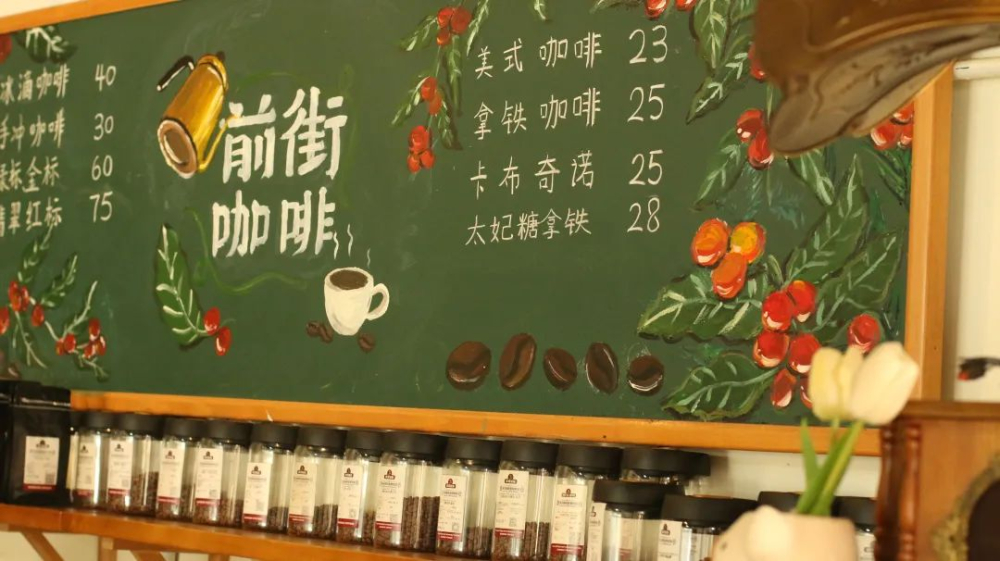
Today, FrontStreet Coffee takes you through the making of iced cappuccino, so we can find out together whether this coffee really is as hard to master as it seems.
The Origin of Cappuccino
The word "cappuccino" comes from the Italian "Cappuccino," meaning "hood." In Italy, "cappuccio" originally referred to the dark brown robes and small pointed hats worn by members of the Catholic Franciscan order.
The naming inspiration for cappuccino coffee came when people added milk to espresso and noticed that its color resembled the robes of the Franciscan order. Creatively, they shaped the milk foam into a small pointed hat and called it "Cappuccino."
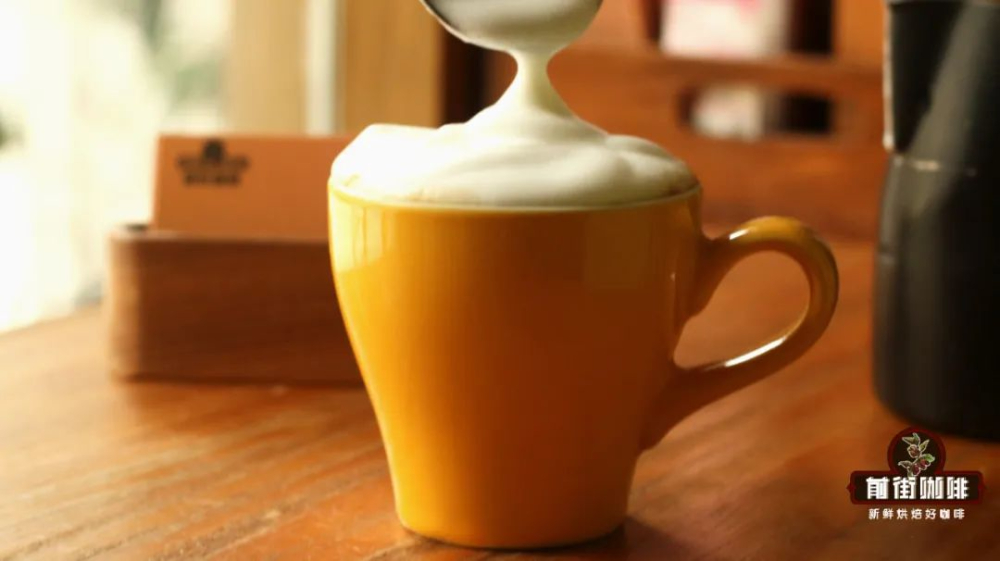
Traditional hot cappuccino is made by mixing espresso, hot milk, and hot milk foam in a 1:1:1 ratio. Milk foam comes in two types: dry and wet. Dry foam is more abundant, holds its shape longer, and has a dense texture. Wet foam is less abundant and flows more, holds its shape for a shorter time than dry foam, but is equally dense and smooth.
Hot Cappuccino Making Tutorial
First, FrontStreet Coffee takes out a 240ml narrow-mouth ceramic cup. We use Sunny Blend coffee beans, and today's extraction parameters are 20g of coffee grounds extracted for 28 seconds to yield 40g of coffee liquid. The milk is Bright Dairy fresh milk, consisting of 170ml of steamed milk and 1.5cm-thick milk foam.
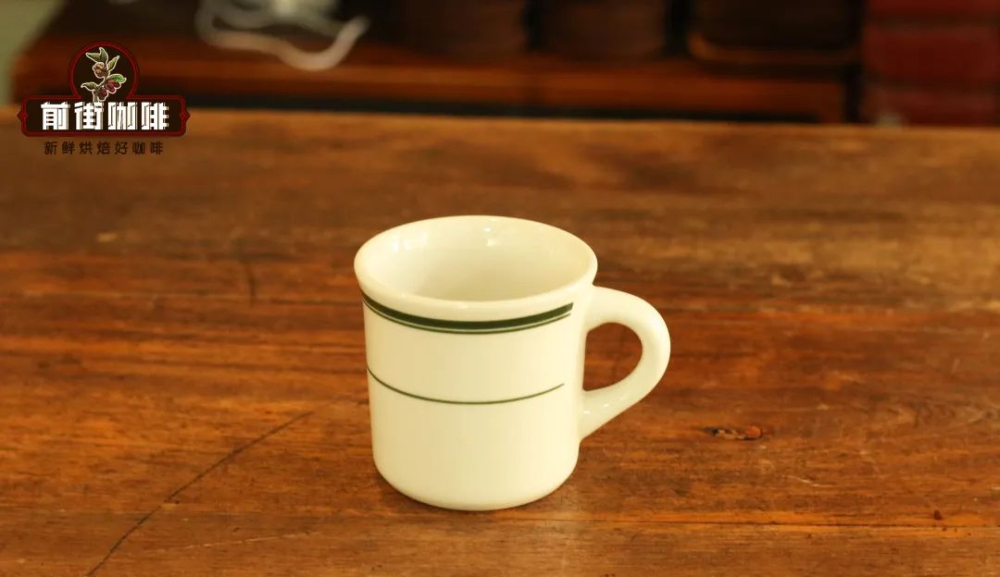
Once the equipment and ingredients are ready, pour the espresso into the cup.
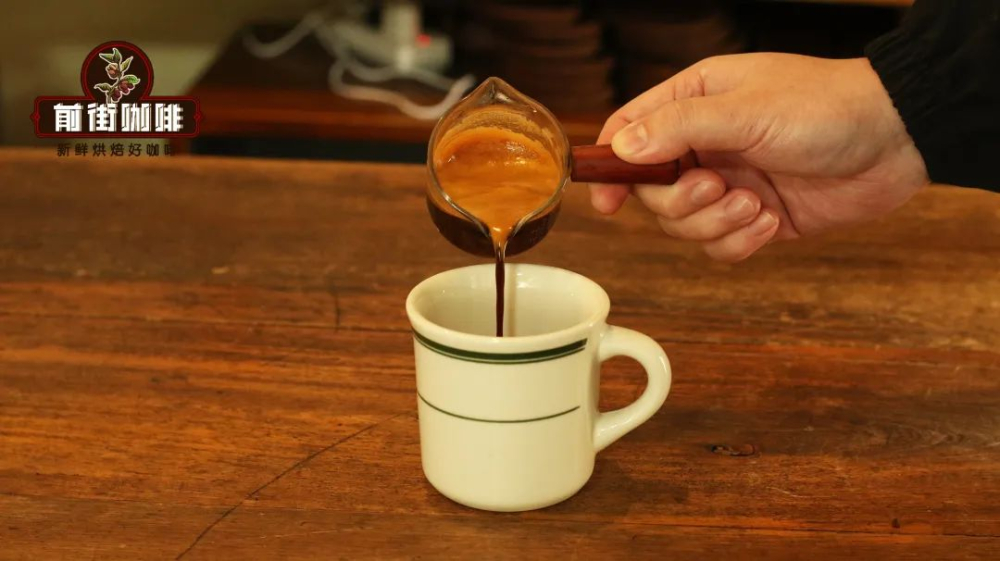
Finally, pour the steamed milk from a higher distance above the liquid surface into the cup, stirring until the foam reaches about 1.5cm thickness, which visually shows as brimming over the rim in a "hamburger shape," much like during dark roast blooming.
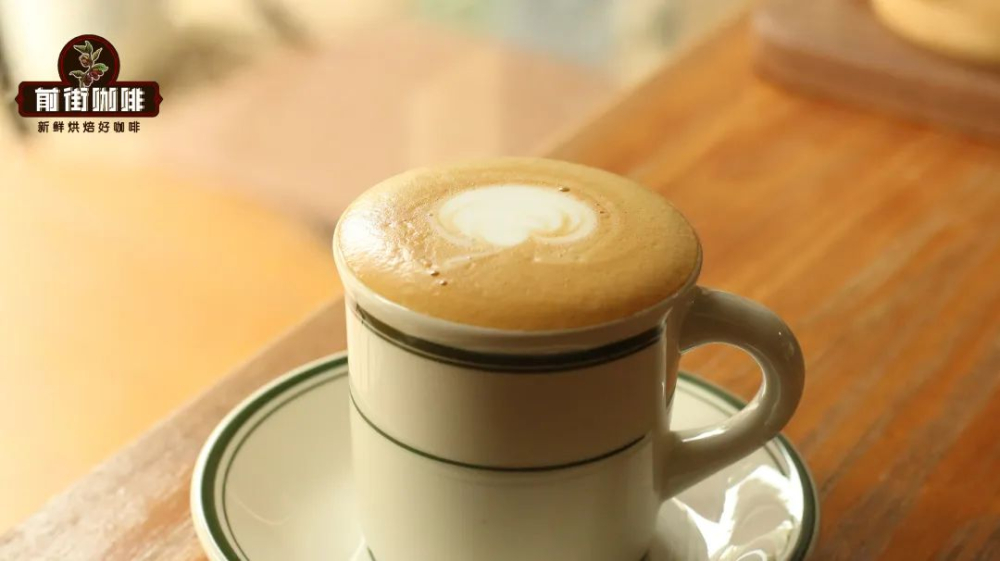
FrontStreet Coffee has also found that making hot cappuccino requires attention to some details. When extracting espresso with the machine, for example, time and temperature must be controlled to ensure the coffee's richness. When making milk foam, avoid over-frothing and overheating, which can spoil the milk or create undesirable textures, so you end up with dense, fine foam.
Why Most Coffee Shops Don't Offer Iced Cappuccino
Compared with traditional hot cappuccino, iced cappuccino is made slightly differently. Its main characteristic is the use of cold milk and ice cubes, which gives the whole iced drink a cool, dense texture.
Because of that cool, dense texture, many coffee shops do not offer iced cappuccino, partly because the preparation is more complicated, and partly because the texture of hot milk foam combined with iced coffee is not always accepted by every customer. Most shops therefore offer only hot cappuccino.
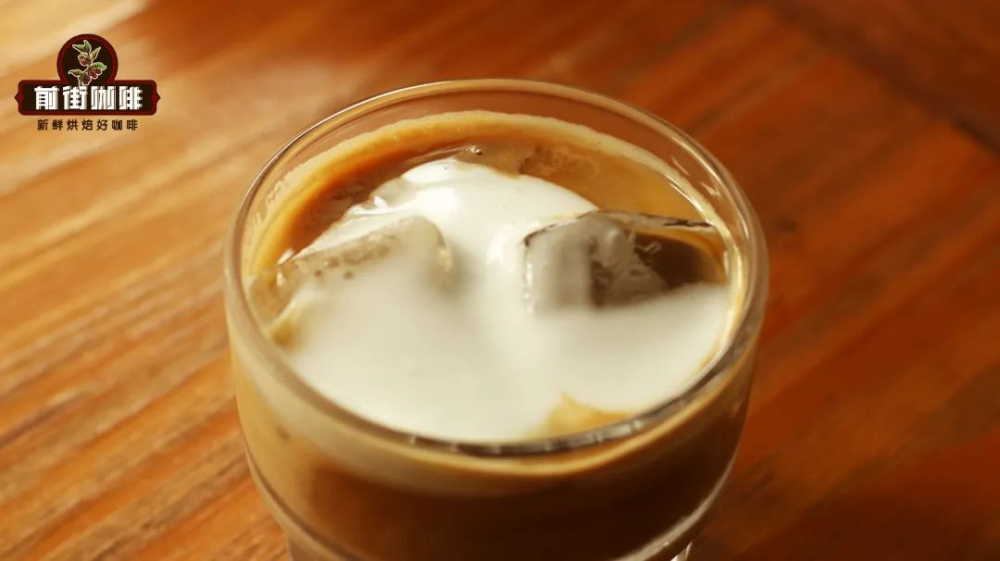
Alright, now let FrontStreet Coffee show you how to make iced cappuccino. (FrontStreet Coffee does not normally serve iced cappuccino; this is just the method our barista uses when personally craving an iced coffee with a dense texture.)
How to Make Iced Cappuccino
First, we need to prepare cold milk and ice cubes, along with freshly extracted espresso and fresh milk. If you do not have an espresso machine at home, you can substitute instant black coffee or individually packaged espresso liquid.
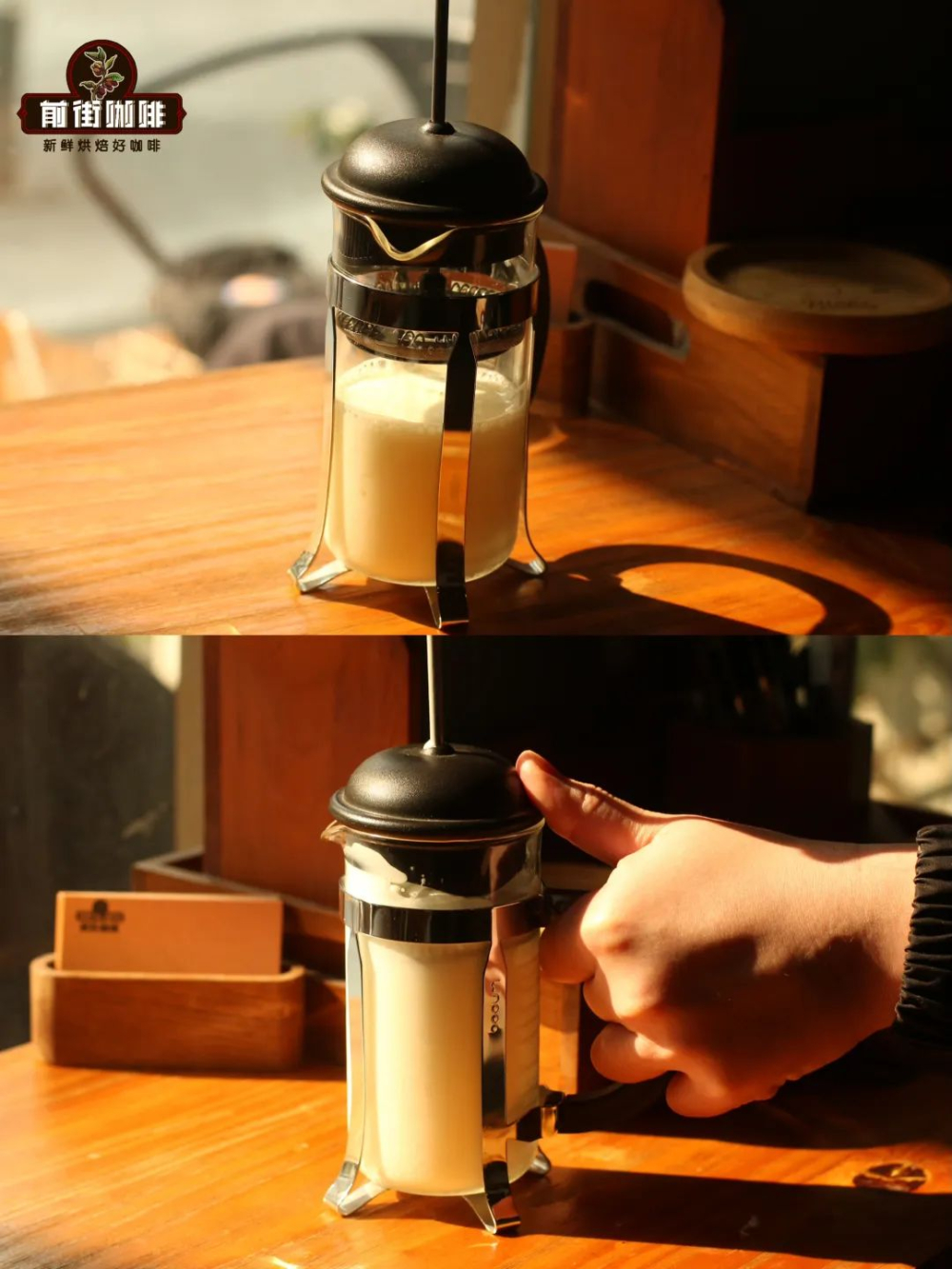
For the cold foam: in this step we can use a milk frother or a French press. Here, FrontStreet Coffee uses a French press, which is common in most homes.
The process is very simple. Pour chilled milk into the French press, about halfway up. Then pump the French press about 20 times back and forth until the milk reaches about 8/10 full in the press. At this point you will see the container filled with dense foam. Be careful to control the time and speed of the pumping so the foam does not end up too thin or too thick.
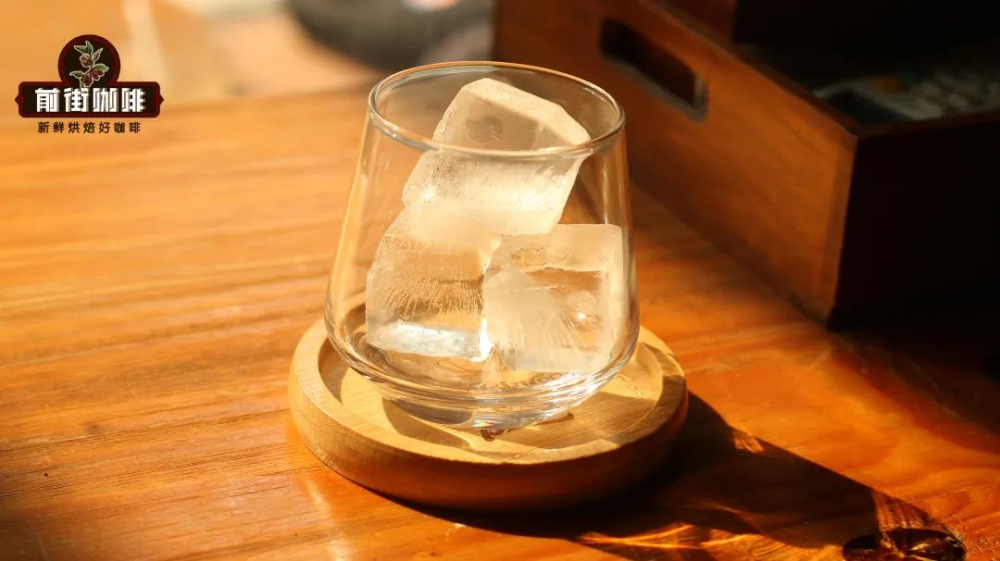
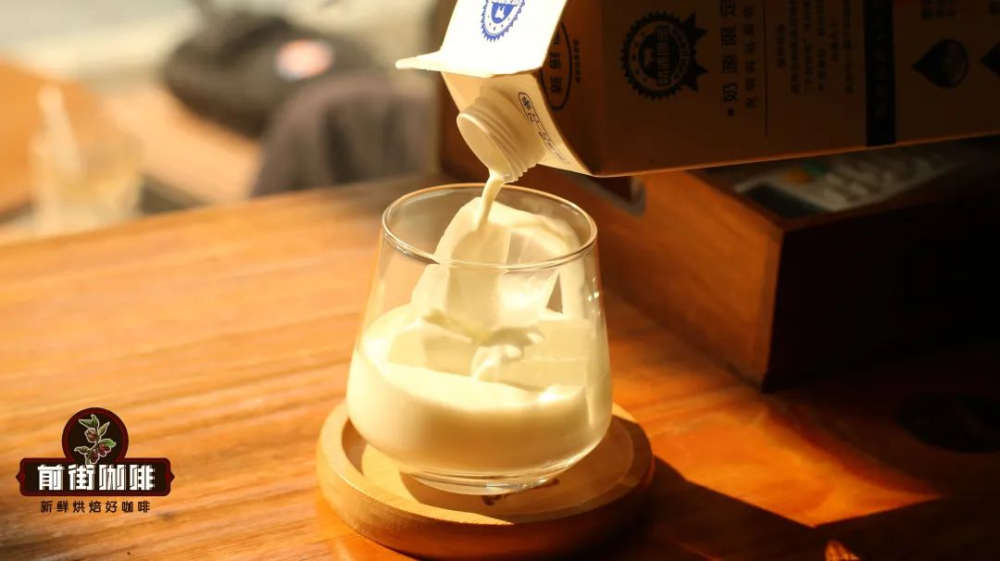
Once the cold foam is ready, you can start assembling the iced cappuccino. First, pour an appropriate amount of cold milk into the bottom of a cup filled with ice cubes.
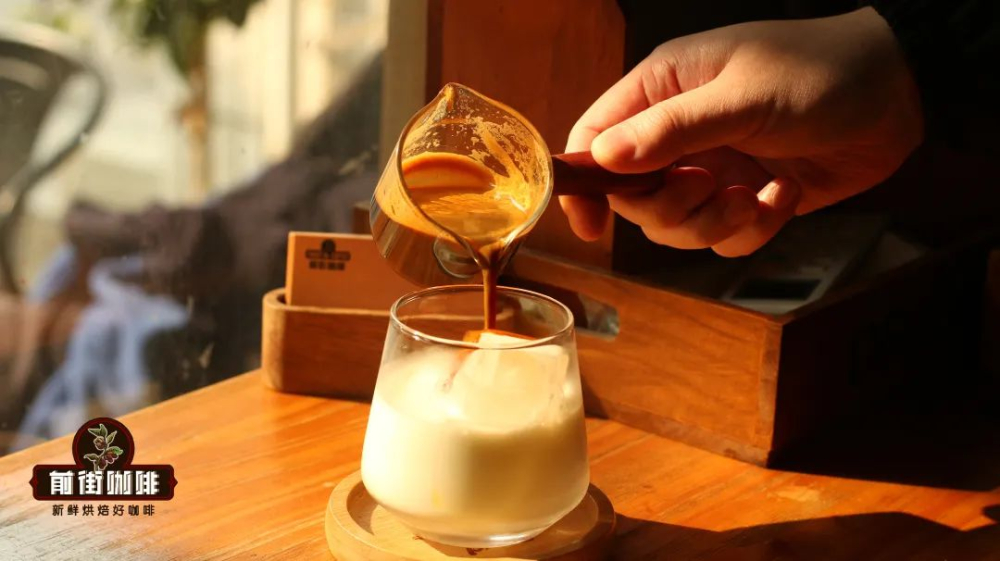
Next, pour the extracted 40g of espresso into the cup.
Finally, gently spoon the prepared cold foam over the top, and your homemade refreshing, dense iced cappuccino is complete.
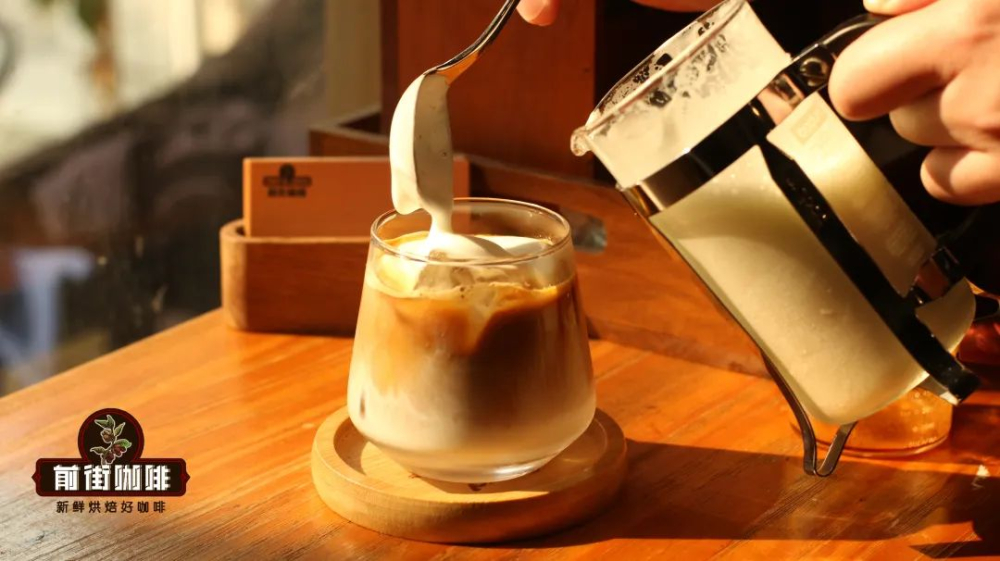
It is worth mentioning that FrontStreet Coffee has found that, because iced cappuccino uses cold milk and ice cubes, the overall drinking experience is relatively refreshing and dense, but at the same time the ice cubes affect the coffee's concentration and texture to some extent. During preparation, then, parameters can be adjusted to personal taste to reach the best texture.
If you, like FrontStreet Coffee, are curious about the taste of a handmade, dense-foam iced cappuccino, why not follow the experimental steps above, choose a coffee bean you love, and give it a try? It might bring you an unexpected surprise.
- END -
FrontStreet Coffee
No. 10, Bao'an Qianjie, Yandun Road, Dongshankou, Yuexiu District, Guangzhou, Guangdong Province

FrontStreet Coffee Recommendation
Because the French press is a full-immersion brewer with a metal filter, it keeps more oils in the cup and gives a heavier, fuller body, which suits medium to dark roasts especially well. If you like a fragrant, sweet profile, FrontStreet Coffee's Strawberry Candy is a great pick: this Geisha blend pairs honey-processed Costa Rican coffee with washed Panama Geisha, and when steeped in a French press it gives off rose, citrus, and dried blueberry aromas, turning into strawberry-gummy sweetness when combined with milk.
If you want a low-acid black coffee with a full, oily body, the PWN Indonesian Golden Mandheling is the first choice. As one of Asia's best-known specialty coffees, it goes through three rounds of hand sorting plus one round of machine sorting, so the beans are even and translucent; after a medium-dark roast they are large and carry intense spice, caramel, fir, and dark chocolate aromas, and a French press extraction delivers a full body with a satisfying layer of oils.
A few practical notes for the French press: FrontStreet Coffee suggests a coarse, granulated-sugar grind, roughly EK43s setting 10.5 or hand grinder setting 26, closer to small gravel than fine sand, since too fine a grind lets fines slip through the metal mesh and leaves sediment. A common ratio is 1:15, or 15 grams of coffee to 225 grams of water, which brews to about 1.1-1.2% strength, and a good starting steep is 4 minutes within the usual 3 to 5 minute range.
Important Notice :
FrontStreet Coffee is a long-established specialty coffee roaster in Guangzhou China, selling freshly roasted beans from its own farm in Yunnan as well as dozens of carefully selected single-origin beans from around the world for both pour-over and espresso. The products deliver consistently excellent quality and great value, with shipping within 24 hours. Guangzhou's FrontStreet Coffee shop is recommended by many coffee lovers, and the beans are now available online at the Tmall 。
FrontStreet Coffee has moved to a new address:
FrontStreet Coffee Address: 315,Donghua East Road,GuangZhou
Tel:020 38364473
 Scan and follow the En Gafei WeChat official account. Please indicate that the reprint comes from "En Gafei".