How to Practice Pour-over Coffee Water Control Skills: Techniques for Circular Pouring Size and Height

Flow that comes and goes, sometimes heavy and sometimes thin. A stream that won't stay vertical. Circles that aren't quite round. Water punching straight through the coffee bed... Have any of these water-control problems plagued your home pour-over sessions?
Even after setting your brewing parameters and pouring strategy in advance, the moment the timer starts your hands seem to stop cooperating — the flow wavers, and the final flavor is left to luck. At FrontStreet Coffee, we believe that instead of replaying your mistakes afterward, you should first build a solid foundation in water control.
Why is steady water flow important in pour-over coffee?
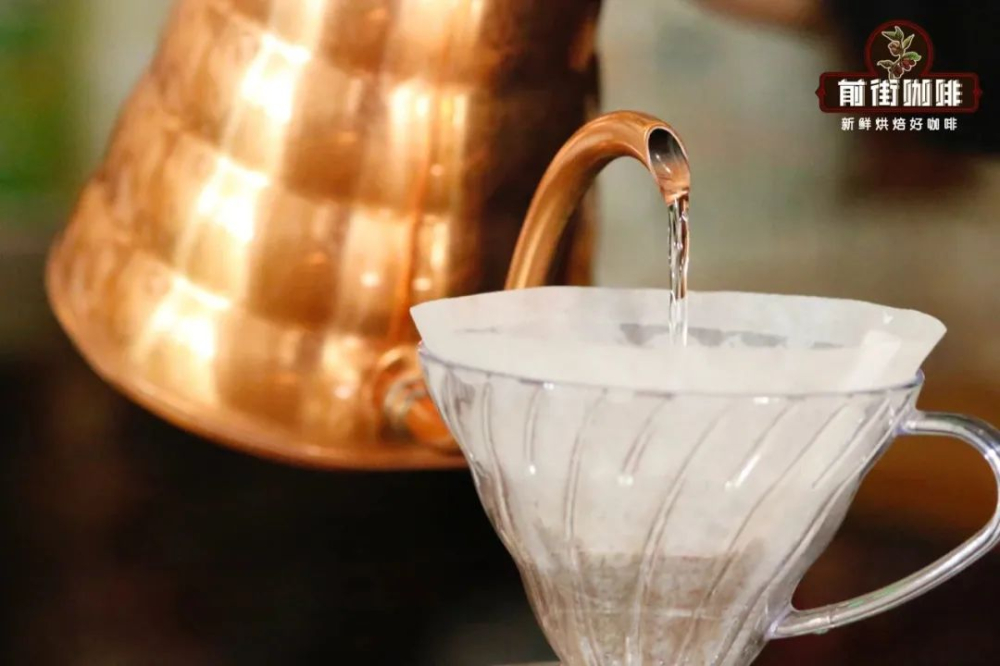
By "steady" we mean a uniform, consistent flow with precise control over rate, pressure, and the speed of your circular motion — plus clean water delivery and a clean cut-off.
Only with stable water control can the coffee bed extract evenly, so that your actual brewing closely matches the plan and the flavor lands close to the ideal. For beginners especially, enough water-control practice builds the feel for delivery and cut-off that you'll later apply flexibly to more advanced brewing techniques.

Choose a comfortable pour-over kettle and adjust your pouring posture
The market offers plenty of pour-over kettles, most combining a gooseneck spout with an eagle-beak tip for finer control over the stream. When choosing one, the kettle's weight shouldn't be too heavy or too light (roughly 300-500g). FrontStreet Coffee recommends a 600ml kettle: filled six- to seven-tenths full, it won't wobble from being too light or tire your hand from being too heavy.
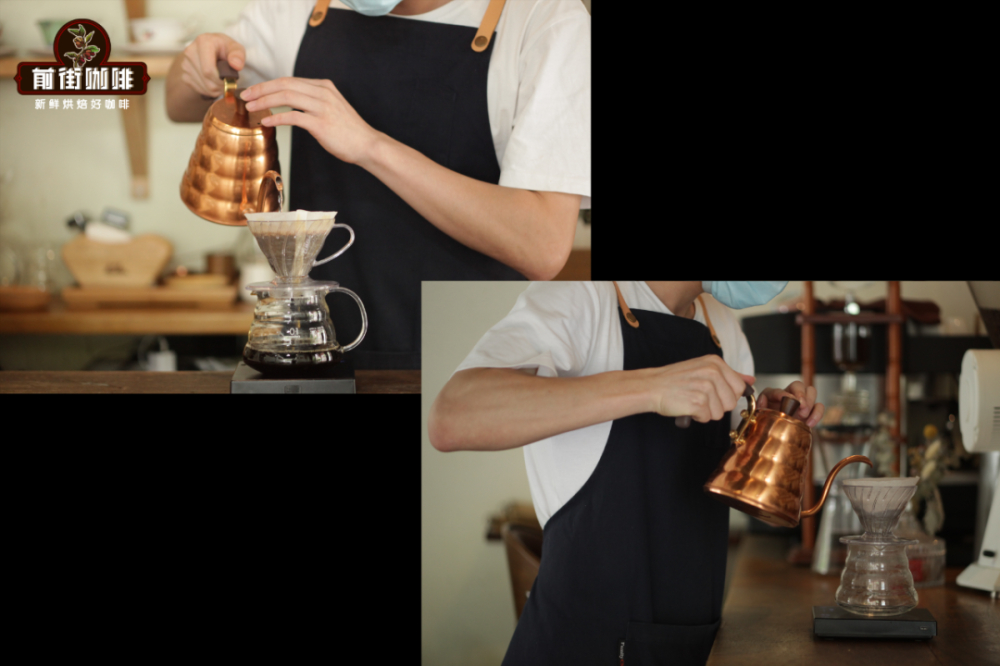
During practice, FrontStreet Coffee keeps the water volume consistent, gripping the handle with the right hand, arm extended and angled slightly downward from the shoulder. If your arm sits too low, the effort shifts into your wrist, making force hard to control and often leading to soreness and then trembling. If one-handed pouring feels unstable at first, use your left hand to steady the kettle lid and help keep the force even.
What should you practice in water-pouring training?
1. Keep the water flow vertical
Although a gooseneck spout gives you finer control, an overfilled kettle or too steep a tilt can push the stream outward into a parabolic arc. When the water column curves, it tends to punch through the coffee bed at the edge of the dripper, producing a watery, thin cup. A stream at a marked angle also creates turbulence inside the bed, disturbing extraction. Keeping the flow vertical is therefore the first fundamental to master.

If your streams always drift outward into that parabola and your coffee tastes bland, FrontStreet Coffee suggests practicing fixed-point vertical pouring first. Find a container with a small opening (like a straw) and practice letting the column fall straight down.
2. Water flow rate
How fast to pour is one of the questions that torment beginners most. Flow rate directly affects extraction time and how aggressively the bed is agitated, which in turn shapes flavor. Whether to pour heavy or light depends on the state of the coffee bed and your own brewing habits — and because spout size and pouring force vary from person to person, everyone's definition of "small" and "large" differs too.
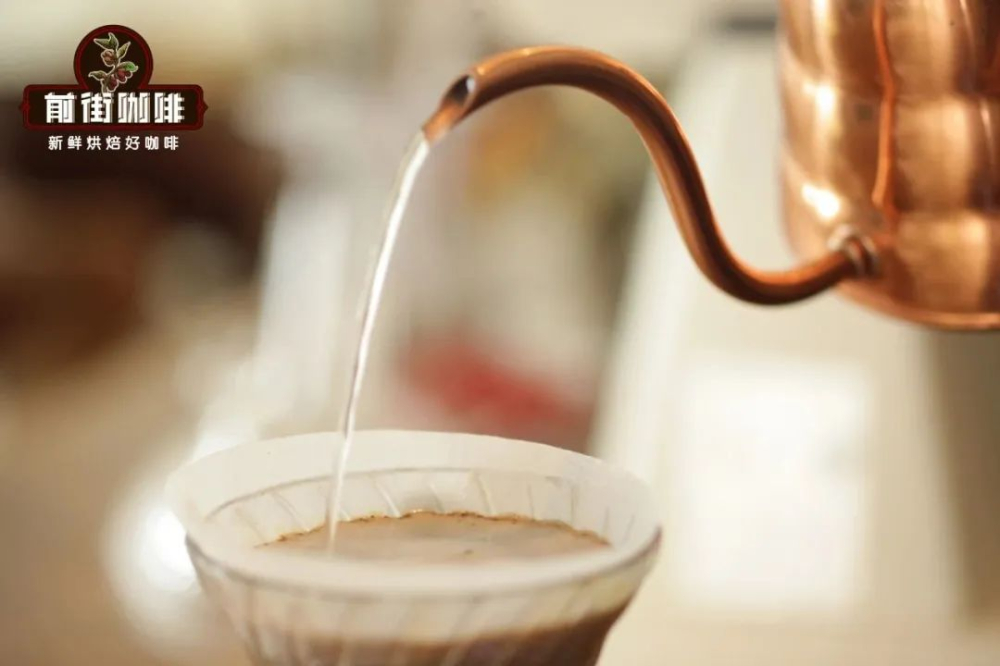
When practicing, a moderate middle ground helps you learn faster. As a reference, FrontStreet Coffee's brewing flow generally sits at 5-7ml/s. (To measure yours: put a container on a scale, pour as you normally would for 10 seconds, and divide the total by 10.)
3. Water flow height
The higher the water column, the greater its penetration, the more intense the agitation of the bed, and the higher the extraction efficiency. The lower the stream meets the liquid surface, the gentler the penetration and the calmer the bed. So if you want to extract plenty of flavor while keeping the brew stable, your pour height needs a balanced reference too — FrontStreet Coffee's baristas typically pour from 3-5cm above the bed.
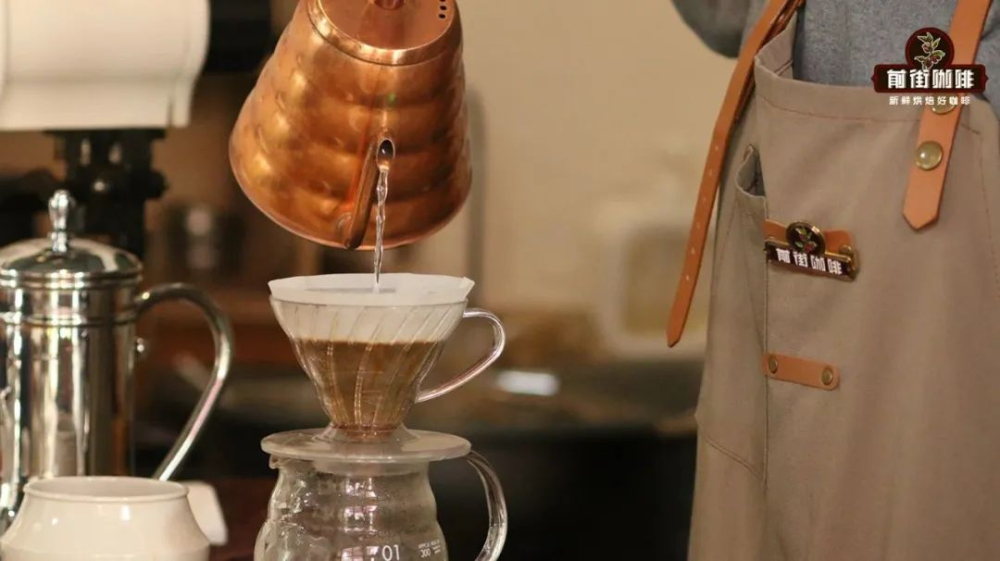
4. Circular pouring
Beyond flow rate and height, the circular motion itself trips up many brewers. If your spent coffee bed ends up thin on one side and thick on the other, uneven circle pouring is the likely culprit. Good circular pouring means doing two things: first, keep the water path genuinely round — sloppy circles leave the bed uneven, which means uneven extraction; second, pour in one consistent direction — if you start clockwise, keep every pass clockwise.

For practice, FrontStreet Coffee suggests starting at the center and spiraling outward, the way you'd swirl a cup to smell the aroma. When you reach the outermost circle, spiral slowly back in until you return to the center point.
- END -
FrontStreet Coffee Recommendation
The V60 dripper is a great training partner for water control — its single large outlet means the flow speed depends almost entirely on the brewer's skill, so every improvement in your pouring shows up directly in the cup. Designed by Hario of Tokyo and named for its 60° cone angle, the V60 forces water to travel to the center of the cone before draining, extending contact time between water and grounds so that aroma and flavor extract fully.
As for beans, FrontStreet Coffee's Yirgacheffe Guodingding is a superb choice for practicing: its distinct citrus, berry, and floral character rewards a steady, even pour, while the green-tea-like sweetness on the finish makes every improvement easy to taste. If you want something more expressive, FrontStreet Coffee's Ethiopia Huakui — packed with strawberry, passion fruit, jackfruit, and lychee aromas — responds beautifully to a controlled 5-7ml/s pour. On the medium-dark side, FrontStreet Coffee's PWN Indonesia Golden Mandheling and Jamaica Blue Mountain No.1 both shine through a V60 as well: the Mandheling low in acidity with herbs and dark chocolate, the Blue Mountain balancing cream, caramel, chocolate, nuts, and honey in that famously harmonious, crowd-pleasing way.

Important Notice :
FrontStreet Coffee is a long-established specialty coffee roaster in Guangzhou China, selling freshly roasted beans from its own farm in Yunnan as well as dozens of carefully selected single-origin beans from around the world for both pour-over and espresso. The products deliver consistently excellent quality and great value, with shipping within 24 hours. Guangzhou's FrontStreet Coffee shop is recommended by many coffee lovers, and the beans are now available online at the Tmall 。
FrontStreet Coffee has moved to a new address:
FrontStreet Coffee Address: 315,Donghua East Road,GuangZhou
Tel:020 38364473
 Scan and follow the En Gafei WeChat official account. Please indicate that the reprint comes from "En Gafei".