
What to Order on Your First Coffee Shop Visit? Introduction to Global Popular Coffee Varieties
A Guide to Coffee Culture: Understanding Your Favorite Beverages
Do you remember the first time you walked into a coffee shop and felt completely lost among the drink names on the menu? Have you ever ordered something and received a coffee that was nothing like what you expected? Like a matcha latte with no coffee in it, or a "wife cake" with no wife inside...
A while back, a British coffee shop created a "no-nonsense coffee guide" that went viral. The guide simply crossed out the usual menu item names with a blunt ✘ and replaced them with plain explanations:
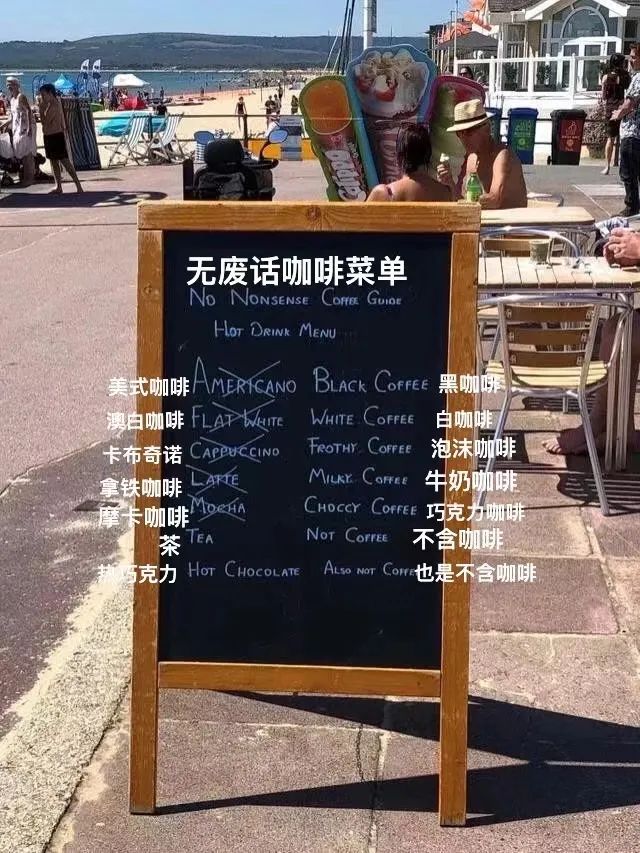
These are the classics found on coffee shop menus almost everywhere in the world, and when the menu was published it won near-universal approval online. Many people said that if such a simple guide had existed back when they first ordered at a coffee shop, they would have been spared a lot of embarrassment...
In truth, each of these drinks has simple ingredients and an uncomplicated method—so why so many different names? Let's look at the origins and stories behind the world's most popular coffee drinks, and what each one really is.
Espresso
In short: an extra-strong, extra-small serving of coffee.
"Espresso" is the past participle of the Italian "esprimere," from the Latin "exprimō"—"to squeeze out." Some linguists argue it's closer to the English "express," implying speed and something made specifically for you. The interpretations differ, but both capture espresso's two defining traits.
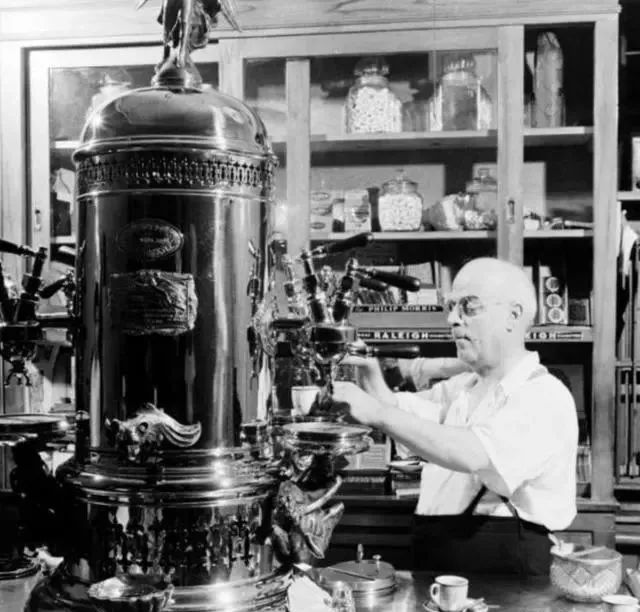
During the industrial boom of the 18th and 19th centuries, when speed was everything, Italians used steam-generated pressure to force hot water through coffee grounds quickly, brewing an energizing cup in record time. In 1884, they built a machine that used steam power to pressurize coffee extraction and patented it—the ancestor of today's espresso machine.
Most classic espresso is made with blended beans, which cost less and deliver stable flavor. As drinkers pursued more refined flavors, some cafés began pulling shots from single-origin beans—known as SOE (Single Origin Espresso).
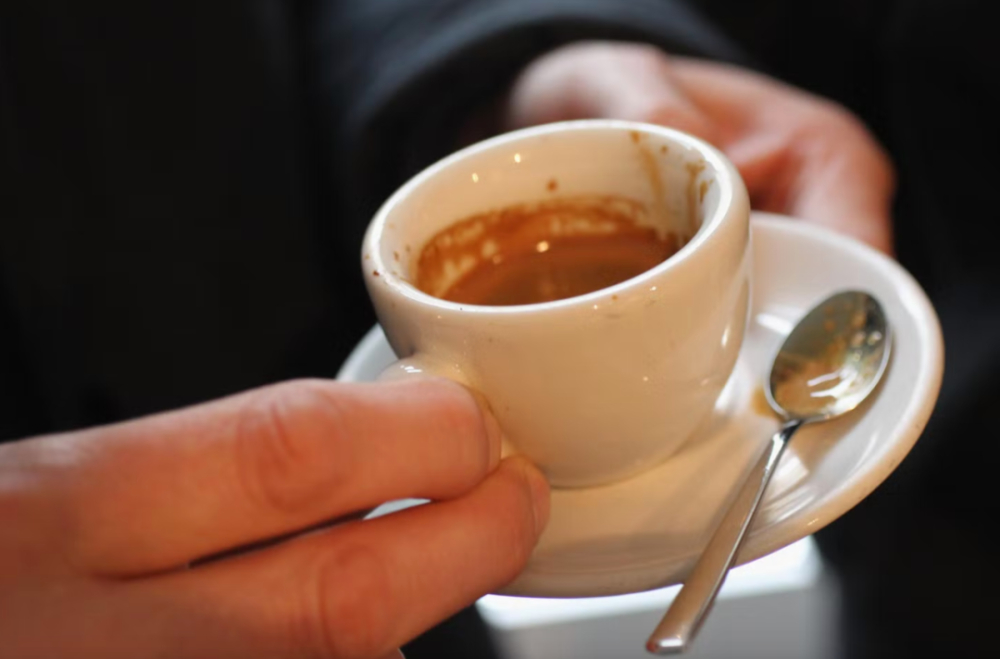
Espresso's defining features: pressurized extraction, a small serving (typically just 15-40ml), drunk undiluted, with high concentration, thick golden crema, and an intense, full-bodied mouthfeel.
Americano
In short: espresso diluted with water.
Legend has it that during World War II, American soldiers stationed in Italy found the local espresso too harsh and strong, so they added the extracted shot to hot water to dilute it.
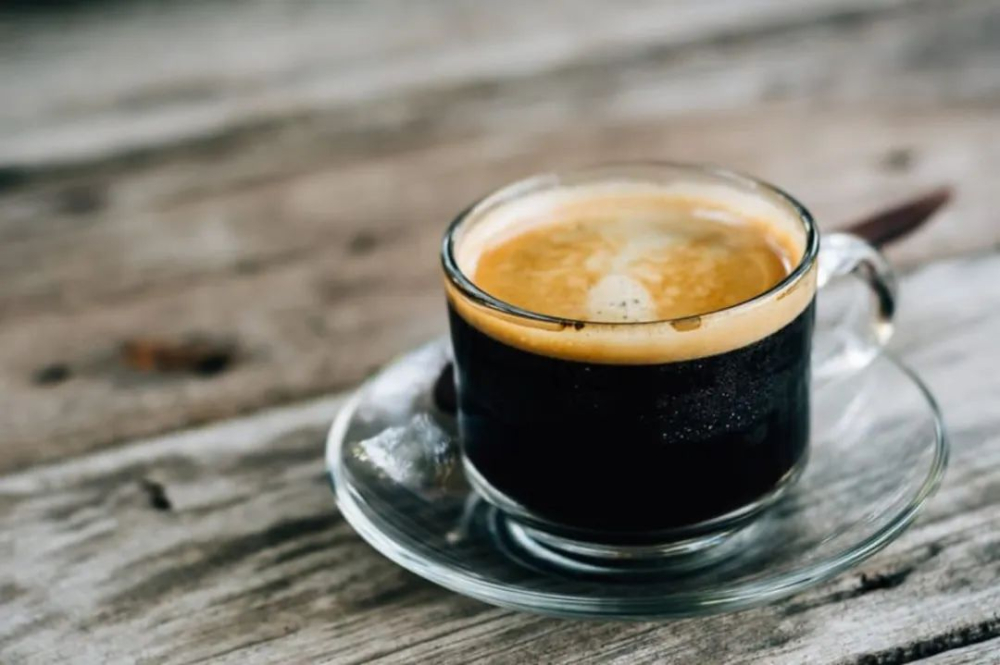
The Cambridge Dictionary defines an Americano as "a type of coffee drink made by adding hot water to espresso coffee." That's all it is—diluted espresso.
Americano characteristics: built on espresso, diluted with water, rich coffee aroma, moderate strength, easily adjusted to personal taste.
Caffè Latte
In short: milk coffee.
The most familiar origin story says that in the early 20th century, Italians invented the semi-automatic steam-pressure coffee machine and began adding steamed milk to espresso. "Latte" simply means "milk" in Italian (so not every latte contains coffee), and "Caffè Latte" originally expressed the union of coffee (caffè) and milk (latte).
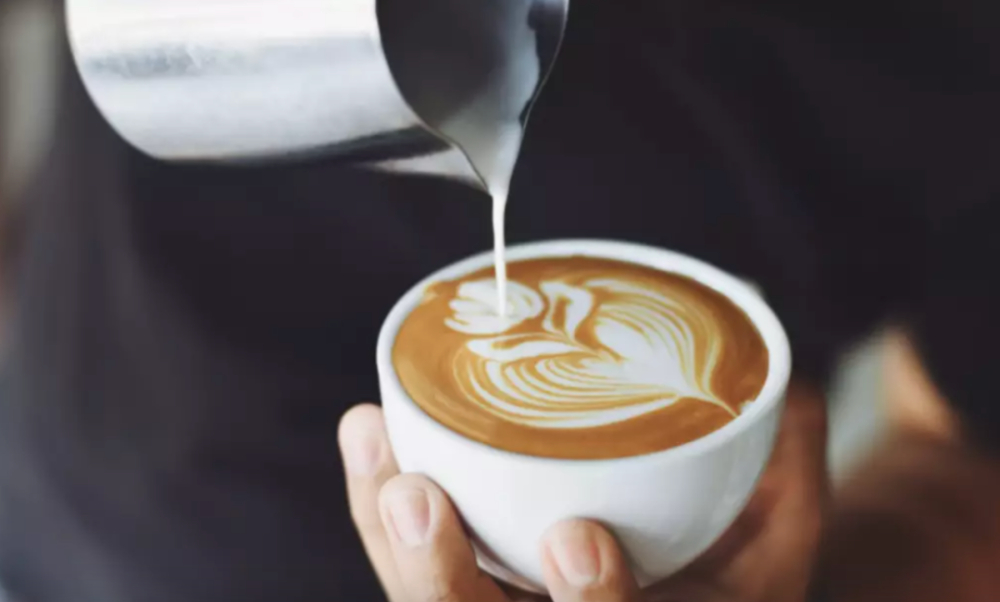
Others trace milk coffee further back: some say it appeared after the Ottoman-Vienna war, when Viennese unaccustomed to Turkish-style coffee added milk and honey; others credit the Dutch coffee habit during their posting in Indonesia in 1660, or the French adaptation after the Dutch carried milk and coffee beans from Indonesia to France...
Whatever its true origin, the latte we drink today is espresso combined with steamed milk: balanced milk and coffee aromas, fine silky foam when hot, and a rich, smooth mouthfeel.
Cappuccino
In short: a foamy milk coffee with a marshmallow-like texture.
"Cappuccino" is a phonetic borrowing of the Italian "Cappuccio," meaning "hood." Sharp-eyed readers will notice the two words differ by a single "n"—and that "n" is the key to the drink's appearance: the Capuchin Order of Saint Francis.
When the order arrived in Italy as missionaries, its friars wore dark brown robes and small pointed hoods. Italians had the clever idea of whipping milk into a dense, stable foam and pouring it over espresso, creating a ring of brown in the cup resembling the friars' robes, then sculpting the foam into a pointed cap with a spoon.
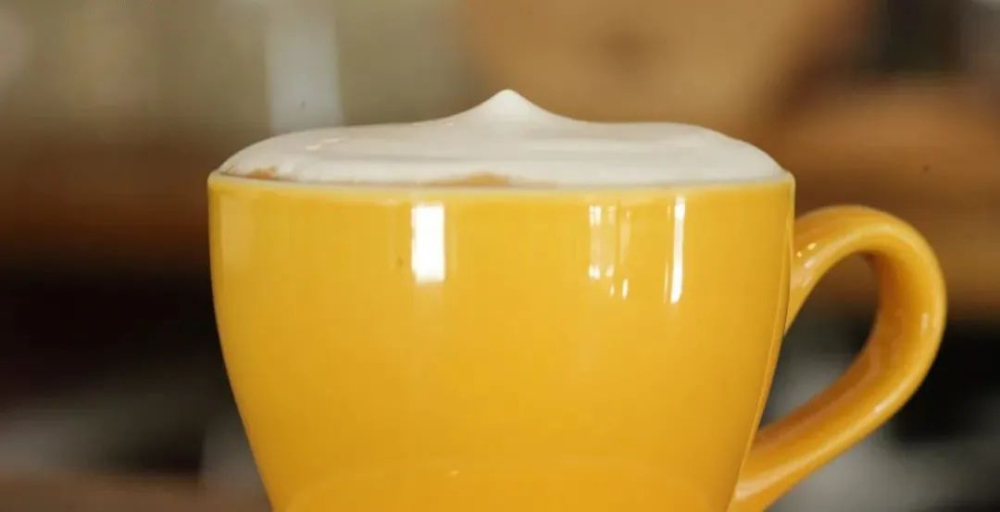
Since "Capuchin" and "Cappuccio" sound so alike, Italians slipped the "n" into "Cappuccio" without breaking the rhythm of the word, and named the drink "Cappuccino."
Cappuccino characteristics: espresso and milk with a thick, dense foam when hot, balanced milk and coffee aromas, and a rich, velvety mouthfeel.
Flat White
In short: a milk coffee with a pronounced coffee flavor.
Having spread from the Southern Hemisphere to the world, the Flat White's birthplace has been contested between New Zealand and Australia for decades. Australian Alan Preston claims he invented it in 1985 at his Moors Espresso Bar in Sydney; New Zealand barista Fraser McInnes says that in 1989, working at a Wellington café, he made a cappuccino whose foam failed to thicken and simply gave the drink a new name.
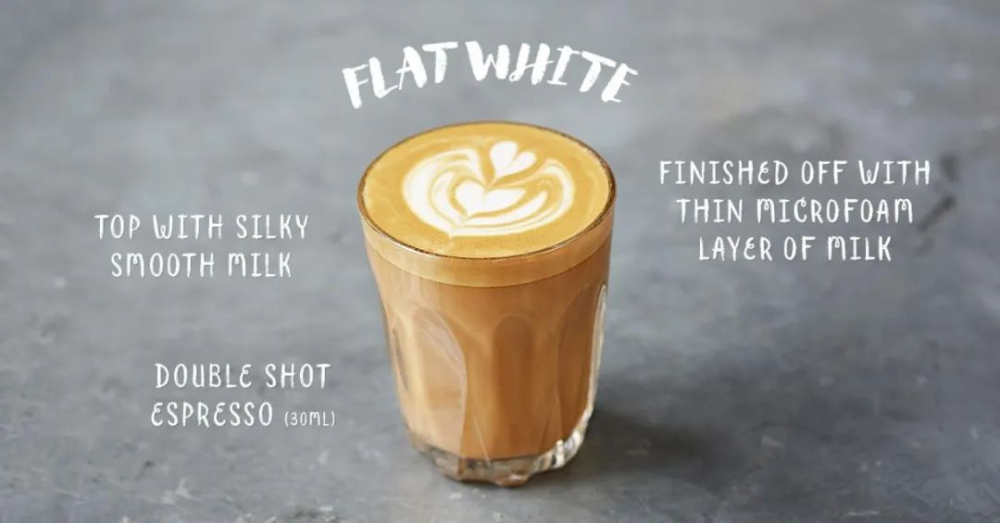
There's no way to settle the dispute. The Australian version is served in a small (around 3oz) glass: a single shot of espresso with a little steamed milk, the foam about half as thick as a latte's. The New Zealand version uses a regular-sized glass with a double ristretto and steamed milk, also with relatively thin foam.
Either way, the Flat White's point is that although it's still coffee and milk, it contains less milk than a latte or cappuccino, so the coffee flavor stands out. If you want a milk coffee without too much milk, the Flat White is the one to order—rich coffee character in a mellow, smooth cup.
Dirty Coffee
In short: served only iced, never stirred, with distinct layers and a rich coffee flavor.
Dirty began gaining popularity around 2018, and the name fits: the dark crema of the espresso blankets the white milk, as if the coffee had "dirtied" it.
A proper Dirty calls for high-fat chilled milk and a frozen cup, with the espresso floated on top of the cold milk. The hot espresso and its crema sit on the milk's surface and slowly form a gradient.
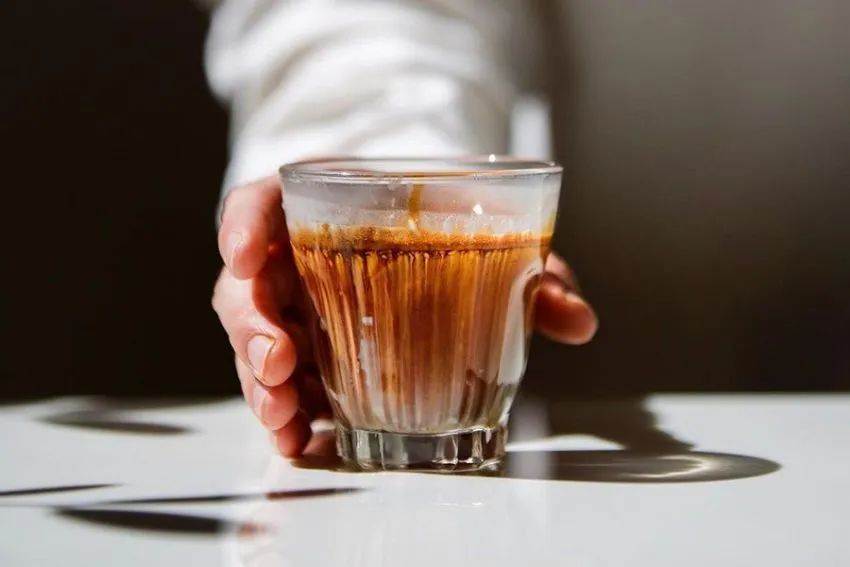
Dirty offers an evolving experience—from strong to light, dark to sweet. The first sip is bold coffee; the last is sweet. So don't let it sit, don't stir it, and if you can, finish it in three sips to catch the full progression.
Mocha
In short: milk coffee with chocolate added.
"Mocha" takes its name from the Yemeni port of Mocha. Yemen, the first country to cultivate and export coffee on a large scale, began shipping beans to Europe in the early 17th century. Mocha was then its only small port serving Europe, and goods leaving it were stamped "MOCHA" to certify their origin—so Europeans called the delicious coffee that came through the port "mocha coffee."
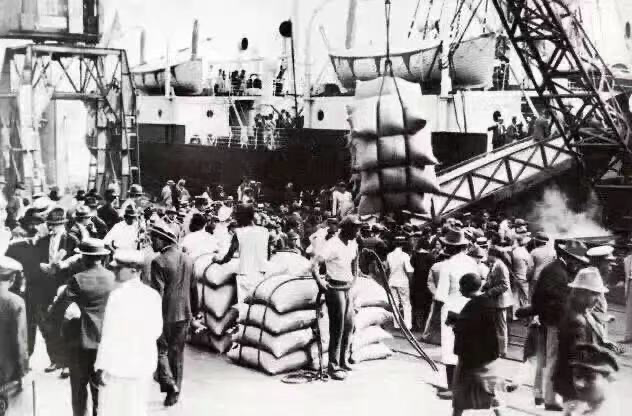
Mocha beans are small but intensely fragrant: noticeable acidity, heavy body, fermentation notes, a moderate finish, and a rich dark-cocoa aroma at the end.
By the 18th century the port had fallen under Ottoman control, and the Turks—lovers of Yemeni coffee—kept more and more of it, so less reached Europe. Italians, missing the beans' rich cocoa aroma, began adding dark cocoa to espresso, and Italian-style mocha coffee was born.
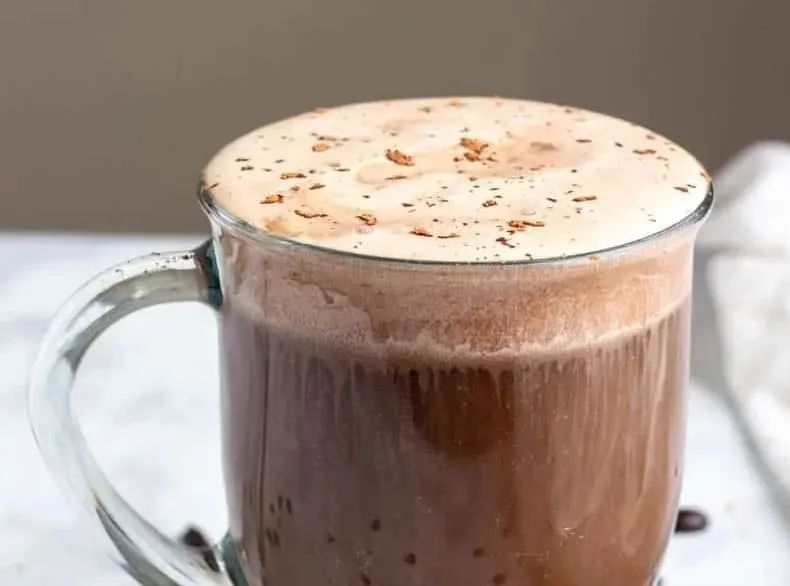
Mocha characteristics: espresso with dark cocoa or chocolate; most mochas on the market are sweet, with a rich, smooth, sweet taste.
Hand Drip (Pour-Over) Coffee
In short: drip coffee with overall balance, a clean cup, and distinct layers of aroma and flavor.
Pour-over was invented by Germany's Melitta Benz in the early 20th century. Brewing coffee at home, she had the inspired idea of using her son's blotting paper as a filter, and unexpectedly extracted a cup that tasted unlike anything made before.
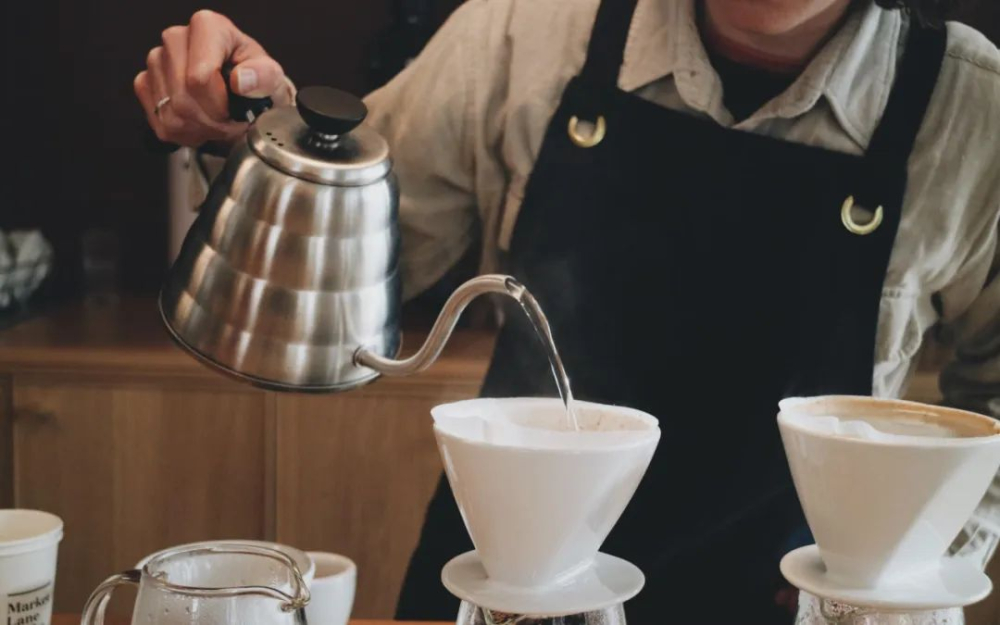
After several refinements, Melitta filter paper and ceramic drippers earned a German patent in 1908 and spread across Europe, giving people clean, residue-free drip coffee at last. Compared to espresso, drip coffee is cleaner overall, and you can pick single-origin beans to match your own palate.
With so many beans on the shelves, choosing can be daunting. Here's a simple guide: if you like bright, refreshing acidity, go for lightly roasted African beans; for gentle acidity with rich body, choose Central American beans; if you want zero sourness, high body and a solid, heavy cup, look to Asian or island beans.
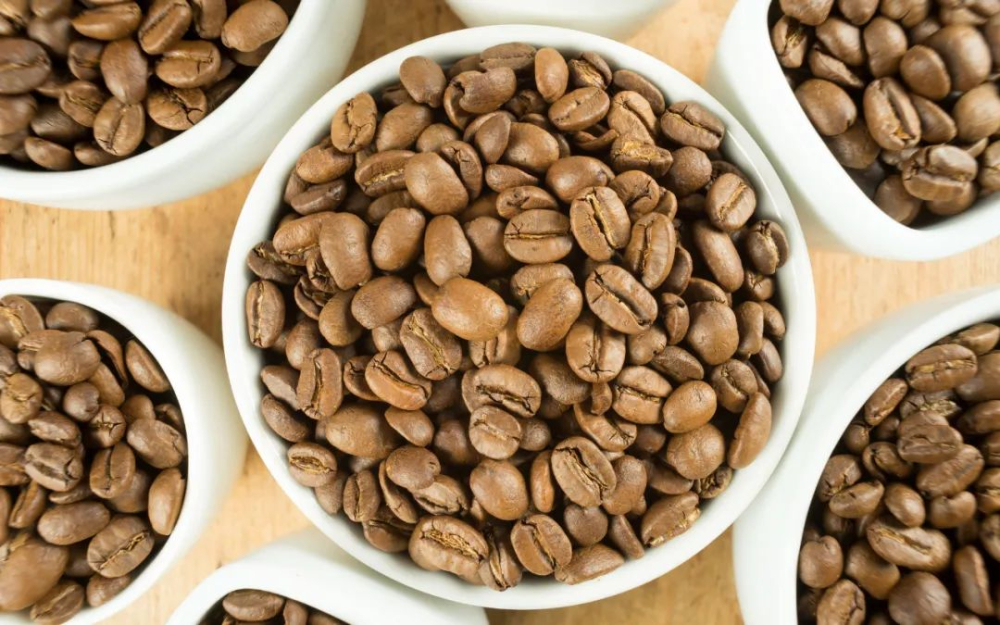
And remember: a higher price doesn't mean a better bean—choosing what you like matters most. Flavor notes led by florals and fruit usually signal acidity (the more fruit descriptors, the brighter the sweetness and tang); nut-led descriptions mean mild acidity; and beans with no floral or fruit notes at all generally won't be sour.
Cold Brew / Ice Drip Coffee
In short: iced coffee extracted at low temperature, with a clean, full, smooth taste.
Legend has it that in 1660, Dutch sailors hauled coffee from the colony of Indonesia back to Europe. With no hot water aboard, they couldn't brew hot coffee, so they tried extracting with cold water instead. The result was gentle, smooth, and enticingly aromatic—loved by the sailors and soon by everyone else. Japanese merchants later adapted the story into the origin of ice drip coffee.
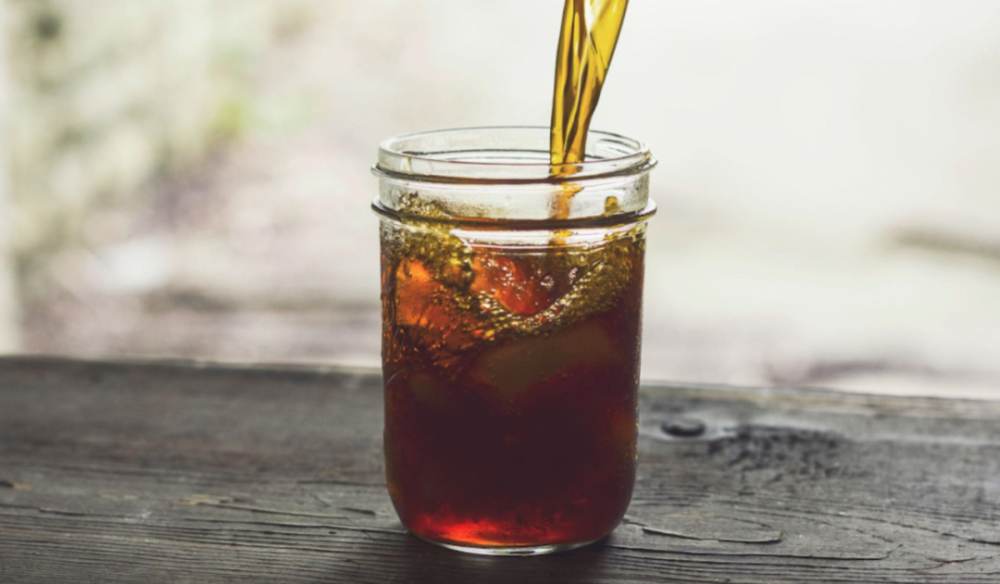
Whether ice drip or cold brew, both use low-temperature extraction. Cold water lacks the heat to drive molecular movement, so bitter compounds struggle to leach out—which is why cold brew tastes cleaner and more refreshing. The long extraction also lets the good flavors fully dissolve, so the cup tastes full as well.
Because of that long extraction, ice drip and cold brew contain more caffeine than drip or espresso-based coffee—so if you need a serious energy boost, these are the drinks for you!
Image source: Internet
FrontStreet Coffee Recommendation
Once you know what to order, the next step is choosing beans worth brewing at home—especially for milk-based drinks. For espresso machines and moka pots, FrontStreet Coffee's Premium Blend (Brazil Cerrado + Colombia Huila) is our go-to: Brazil leads the profile, so lattes come out layered with almond, walnut and other nut flavors, silky and lingering on the palate.
If you want your latte crowned with gorgeous golden crema, choose the Classic Blend or Commercial Blend, which include a touch of Robusta for extra foam, fuller body, and a rich caramel aroma. And if you prefer brewing single-origin beans with milk, a medium-dark roast such as FrontStreet Brazil Fazenda Rainha or PWN Golden Mandheling softens beautifully with just a splash of milk while keeping its chocolate-and-nut sweetness.
Important Notice :
FrontStreet Coffee is a long-established specialty coffee roaster in Guangzhou China, selling freshly roasted beans from its own farm in Yunnan as well as dozens of carefully selected single-origin beans from around the world for both pour-over and espresso. The products deliver consistently excellent quality and great value, with shipping within 24 hours. Guangzhou's FrontStreet Coffee shop is recommended by many coffee lovers, and the beans are now available online at the Tmall 。
FrontStreet Coffee has moved to a new address:
FrontStreet Coffee Address: 315,Donghua East Road,GuangZhou
Tel:020 38364473
 Scan and follow the En Gafei WeChat official account. Please indicate that the reprint comes from "En Gafei".

