
How to Practice Italian Coffee Latte Rosetta Pattern and What is the Proper Latte Coffee Ratio and Coffee Amount?
Some friends have asked FrontStreet Coffee how to practice the pitcher movement when drawing etched latte art. This article is a follow-up to "How can I create beautiful etched lines?" If you haven't read it yet, click through to that piece first - we won't repeat its content here.

Issue 1: Asymmetric Patterns
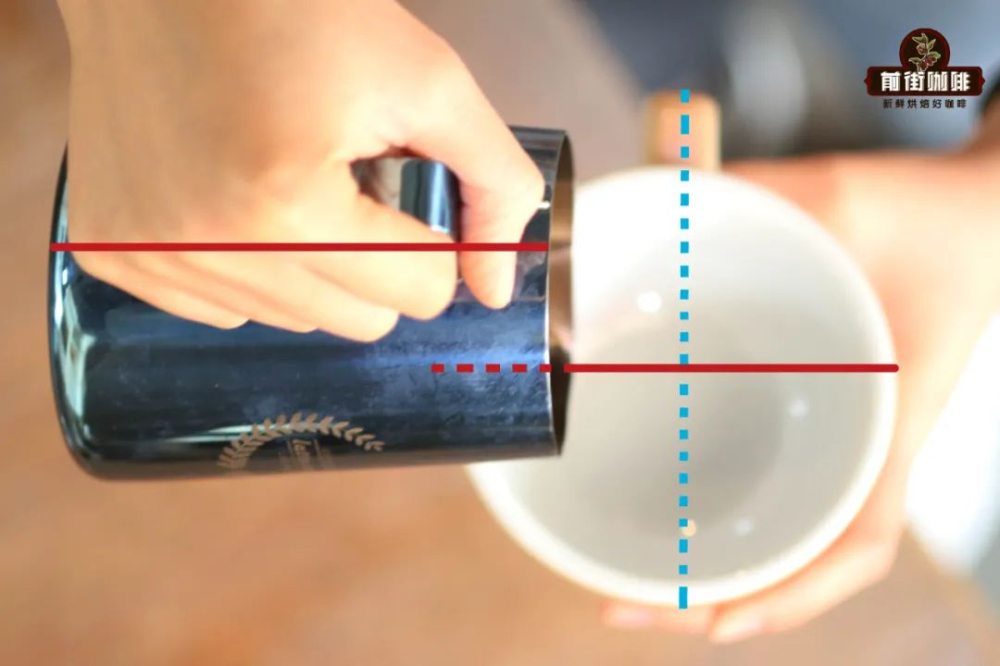
The first problem: if your pattern comes out asymmetrical, there is really only one cause - your milk pitcher and your coffee cup are not sitting on the same straight line.
What does it mean to line them up? Viewed from the side, you should see only the flat profile of the pitcher and cup, not their three-dimensional form.

Viewed from above, the cup handle should point inward, so that the design faces forward as you pour (for right-handed baristas). The center lines of the pitcher and the cup should form a parallel straight line. Only then will the pattern be symmetrical.
Issue 2: Uneven Line Density
The second problem: when etching, one side has dense lines while the other side has sparse lines. There are two possible explanations. The first may come from the alignment issue above. The second is that your pitcher movement force is uneven - the swing amplitude is larger on one side than the other.
FrontStreet Coffee's advice is to practice without milk first. Start with an empty pitcher to get a feel for the motion, as shown in the video below.

Begin by familiarizing yourself with where the force comes from. As the video demonstrates, the thumb fixes the position while the other four fingers apply force, using the pitcher handle as a pivot to swing the pitcher back and forth.
Once you have grasped that principle, you can practice with water, as shown below.

This back-and-forth movement is the most important part of the process: controlling the flow of water and controlling the swing amplitude. Practicing with water is not the same as practicing with an empty pitcher, because water creates resistance during the swing. Keeping the flow and the amplitude consistent takes patience and persistent practice. You will also notice in the video that the swing gets easier as the water in the pitcher decreases.

There is really no difficult technique here - it all comes down to muscle memory. If your pitcher movement is poor, it is simply because you haven't practiced enough.
Issue 3: Thick Etched Lines
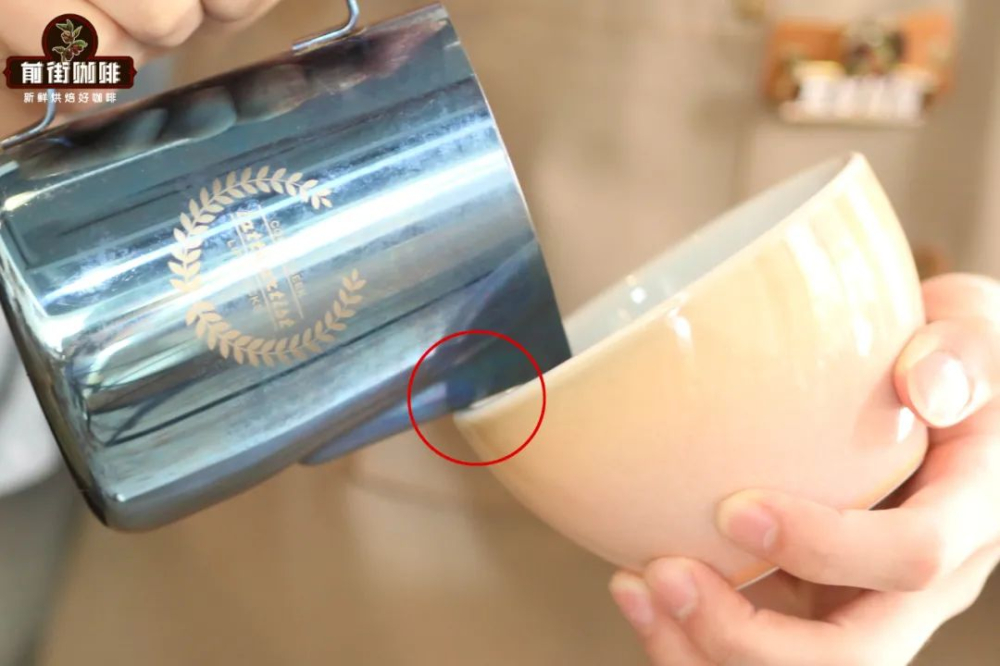
The third problem: your etched lines are too thick. This too has two possible causes. The first is that your milk foam has been frothed too thickly. The second is the hardest habit to break - resting the pitcher against the cup while drawing. That contact made sense when you were pouring large white hearts or pushing tulips, since pressing the spout against the cup offered more stability, but it actually limits you when etching. When you swing the pitcher, the habit restricts your movement, and staying too close to the surface of the liquid leaves very thick white lines that simply don't look good.
FrontStreet Coffee Recommendation
Good latte art starts with milk that frothes into fine, stable foam, and that in turn starts with the right beans. FrontStreet Classic Blend is a medium-dark espresso recipe built from three origins, inspired by the old Mamba combination of Mandheling and Brazil and rounded out with a small amount of Robusta for aroma and crema. It releases clear notes of butter, toasted bread, and caramel cookie, with a strong flavor, a solid body, and the fine, stable crema beginners need to practice pouring.
If you prefer a nuttier profile, FrontStreet Premium Blend pairs washed Colombian beans with semi-washed Brazilian beans in a classic medium-dark espresso combination, showing nuts, dark chocolate, and caramel. Whether you make an Americano, a latte, or a flat white, it brings out creamy, almond, and cocoa aromas, with crema every bit the match of a coffee shop - more than enough for practicing latte art.
For anyone about to open a shop, FrontStreet Commercial Blend is tailored to that purpose. Building on FrontStreet Coffee's Premium Blend with a small amount of Robusta, it adds more fine, deep-brown crema and a heavier body, so Americanos, lattes, and mochas all carry notes of nuts, cocoa, and caramel and the pouring becomes effortless.
Important Notice :
FrontStreet Coffee is a long-established specialty coffee roaster in Guangzhou China, selling freshly roasted beans from its own farm in Yunnan as well as dozens of carefully selected single-origin beans from around the world for both pour-over and espresso. The products deliver consistently excellent quality and great value, with shipping within 24 hours. Guangzhou's FrontStreet Coffee shop is recommended by many coffee lovers, and the beans are now available online at the Tmall 。
FrontStreet Coffee has moved to a new address:
FrontStreet Coffee Address: 315,Donghua East Road,GuangZhou
Tel:020 38364473
 Scan and follow the En Gafei WeChat official account. Please indicate that the reprint comes from "En Gafei".

