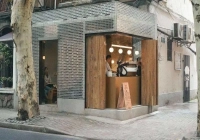
Traditional Coffee Brewing Methods: In the Specialty Coffee Era, Who Still Wants a Cup of Traditional Coffee?
Mention the word "coffee" and plenty of people will immediately launch into a discussion of brewing methods and flavor notes. Traditional, non-modern brewing techniques often get a sideways glance, as if they were bound to over-extract, and their worth gets called into question. In an era dominated by specialty coffee, who still wants to sit down with a cup of the most old-fashioned coffee there is?
A plain stainless steel pot, a cheap-looking drip filter spoon, and a man well past sixty: those three things keep a traditional Thai coffee house with 117 years of history running. There are no specialty beans here, no pour-over, no espresso machine, and no elaborate decor. Every object in the shop tells a story from its century of existence.
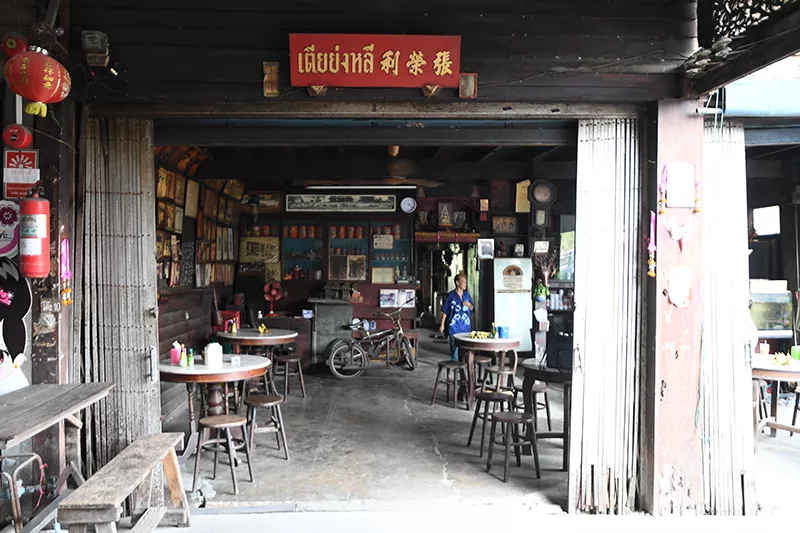
The Siamese Century Coffee House
The century-old shop sits in Pathum Thani Province in northwestern Thailand and goes by the name "Zhang Li Rong." In the Teochew dialect, "Li Rong" carries the sense of "a house full of good stories." Its founder was a Teochew merchant who came to Siam, now Thailand, about a century ago.
According to the current owner, Ananchai, his grandfather reached northwestern Thailand around 1900 and began by selling coffee beans at a canal market. Once he had saved enough, he bought a plot of land along the riverbank and opened the coffee house in 1905. Ananchai is the third generation to run the family business.
Because the place holds so many memories for local families, many of them make a point of stopping by for a cup whenever they visit the floating market. Ananchai says the shop uses only Robusta beans from southern Thailand. Every morning he gets up early to prepare the charcoal and then roasts the beans. The roast usually takes 30 to 50 minutes, and throughout it he must constantly manage the heat so that the beans reach a dark roast without turning burnt and bitter.
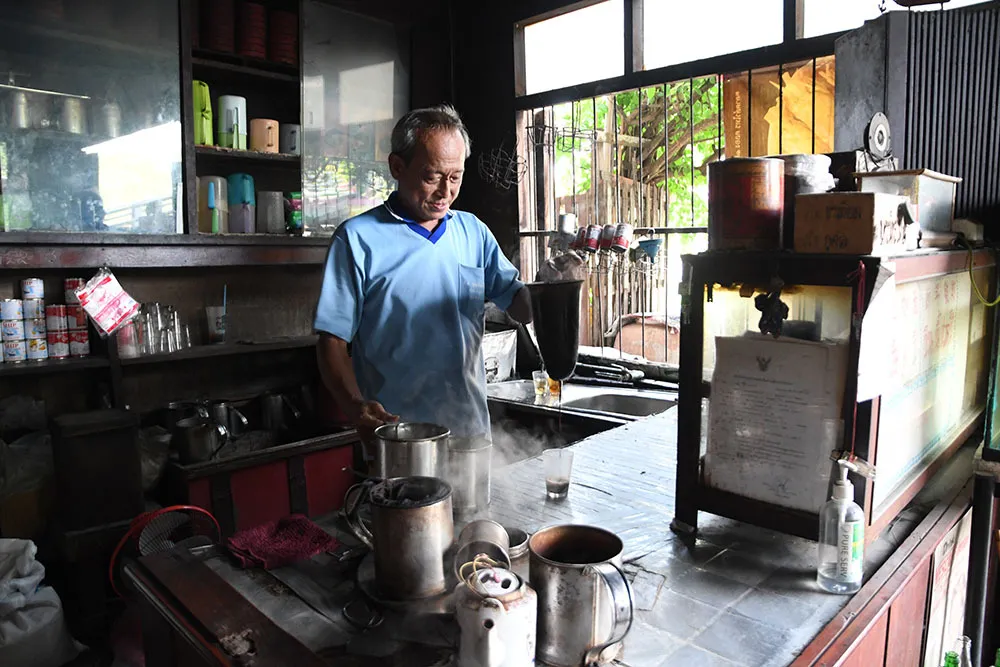
Once roasted, the beans are ground to the right coarseness and kept in iron cans, ready for customers. The menu is short, and everything on it is written in Teochew. "Suang kao," for instance, means a mixture of cold and hot coffee; "gao baht" (nine baht, the local currency being the baht) is coffee with red syrup; and "O liang" is black coffee poured over ice...
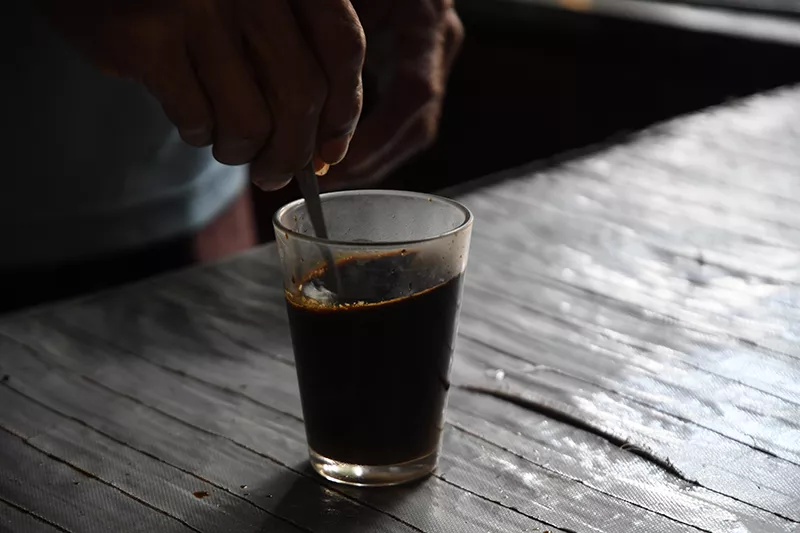
kopi suang kao
Affordable Tradition
The prices are astonishingly low. Every coffee costs just 10 baht (1.9 RMB), and takeout is 15 baht (2.8 RMB). The shop has held those prices both before and after the pandemic. Ananchai has no intention of raising them: the income is enough for his livelihood, and the neighbors have long grown used to them. For him, keeping the shop open is less about profit than about preserving what earlier generations built and offering everyone the most traditional Thai local coffee.
As for the future of the century-old shop, Ananchai has no fixed plan. If the next generation wants to take over, whether they are direct descendants or not, he would be glad to hand it on. But if they see it as a burden, he won't force them. For his part, he will keep running the shop until he can no longer work.
A Living Legacy
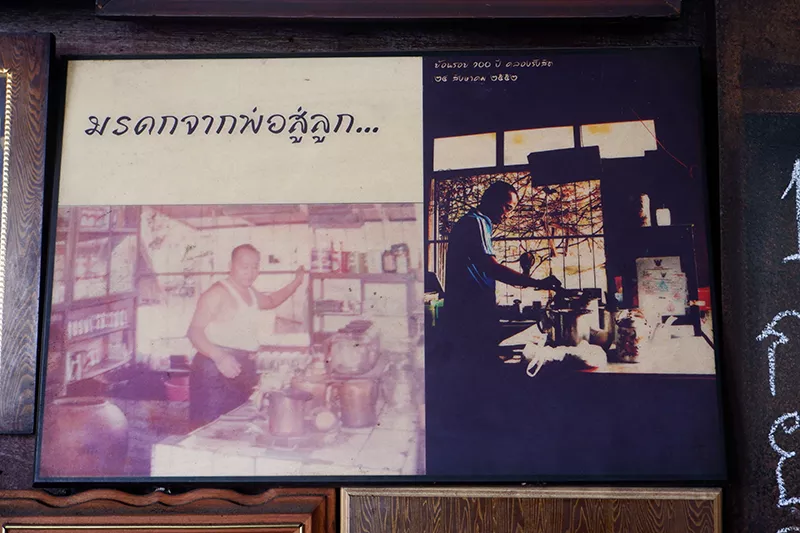
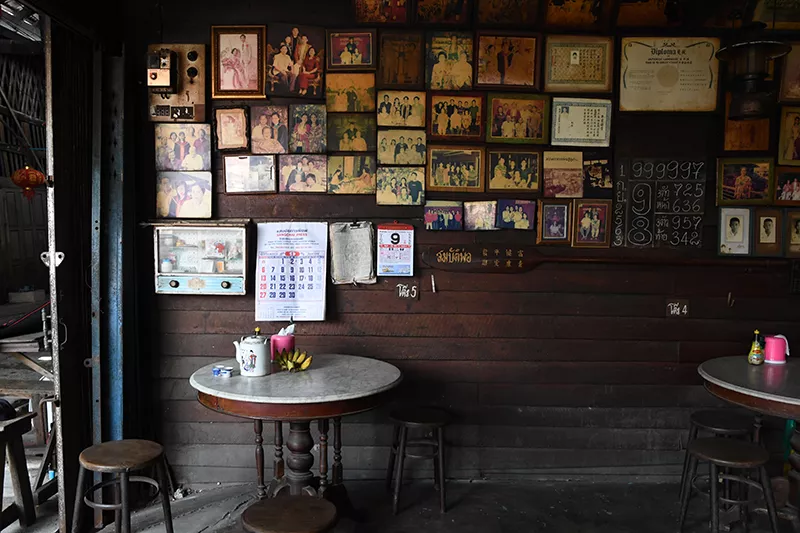
Every object in the shop carries its own story, and the photographs on the walls recount the experiences of several generations. Century-old tables and chairs, a century-old coffee stove, century-old roasting techniques, century-old brewing methods: together they embody the traditional idea of "passing on the family business." Each seemingly ordinary cup of coffee speaks to the meaning of legacy.
The owner admits that running a century-old coffee house is not easy. Before the internet took off, the shop lived on neighborhood trade, and the community's enthusiasm carried it through financial storms and natural disasters. Then in 2005, he helped a group of hungry young people...
To show their gratitude, those young people promoted the century-old shop on social networks. Soon afterward, more young people came to check it out. A once low-key shop quickly spread from fame in northwestern Thailand to the whole country. Many international tourists also make special trips, not only for a cup of the most traditional Thai local coffee but to experience the heritage itself.
Traditional Coffee Beyond Thailand
Thailand is not the only place keeping the old ways alive. Many establishments in Hong Kong still preserve traditional brewing methods and roasting techniques. Coffee roasted over charcoal, white wine added during the roast, beans stir-fried in iron woks: each shop that sticks with traditional coffee has its own understanding of roasting and its own set of techniques. No complicated brewing, just a filter and a pot, serving generation after generation from secret recipes. They may all look like black coffee, and even with sugar and milk added, each one drinks differently.
To many people, traditional coffee may seem "bitterly unpleasant" or simply "over-extracted," yet few have actually tasted it or are willing to try.
Don't let superficial assumptions limit your exploration of coffee. The most interesting things often lie in these traditional coffees, which follow neither modern specialty coffee's golden cup extraction theory nor its expected roasting curves.
Image source: Internet | Today Thailand
FrontStreet Coffee Recommendation
Traditional coffee is built on depth rather than delicacy, so the beans that suit it best are the ones with weight and very little acidity. FrontStreet Coffee's PWN Indonesian Golden Mandheling is roasted dark and shows almost no sourness: full-bodied and lingering, it opens with generous herbal and dark chocolate aroma alongside a faint earthy note, and it layers up beautifully. If you like a heavy cup and dislike acidity, this is the one to reach for.
For the kind of round, balanced cup that old-school coffee houses chase, try FrontStreet Coffee's Jamaica Blue Mountain No. 1. It has neither the sharp fruit acidity of some African coffees nor the heavy bitterness of a deep roast; cream, caramel, chocolate, nuts, honey, and a whisper of fruit sit in near-perfect balance, smooth and rounded on entry with a rich mid-palate and a clean, long finish. Many coffee professionals call it the specialty coffee most likely to please almost anyone.
Important Notice :
FrontStreet Coffee is a long-established specialty coffee roaster in Guangzhou China, selling freshly roasted beans from its own farm in Yunnan as well as dozens of carefully selected single-origin beans from around the world for both pour-over and espresso. The products deliver consistently excellent quality and great value, with shipping within 24 hours. Guangzhou's FrontStreet Coffee shop is recommended by many coffee lovers, and the beans are now available online at the Tmall 。
FrontStreet Coffee has moved to a new address:
FrontStreet Coffee Address: 315,Donghua East Road,GuangZhou
Tel:020 38364473
 Scan and follow the En Gafei WeChat official account. Please indicate that the reprint comes from "En Gafei".