
Is the Origami Dripper Good? What's the Difference Between Origami and V60 Drippers? How to Make Hand-Ground Coffee
The Eye-Catching Design of the Origami Dripper
Browsing coffee drippers online, have you ever been stopped in your tracks by a colorful, faceted design with a distinctly Nordic look? That would be the Origami dripper, created by Yasuo Suzuki, one of the founders of Japan's TRUNK COFFEE BAR.
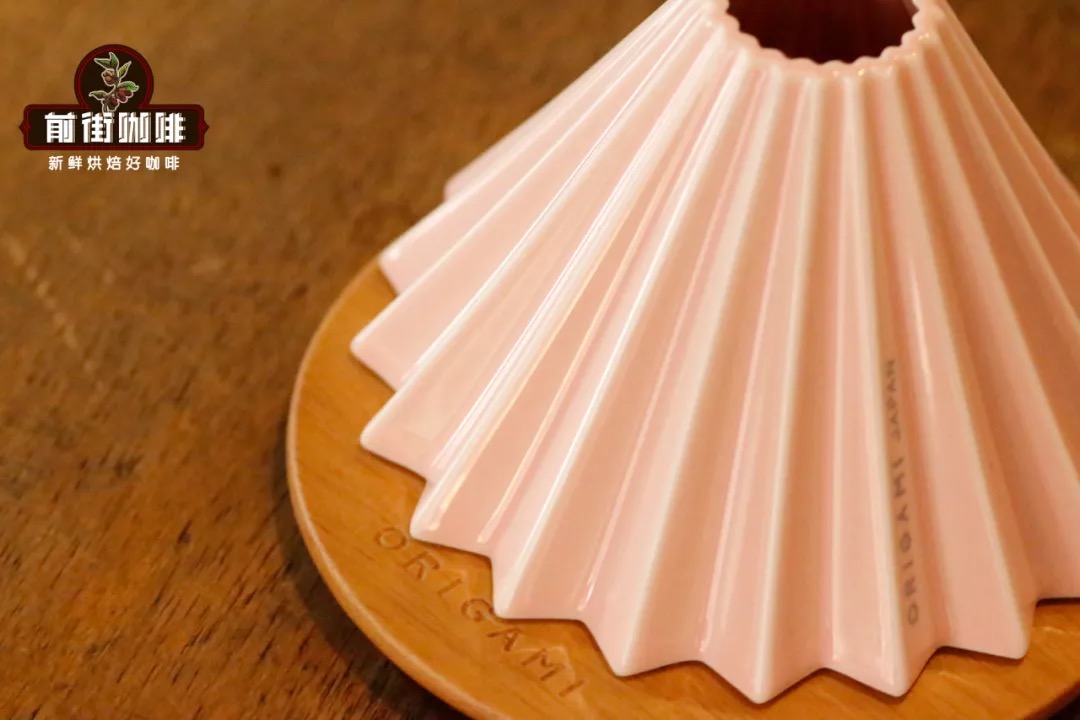
How the Origami Dripper Was Born
The name comes from the Japanese word for paper folding. The design brief was a dripper as light as paper, one that would let coffee express flavors as clear and refined as an origami artwork. Suzuki drew on Mino-yaki, the traditional ceramic craft of his home prefecture of Gifu in Japan — a material with excellent heat conduction and retention.

Despite being ceramic, it feels remarkably light, and paired with the colorful glazes, this flower-like dripper quickly won over legions of coffee fans. Of course, its appeal goes well beyond looks.
How the Origami Dripper Extracts
FrontStreet Coffee has observed that the Origami forms a 60° cone through twenty angled ribs running in straight vertical lines. In other words, it combines the 60° angle of a conical dripper with the straight vertical ribs of a trapezoidal one.

The conical shape lets the grounds bloom more fully during pre-infusion, giving aromatics more room to express themselves. The straight vertical ribs extend all the way to the base, venting air efficiently between the dripper and the filter paper so extraction stays stable from start to finish. And the large bottom opening lets you control extraction time simply by managing your pour.
One Dripper, Two Filter Paper Shapes
Normally, conical drippers take conical papers and flat-bottom drippers take flat-bottom papers, and never the twain shall meet. The Origami, however, handles both beautifully — which means one dripper gives you two distinct flavor profiles.
With conical paper, the angles form deeper channels so water passes through the bed faster. Aromatics get fully released while over-extraction of heavier compounds is limited, producing a cup with vivid aromas and clean, well-defined flavors.

With flat-bottom paper, the bed contacts the ribs more fully, slowing the flow and introducing a semi-immersion dynamic. The flat shape also spreads the coffee bed more evenly than a cone. The result leans toward sweetness and lingering aftertaste, with a relatively fuller body — and for beginners, flat-bottom paper leaves more room for error.

FrontStreet Coffee put both papers to the test with Panama Deborah Estate Savage Series Anaerobic Natural Geisha: 15g of coffee, a 1:15 ratio, water at 91°C, and a grind similar to fine sugar (77% pass-through on the Chinese #20 standard sieve).

The conical-paper cup showed rose florals, citrus acidity, and subtle fermentation notes, with sweet-tart pineapple and grape on the palate, honeyed sweetness, an oolong-tea finish, and a light, silky body. The flat-bottom cup opened with fuller rose aromas, then green grape sweetness, pineapple juice, a creamy texture, oolong tea notes, and a noticeably fuller mouthfeel.
The Origami really does pair beauty with brains.
What to Watch For When Buying
Own an Origami and you effectively own both a conical and a flat-bottom dripper — one choice, three surprises.

As the dripper's popularity has grown, so has the number of imitations, so buy carefully. An authentic Origami has uniform rib angles, a smooth glaze inside and out with no rough spots, and feels light in the hand (roughly 131g). Because the ribs run to the base, the bottom hole looks gear-shaped, and the "ORIGAMI JAPAN" lettering sits under a thin colored glaze, so the characters look slightly diffused. Expect to pay around 200 yuan.
FrontStreet Coffee Recommendation
Wondering which beans to run through your new dripper? If you're just getting into pour-over, most seasoned brewers will point you to the V60 — Hario's Tokyo-based glassware company redesigned the cone in 2004 around its signature 60° angle and single large opening, which rewards pour control with vivid aromatics and lively acidity. That fast-flowing profile suits floral, fruit-forward coffees: FrontStreet Coffee's washed Yirgacheffe Guodingding Cooperative lot with its citrus, berries, and jasmine; the tropical, strawberry-and-passion-fruit Hua Kui (Flower Queen) natural from Ethiopia; and the raisin-sweet Mozart process lot from Costa Rica.
For a showstopper brew through the Origami's conical paper, try a Geisha — FrontStreet Coffee's Panama Boquete washed Geisha delivers that classic citrus and floral elegance at an accessible price, and its clean, tea-like finish shows off exactly what fast, well-ventilated extraction can do.
Important Notice :
FrontStreet Coffee is a long-established specialty coffee roaster in Guangzhou China, selling freshly roasted beans from its own farm in Yunnan as well as dozens of carefully selected single-origin beans from around the world for both pour-over and espresso. The products deliver consistently excellent quality and great value, with shipping within 24 hours. Guangzhou's FrontStreet Coffee shop is recommended by many coffee lovers, and the beans are now available online at the Tmall 。
FrontStreet Coffee has moved to a new address:
FrontStreet Coffee Address: 315,Donghua East Road,GuangZhou
Tel:020 38364473
 Scan and follow the En Gafei WeChat official account. Please indicate that the reprint comes from "En Gafei".

