What is Coarse Sugar Grind Size for Pour-Over Coffee? Coffee Grind Size Visual Guide [Images]
The Challenge of Coffee Grind Size
Coffee grind size has always been a challenge many enthusiasts struggle with. When coffee shops share brewing methods, you've probably heard "medium grind," "coarse sugar size," or "Fuji R-4 setting" again and again — yet you still might not know exactly how coarse that "coarse sugar size" actually is.
The Problem with Vague Descriptions
Why do these parameters seem standard yet are actually ambiguous? Some shops describe grind levels as "fine, medium, coarse," which creates a consensus problem: is your range of fine to coarse the same as mine? As a beginner, you'd have to accept their entire theoretical system just to understand what their "medium grind" means.
Then there's "coarse sugar size," where some shops use everyday objects as analogies for grind parameters. Coarse sugar is a perfect reference point: "Go home and compare it with coarse sugar — this coffee's grind is similar to coarse sugar."
While using coarse sugar as a reference should in theory be scientific, in practice you end up completely baffled during the comparison. First, sugar comes in four grades: refined, superior, grade one, and grade two. Different grades vary in purity and particle-size accuracy. Sugar particle values are also divided into coarse (0.800-2.50mm), large (0.630-1.60mm), medium (0.450-1.25mm), and fine (0.280-0.800mm). In consumer perception, though, there's only "coarse sugar" and "fine sugar."
Second, ground coffee isn't uniform in size — obvious very-fine and very-coarse particles are inevitable. Put those two points together, and for someone without experience, comparing against coarse sugar is meaningless.
Grinder Settings as Reference
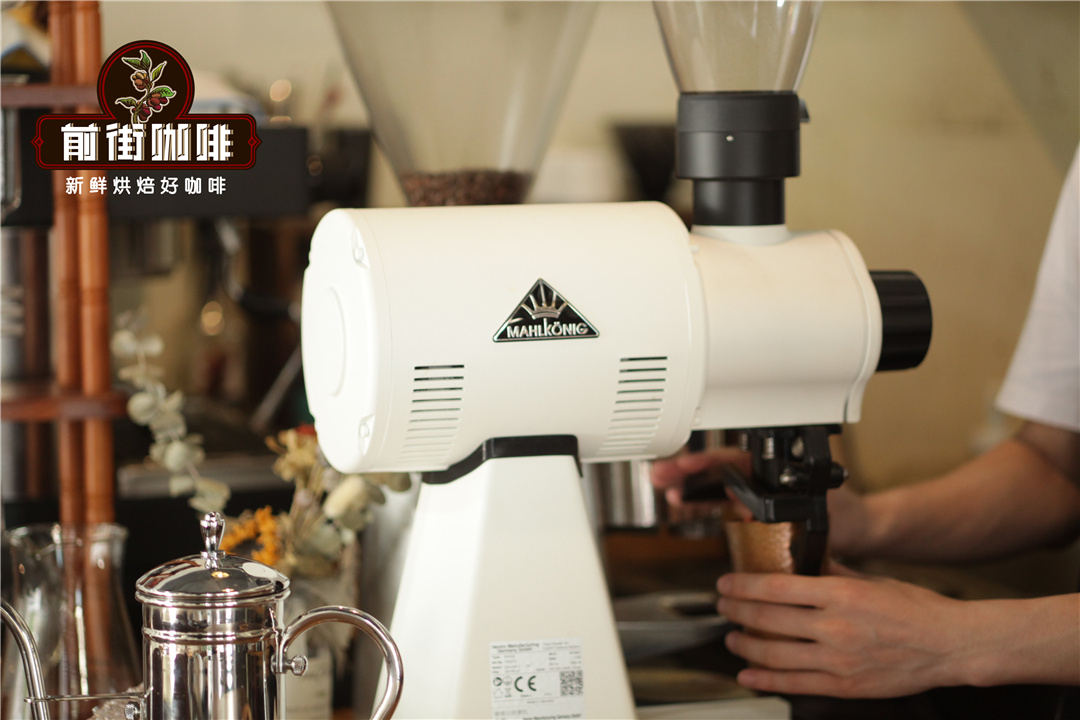
Then there's "Fuji R-4," which uses common grinder settings as the grind parameter and appears very reliable. If I use the same grinder as you, then your setting is my setting. Even across different models, many enthusiasts have created reference charts — "grinder A's setting a corresponds to grinder B's setting b" — establishing a standard system this way. This seems like the most scientific expression.
Here, FrontStreet Coffee would like to share a customer's story. This customer also loves pour-over, so he bought a Fuji R grinder from Japan — an authentic one. After more than half a year, he helped a good friend buy another genuine Fuji R grinder from Japan. While testing his friend's machine, he discovered that coffee ground at the same setting on his Fuji R differed in size from the new Fuji R. Fuji R A's 3.5 setting corresponded to Fuji R B's 4 setting.
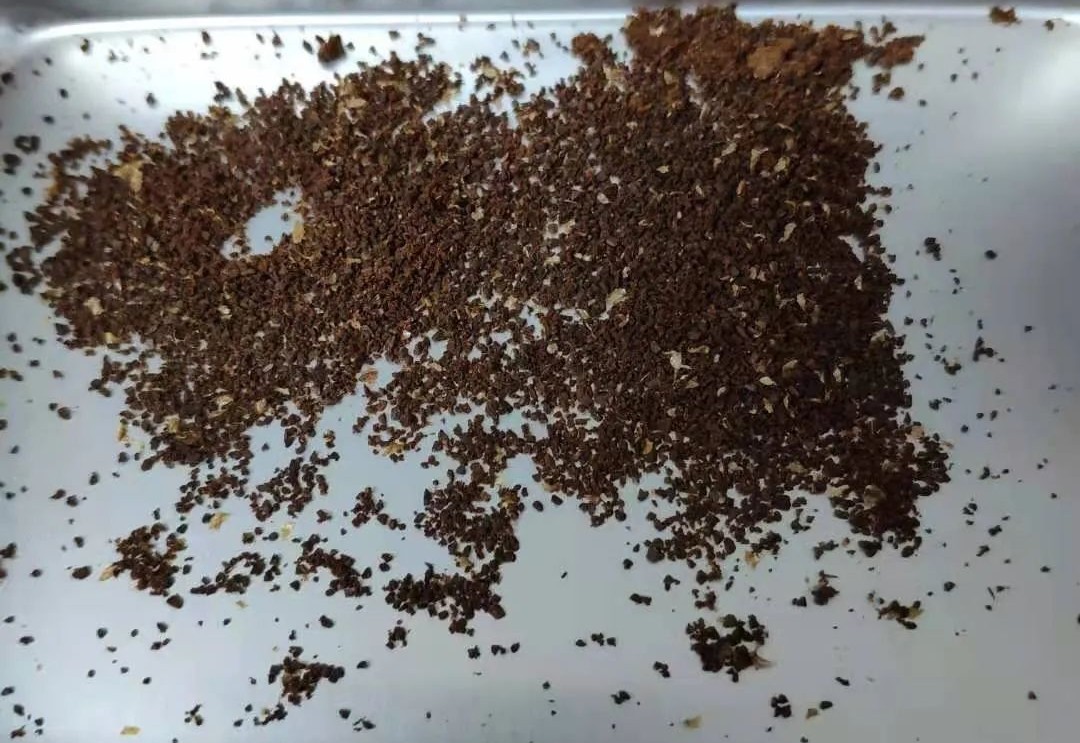
The point of sharing this is that even the same model of grinder at the same setting doesn't necessarily produce the same grind size — possibly due to manufacturing precision or burr wear. Reality does show errors, and that has to be acknowledged. So the standard broke down again.
Even so, FrontStreet Coffee believes these three approaches are still the most direct and acceptable ones. Although there's a chance of significant error, they can still work when paired with grinding reference charts.
A More Scientific Approach
Is there a more scientific method? Yes. Using coarse sugar as a reference and grinder settings as standards isn't wrong — it's just that the reference objects aren't reliable enough. So to define grind size more scientifically, the tool must be fixed with minimal variability.
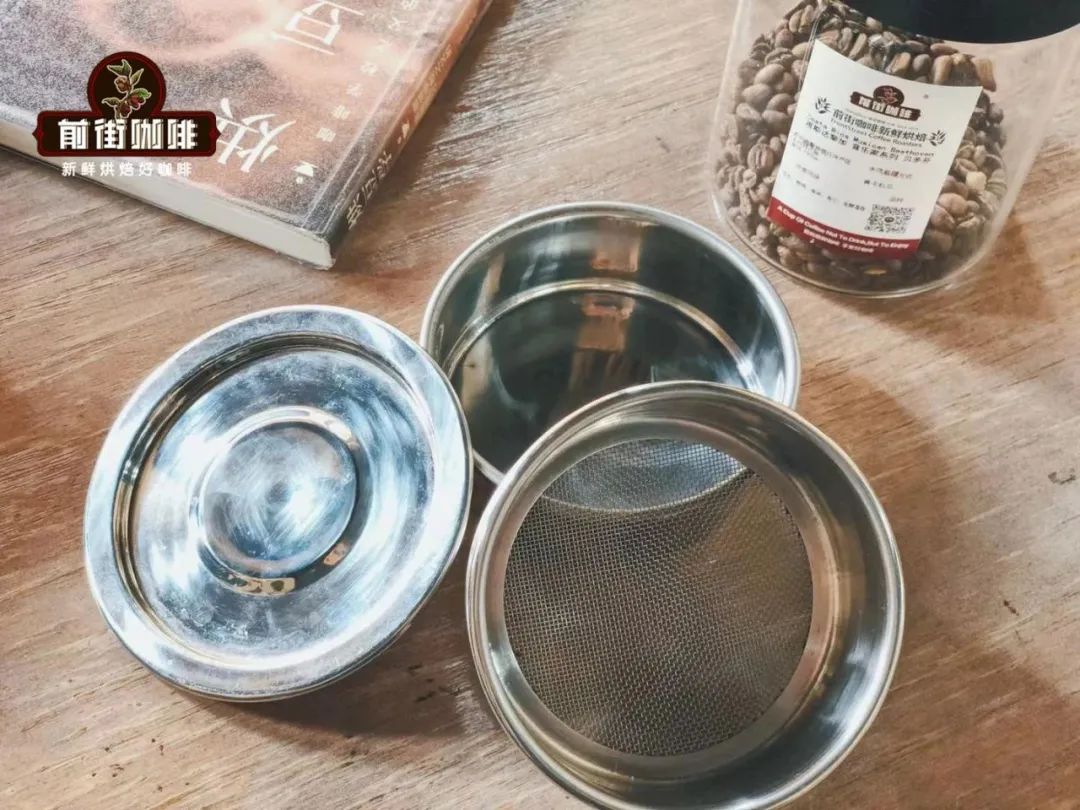
That's why we use standard sieves. This calibration method was initially used for cupping. For more objective and accurate cupping, the industry uniformly adopted No. 20 (0.85mm) sieves with a 70-75% pass rate as the standard for cupping grind fineness.
Why can sieves calibrate grind parameters? The No. 20 sieve FrontStreet Coffee refers to has the national-standard 0.85mm aperture, meaning that no matter who uses it, the sieve is the same and error is reduced. FrontStreet Coffee's standard for pour-over grind is an 80% pass rate on a No. 20 sieve. When sharing brewing methods with enthusiasts, we often use the pass-rate percentage on the No. 20 standard sieve as the measurement, so enthusiasts can calibrate at home with a sieve of the same specification and reach the same fineness. (This sieve costs about tens of yuan.)
No. 20 Sieve Calibration
This must be distinguished from using fine-powder sieves to remove fine particles — the purpose is different. This sieve is designed to help you clearly recognize what level your current grind is at; it's a fineness-judgment tool. The more coffee powder that passes through, the finer the grind. This can be expressed as a pass-rate percentage: an 80% pass rate is finer than a 75% pass rate.
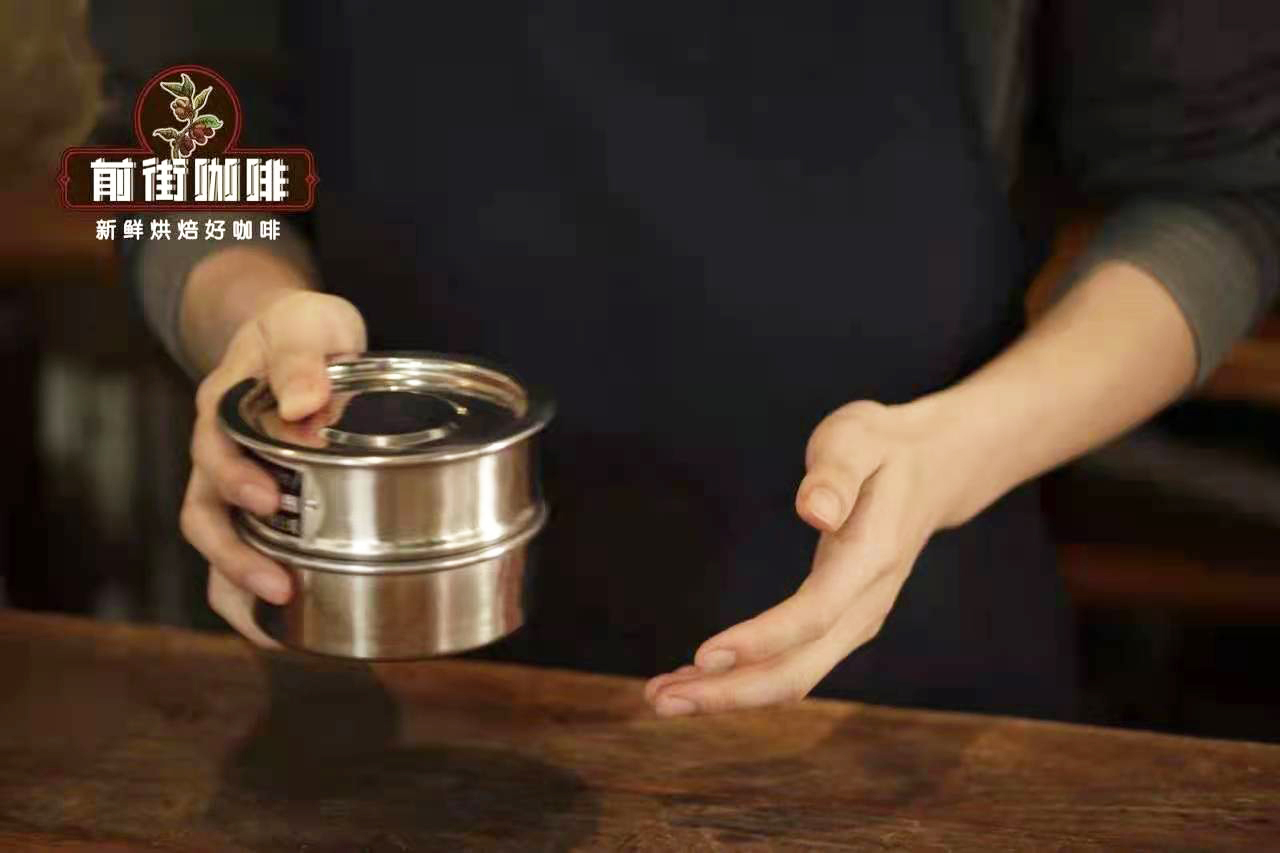
There's still a drawback: with only one sieve, even the particles that pass through vary in size. If the grinder is highly precise, this can be ignored. But if the grinder is poor quality, then no method will help much.
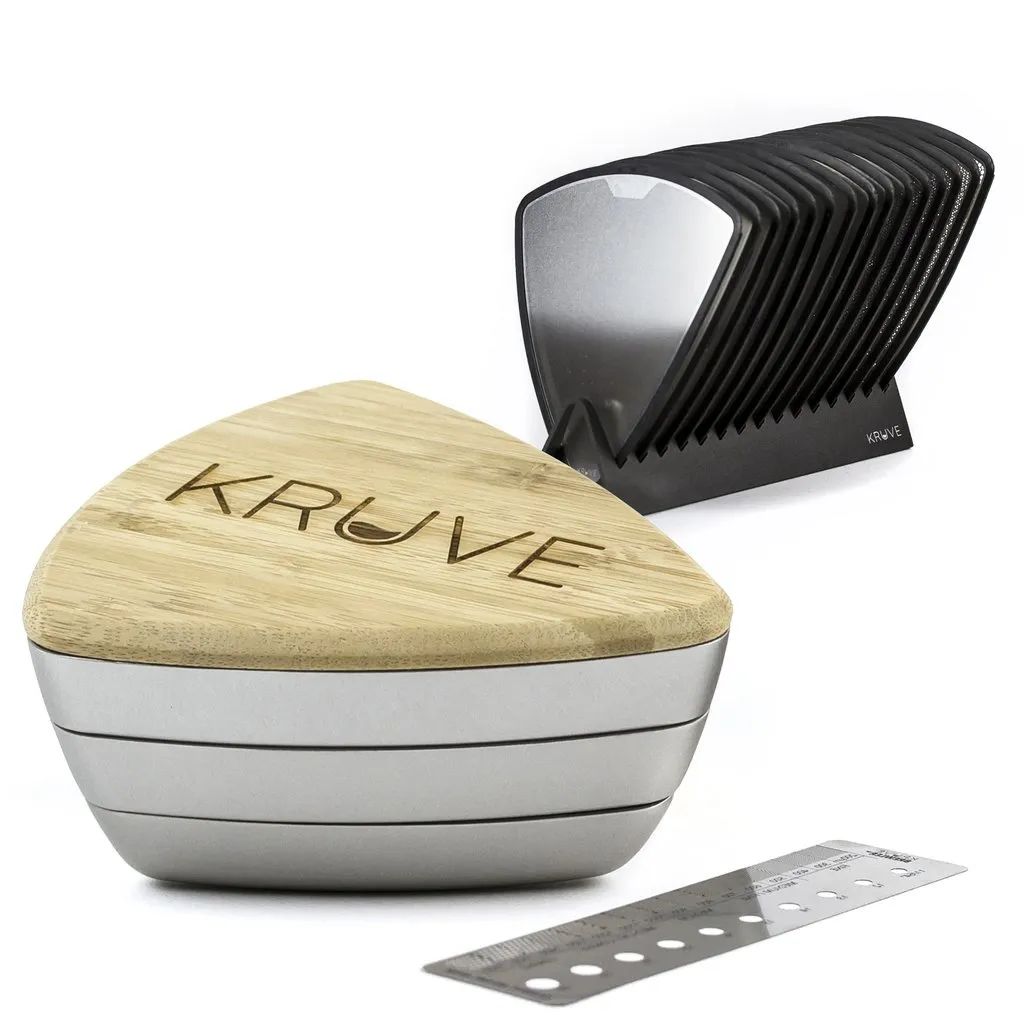
Of course, there are more precise coffee sieves, such as the Canadian brand KRUVE sifter, which has a complete range from 0.2mm to 1.6mm and can precisely map out the particle-size distribution of ground coffee. Aside from being a little pricey, it has no major issues. FrontStreet Coffee is only sharing that such a product exists — not suggesting everyone should buy one.
FrontStreet Coffee Recommendation
Once you can nail your grind, the next question is what to grind — and a V60-friendly bean makes calibration far easier to taste. FrontStreet Coffee's classic Yirgacheffe Guodingding is a washed lot from a small village cooperative whose clean citrus, lemon, and jasmine notes and lack of bitterness let you hear grind changes clearly, while the tropical-fruit Huakui and the raisin-honey Mozart from Costa Rica add sweet, layered fruit that rewards a consistent medium grind.
Brew any of them in a V60 at roughly 15g of coffee, a 1:15 ratio, and a grind hit around an 80% pass rate on a #20 sieve, and the difference between one click finer and one click coarser will show up plainly in the cup — the fastest way to turn a vague "coarse sugar size" into something you can actually control.
Important Notice :
FrontStreet Coffee is a long-established specialty coffee roaster in Guangzhou China, selling freshly roasted beans from its own farm in Yunnan as well as dozens of carefully selected single-origin beans from around the world for both pour-over and espresso. The products deliver consistently excellent quality and great value, with shipping within 24 hours. Guangzhou's FrontStreet Coffee shop is recommended by many coffee lovers, and the beans are now available online at the Tmall 。
FrontStreet Coffee has moved to a new address:
FrontStreet Coffee Address: 315,Donghua East Road,GuangZhou
Tel:020 38364473
 Scan and follow the En Gafei WeChat official account. Please indicate that the reprint comes from "En Gafei".