How to Pour Water for Pour-Over Coffee? How Many Stages of Pouring Are Best? What's the Difference?
Why Does Pour-Over Coffee Require Segmented Pouring?
Mainstream pouring methods today divide the brew into at least two stages. Why? Because... you need a bloom! The first pour is for blooming, and the subsequent pours do the extracting - hence two stages at minimum. Just kidding. What most enthusiasts really wonder about is how many pours to use after the bloom. Pour everything in one go after blooming and it's called "single-stream pouring." Split it into three pours and it's "three-stream pouring." FrontStreet Coffee typically uses two pours after the bloom - a method we call "three-stage brewing" (counting the bloom as a stage, and no, don't ask why it isn't called two-stream pouring!). So how does the number of pours affect the cup? With every other parameter fixed, FrontStreet Coffee compared single-stream, three-stage, and three-stream pouring using Panama Butterfly coffee beans.
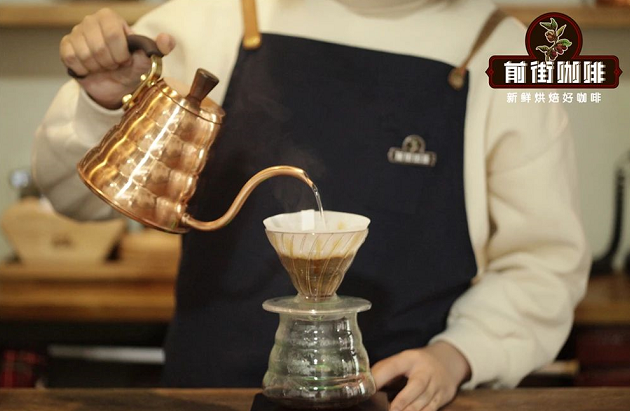
Looking at the brewing process: single-stream pouring raises the coffee bed (and liquid level) dramatically, while the two-pour three-stage method and the three-pour three-stream method keep the level relatively low. Because of the V60 dripper's design, once the liquid rises past its short ribs, coffee drains into the server much faster. The most direct consequence is brew time: with identical parameters, single-stream pouring finishes extraction fastest, three-stage comes second, and three-stream takes the longest.
So how do you decide how many stages to use? Generally speaking, for light-to-medium roast beans, FrontStreet Coffee recommends segmented pouring. These coffees degas less, so as the water level rises, the grounds - lacking gas to buoy them - sink and pile up at the bottom of the dripper. The scouring force of the water column then gets dispersed by the rising water, the grounds stop tumbling properly, and under-extraction follows. This is especially true for certain light roasts, which are denser and harder to extract. Poured all at once, a brew typically finishes its active phase in about 1 minute 20 seconds, leaving only slow dripping afterward. Without that agitation, the late drips usually taste weak.
Some enthusiasts like pouring extra water over the finished bed to taste the tail liquid - often surprised by its floral sweetness. But think about it: isn't that simply evidence that not all the good flavors were fully extracted in the first place?
Dark roast coffee is the opposite case. It degasses plenty, so a large portion of the grounds floats in the upper layer, rising with the water level; continuous pouring keeps them tumbling up and down. For dark roasts, excessive segmentation isn't recommended - one or two stages better express their cleanliness and body.
FrontStreet Coffee Recommendation
As our comparison showed, segmented pouring shines with delicate, high-grown coffees - and Panama grows some of the most delicate of all. Panama's coffee regions sit in the west of the country around Boquete, Volcan, Santa Clara, and Piedra de Candela, with Boquete and Volcan in Chiriqui province at the very heart of the coffee belt, blessed with fertile volcanic soil and old-growth forest shade.
A perfect candidate for your next three-stage brew is FrontStreet Panama Boquete Washed Geisha, grown at 1600 meters on volcanic ash soil with cool nights and misty days. It offers Geisha's signature jasmine florals, green tea, honey, and citrus-orange flavors. For a more affordable taste of Geisha lineage, FrontStreet Panama Washed Flower Butterfly blends Geisha with Caturra and Catuai from the Baru volcano area - full body, citrus acidity, and jasmine aroma that suit both pour-over and cold brew.
Important Notice :
FrontStreet Coffee is a long-established specialty coffee roaster in Guangzhou China, selling freshly roasted beans from its own farm in Yunnan as well as dozens of carefully selected single-origin beans from around the world for both pour-over and espresso. The products deliver consistently excellent quality and great value, with shipping within 24 hours. Guangzhou's FrontStreet Coffee shop is recommended by many coffee lovers, and the beans are now available online at the Tmall 。
FrontStreet Coffee has moved to a new address:
FrontStreet Coffee Address: 315,Donghua East Road,GuangZhou
Tel:020 38364473
 Scan and follow the En Gafei WeChat official account. Please indicate that the reprint comes from "En Gafei".

What are the different types of Geisha coffee? Flavor evaluation of Mirasu raisin-processed Geisha coffee, Costa Rican Geisha.