Kenya SL28 34 Pour-over Temperature? Kenya Coffee Varieties K7 Batian Ruiru Characteristics and Historical Stories
FrontStreet Coffee has recommended Kenya's Asalia coffee beans more than once, so by now you are probably familiar with the brewing details of this bean.
Dripper: V60
Water Temperature: 90-92°C
Dose: 15g
Coffee-to-Water Ratio: 1:15
Grind Size: Medium-fine (80% pass rate through a China-standard #20 sieve)
Brewing Method: Multi-stage pour
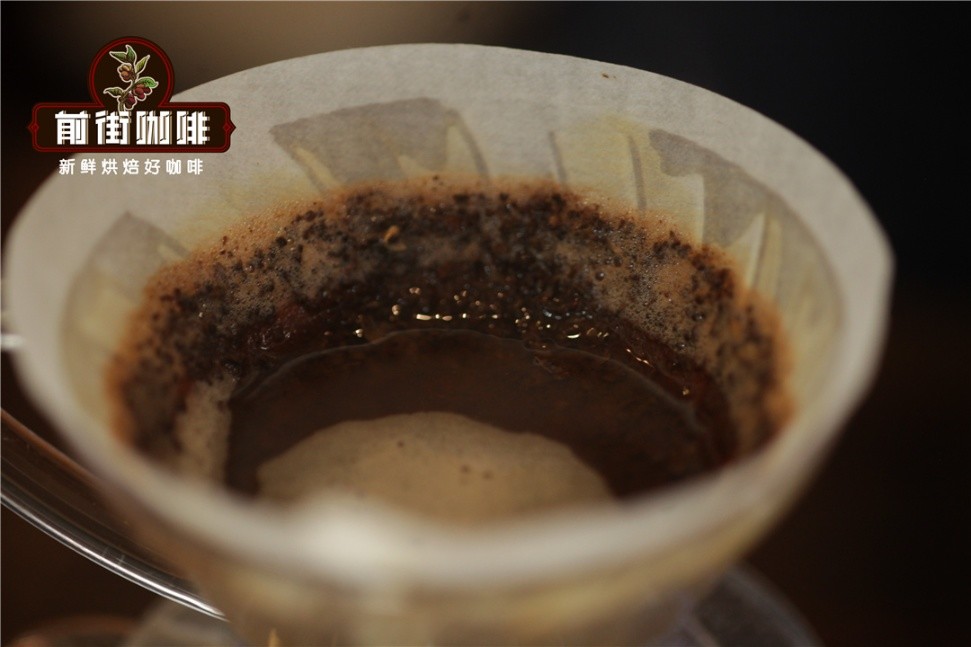
Bloom with 30g of water for about 30 seconds. Pour the next 125g in small, centered stages, then wait until the water level nearly exposes the coffee bed before pouring the rest, up to 225g in total. When the water level once again nearly exposes the bed, remove the dripper (timing starts at the bloom). Total extraction time is 2:00.
Coffee Varieties
Kenya's deep red, fertile volcanic soil, its mild climate, ideal equatorial sunlight, and carefully selected coffee varieties all contribute to the country's exceptional coffee quality.
Today's mainstream Kenyan coffee comes from five principal varieties:
- SL 28
- SL 34
- K7
- Ruiru 11
- Batian
First, some history: SL28 and SL34 were developed by Scott Agricultural Laboratories between 1922 and 1944, followed by K7. In the late 1960s, Kenya suffered a devastating outbreak of coffee berry disease and coffee leaf rust. The Coffee Research Foundation (CRF), which took over the government-managed laboratory at the time, responded by fast-tracking disease-resistant varieties — Ruiru 11 and Batian.
The varieties released through Kenya's coffee research institutions each have their niche: Ruiru 11 performs well at all altitudes and resists both coffee berry disease and coffee leaf rust; SL34 thrives at high altitudes with abundant rainfall; SL28 does best at medium to high altitudes where leaf rust pressure is low; and Kent is suited to lower altitudes, though it is susceptible to leaf rust.
K7 traces back to French Mission Bourbon (Coffea arabica var. bourbon) grown on the Legetet estate in Muhoroni, Kenya, and was selected for cultivation on the basis of cupping trials. (Robusta, Coffea canephora, is grown separately in the humid lowlands of western Kenya.)
SL28
SL28 is the flagship of Kenyan coffee. For its exceptional cup quality and strong yields, buyers flock to it. Scott Agricultural Laboratories selected SL28 in 1931 from a drought-resistant variety from Tanganyika — one that can be traced back to Bourbon. The "SL" prefix stands for Scott Laboratories, and 28 is the accession number.
Botanical Characteristics of SL28
SL28 tolerates water stress well, a trait inherited from its drought-resistant Tanganyikan parentage: the tree can go long periods without water and still bear fruit, thanks to its deep root system. An SL28 plot can even be left unattended for years and then be brought back into full production — a very unusual quality.
SL28 is a tall variety with green, occasionally bronze-tinted shoot tips. The beans are large, yields are high, and trees come into bearing after two years. SL28 thrives at medium to high altitudes of 1500-1700 masl and above; agronomists recommend planting 1,330 trees per hectare to ensure quality.
Its main drawback is disease. SL28 is susceptible to all the major coffee diseases: coffee berry disease (CBD), coffee leaf rust (CLR), and bacterial blight — a constant threat to Kenya's most popular variety.
SL34
SL34 closely resembles SL28: outstanding cup quality and high yields, though buyers generally consider its quality a notch below SL28.
Scott Laboratories developed SL34 by single-tree selection from the "French Mission" (Bourbon) stock — but as recent genetic work has shown, SL34 actually originates from a Typica-like variety.
Botanical Characteristics of SL34
In the field you can recognize SL34 by its tall stature and deep bronze (sometimes green) shoot tips. Like SL28, it is water-stress tolerant and deep-rooted, but its cherries and beans are larger and heavier than SL28's. SL34 takes two years to flower and bear fruit.
SL34 is adapted to high-altitude areas above 1500 masl with abundant rainfall — which is also where the danger lies. Because it is grown densely, farmers need strict protocols to control coffee berry disease; beyond CBD, CLR and bacterial blight are threats as well.
K7
K7 was the third successful variety released by Scott Laboratories, with high yields and good quality. Like SL28 and SL34, it traces back to Bourbon and shares their drought resistance — but K7 has one feature the other Scott Labs varieties lack.
Botanical Characteristics of K7
K7 is the only traditional Kenyan variety with resistance to certain races of CLR and CBD. That makes it an ideal choice for lower growing areas, from 1200 to 1500 masl, where leaf rust is present. Expect the first harvest about two years after planting.
K7 is tall with widely spreading laterals, bronze-green leaves, and light bronze shoot tips. Compared with the vivid acidity of SL28 and SL34, K7's cup is more understated: mild, subtle acidity carried by a full body.
Ruiru 11
In the late 1960s, with coffee berry disease and leaf rust running rampant, the Ruiru research station was charged with breeding resistant varieties. In 1985 they succeeded with Ruiru 11 — a composite variety assembled from 66 hybrid sibling lines, which is why it carries traits from all of them.
Botanical Characteristics of Ruiru 11
The Coffee Research Foundation named it for the station where it was bred. The "11" marks it as the first variety released by Kenyan scientists from a directed hybrid — an F1 hybrid. Ruiru 11 resists both CBD and CLR and is suitable for every growing altitude in Kenya.
It comes into bearing after 1.5 years rather than two, and farmers appreciate its compact growth: 2,500 trees can be planted per hectare, versus 1,330 for SL28 or SL34, so a given plot yields far more.
Its disadvantages: unless grafted onto traditional varieties, it is sensitive to water stress, and its cup quality is slightly below SL28, SL34, and K7.
Batian
In 2010 the Coffee Research Foundation released another disease-resistant variety: Batian. It resists both CBD and CLR, but what makes Batian special is that its morphology closely resembles SL28 — in the field you might mistake one for the other — and in the cup it matches the SL varieties' quality.
Botanical Characteristics of Batian
Batian is an interesting variety because it combines the best of both worlds:
- Resistance to CBD and CLR.
- High yields for farmers; planting density is 1,900 trees per hectare.
- Earlier-maturing cherries than traditional varieties.
- Larger bean size than other Kenyan varieties.
- Cup quality that can compete with SL28 and SL34.
Best of all, it comes into production after just 1.5 years. Batian is a tall variety with bronze-tinged leaves, and its cherries and beans are large, much like SL34's. Digging into the pedigree, Batian is a blend of many celebrated lines: SL34, SL28, K7, SL4, Rume Sudan, N39, and even Timor Hybrid.
Batian has the potential to become Kenya's most popular variety — its one weakness is sensitivity to acidic soils.
FrontStreet Coffee Recommendation
To taste what SL28 and SL34 can do in the cup, try FrontStreet Coffee's Kenya "Little Tomato." These SL28/SL34 beans from Thika, grown at 1550-1750 meters and given Kenya's classic 72-hour double-washed fermentation, are lightly roasted to preserve their vivid acidity: cherry tomato and dried plum fruit over a full, fresh-pressed-juice body, with middle-palate sweetness of snow pear and black plum, and a long finish of yellow sugar and green tea.
FrontStreet brews it on a V60 — the cone's 60° angle and single large outlet suit Kenya's bright, juicy profile perfectly — with 15g of coffee at a 1:15 ratio and water at 90-92°C: a 30g bloom for 30 seconds, staged pours up to 225g, and a total extraction of about 2:00.
Important Notice :
FrontStreet Coffee is a long-established specialty coffee roaster in Guangzhou China, selling freshly roasted beans from its own farm in Yunnan as well as dozens of carefully selected single-origin beans from around the world for both pour-over and espresso. The products deliver consistently excellent quality and great value, with shipping within 24 hours. Guangzhou's FrontStreet Coffee shop is recommended by many coffee lovers, and the beans are now available online at the Tmall 。
FrontStreet Coffee has moved to a new address:
FrontStreet Coffee Address: 315,Donghua East Road,GuangZhou
Tel:020 38364473
 Scan and follow the En Gafei WeChat official account. Please indicate that the reprint comes from "En Gafei".