
What Are the Flavor Characteristics of Honduran Coffee - Growing Caturra and Catuai Varieties
Introduction
When people talk about Honduran coffee, the first names that come up are usually Lychee Lan or Sherry beans. Here, FrontStreet Coffee looks at two other well-known Honduran estates, Sweet Orange and Las Gemelas, to see how their coffees perform.
Coffee growing regions
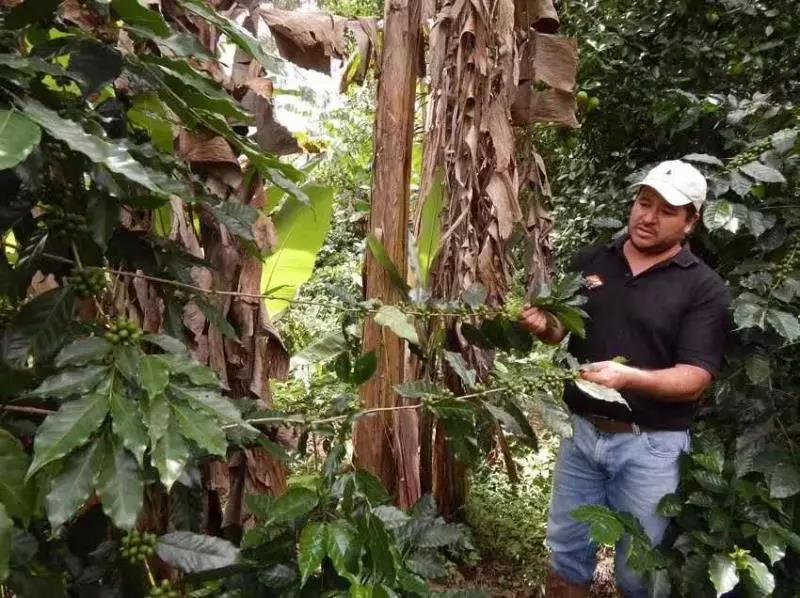
FrontStreet Coffee's Sweet Orange Estate coffee comes from the Marcala region, one of Honduras' most famous growing areas. Honduras has naturally suited soil and water, and the Sweet Orange Estate is home to a batch of high-quality coffee trees. The estate is named after its shade trees, which are tall wild orange trees. The wild orange aroma is very strong, and the coffee grown there has a rare depth of sweetness. The orange trees also layer floral and fruit notes into the cup. The estate now grows Catuai, Bourbon, and Geisha. Besides the fruit trees and coffee trees, it maintains windbreaks to protect the coffee and uses fertilizer made mainly from coffee cherry husks. In 2016, Sweet Orange Estate placed 14th in the Cup of Excellence, and the female owner, Carmen Fabiola Fiallos Melendez, finally realized her dream of becoming a specialty coffee farmer.
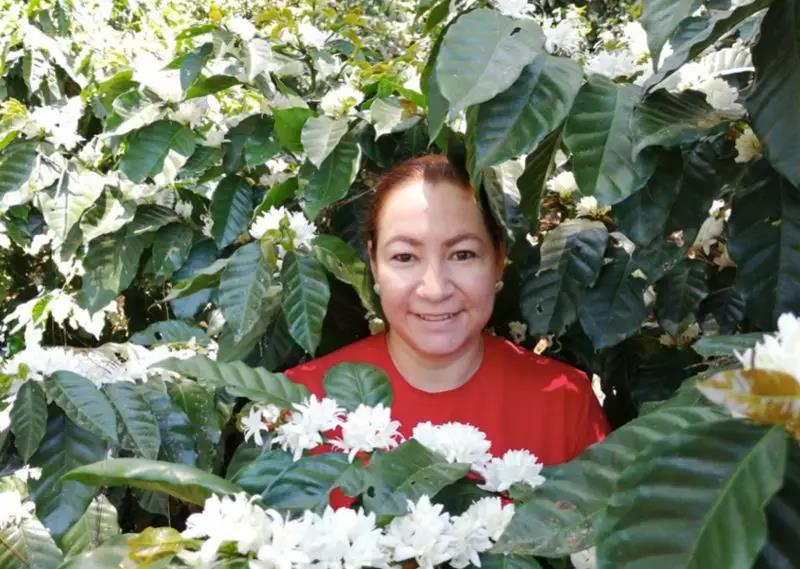
FrontStreet Coffee's Las Gemelas Estate coffee comes from the Copan region. Copan lies between the Ocotepeque and Lempira areas and is characterized by strong chocolate flavors combined with honey and caramel sweetness, with relatively light fruit notes. The growing altitude ranges from 1,000 to 1,500 meters, with the harvest running from November to March. Las Gemelas Estate was inherited by its owner, Neri Subiabue Ariana Aguilar, from her father and family. To ensure quality, they send their coffee to the ARUCO ENTERPRISE association every year for cupping and quality control. Neri chose the estate's name, Las Gemelas (The Twins), to commemorate the birth of her twin daughters.
For a long time the Neri family grew Yellow Catuai. In 2015, Neri adjusted her planting pattern, transplanting the original Yellow Catuai and planting a batch of Red Catuai instead. FrontStreet Coffee's Las Gemelas Estate coffee is the first batch of Red Catuai harvested in 2019. When processing this batch, the owner broke from the family's traditional washed method and innovatively tried natural processing, entering it in competitions. The two experimental batches submitted were processed with different fermentation times before drying, one fermented for 72 hours and the other for 90 hours, and they placed 28th in the 2019 COE competition. FrontStreet Coffee took part in that auction and bought the coffee.
Coffee bean varieties
FrontStreet Coffee noticed that both coffees use the Catuai variety. Catuai is a variety we encounter often, and many high-quality coffees from the Americas are in fact Catuai. In 1949, the Instituto Agronomico de Campinas (IAC) in Sao Paulo, Brazil, developed Catuai by crossing Mundo Novo with Yellow Caturra. After several generations of selection, it was officially released in 1972. Catuai is popular with farmers because of its high yield. Like Caturra, the plant is short and suited to intensive cultivation, with good resistance to wind and rain. It inherited Caturra's low plant height, which overcomes the drawbacks of Mundo Novo, and its fruit is firm and less likely to fall in strong winds, which compensates for the delicacy of Arabica fruit. After its release in the 1970s it spread to Central America and was widely planted in Guatemala, Honduras, Panama, and its country of origin, Brazil. Judged on flavor alone, with the right terroir and processing, Catuai can be quite wonderful.
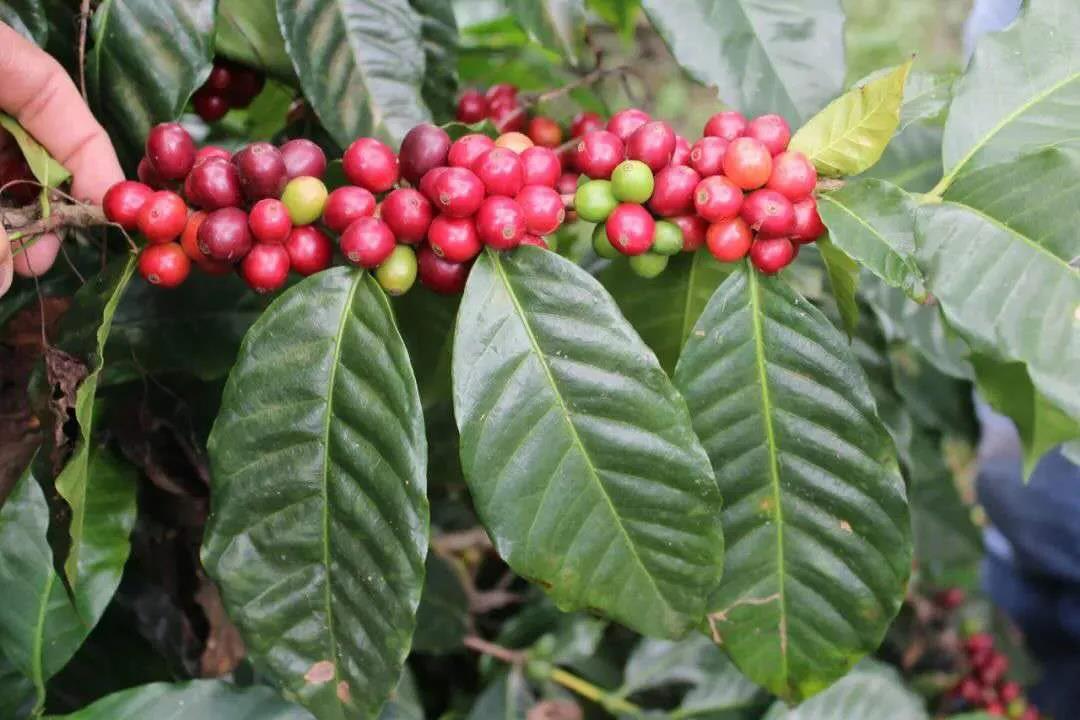
Catuai was introduced to Honduras in 1979 and officially released commercially in 1989. It is widely popular with farmers and today accounts for more than half of all production in Honduras. Because the plants are short they can be densely planted, and the flavor is good above 1,300 meters. Its one drawback is that it is very susceptible to pests and diseases, and Honduras' IHCAFE is working to develop hybrids of Catuai and Catimor to improve resistance. The Red Catuai used by Las Gemelas Estate is fully ripe fruit. Because only fully ripe cherries are selected, the sugar content in the fruit is very rich. Cupping the beans from both estates, FrontStreet Coffee found that Las Gemelas has higher sweetness than Sweet Orange.
Coffee bean processing methods
The Sweet Orange Estate lot that FrontStreet Coffee acquired uses the washed method. The selected cherries go into a depulper to remove their skin and pulp; the beans with remaining pulp and mucilage are placed in water to ferment for about 24 hours; after fermentation the parchment-covered beans are moved to flowing water channels to wash away the remaining pulp and mucilage; after washing they are dried in the sun or with a dryer until moisture drops to about 12%. Finally the parchment is removed. Washing makes this coffee's acidity richer and the overall cup cleaner. The green beans appear blue-green with a fresh acidic aroma.
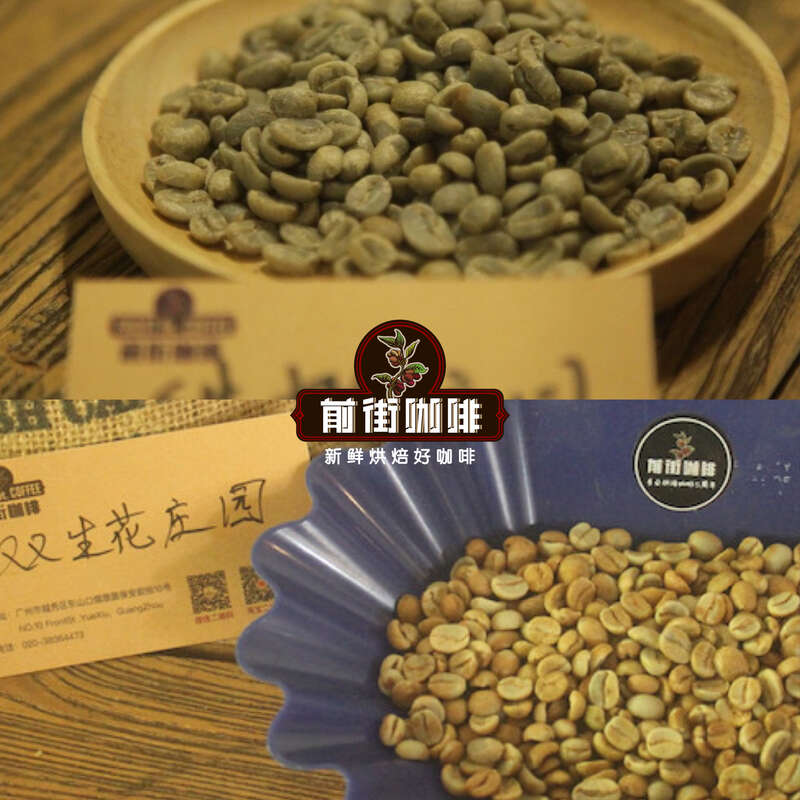
Las Gemelas Estate, meanwhile, uses the natural method, the oldest and most primitive way of processing coffee. Harvested cherries are spread on patios, sometimes even dried directly on roadsides, exposed to sunlight for about 27-30 days, reducing moisture from 60% to about 12%. Naturally processed beans have the lowest acidity, obvious sweetness, and high body, but slightly lower cleanliness. The green beans appear light yellow with a slight fermented aroma.
FrontStreet Coffee roasting records
FrontStreet Coffee's roaster roasted the Sweet Orange Estate using the Yang semi-direct flame method with 600g of beans. The roaster was preheated to 200°C before the beans were added, with the damper set to 3. After 30 seconds the heat was turned on and adjusted to 160. The return-to-temperature point came at 1'31". Holding the heat steady, the beans turned yellow at 5'15" and the grassy smell disappeared, marking the start of dehydration. The heat was reduced to 130 and the damper opened to 4. At 170°C the heat was reduced again to 110. At 8'40" dehydration was complete, with wrinkles and black spots appearing on the bean surface and the toast aroma turning to coffee aroma, the prelude to first crack. The heat was left unchanged, the damper opened to 5, and attention turned to listening for the crack. First crack began at 9'11" with the damper fully open at 5. Development time after first crack was 2 minutes, and the beans were discharged at 192.4°C.
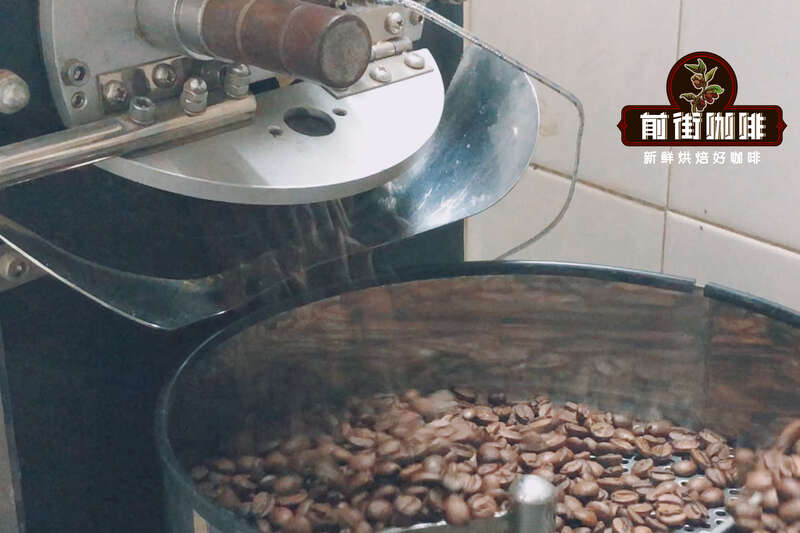
FrontStreet Coffee's roaster roasted the Las Gemelas Estate using the Yang semi-direct flame method with 300g of beans. When the roaster reached 175°C the beans were added immediately, with the heat at 130 and the damper set to 3. The return-to-temperature point came at 1'36". When the roaster reached 140°C the damper was opened to 3.5 with the heat unchanged. At 151.1°C the bean surface turned yellow and the grassy smell disappeared completely, marking the start of dehydration. At 176°C the heat was adjusted to 100 with the damper unchanged. At 8'28" deep wrinkles and black spots appeared on the bean surface and the toast aroma clearly turned to coffee aroma, the prelude to first crack. Again, listening carefully mattered. First crack began at 9'00" with the damper adjusted to 4. Development time after first crack was 1'40", and the beans were discharged at 196°C.
FrontStreet Coffee cupping comparison
FrontStreet Coffee cups within 8-24 hours of roasting the sample beans. Its baristas typically use 200ml ceramic bowls. The cupping water is 94°C, with the grind controlled to pass through a no. 20 standard sieve (0.85mm) at a rate of 70%-75%. The ratio is 11.1 grams of coffee to 200ml of hot water, or 1:18.18, which extracts a concentration exactly within the golden cup range of 1.15%-1.35%, with a soaking time of 4 minutes.
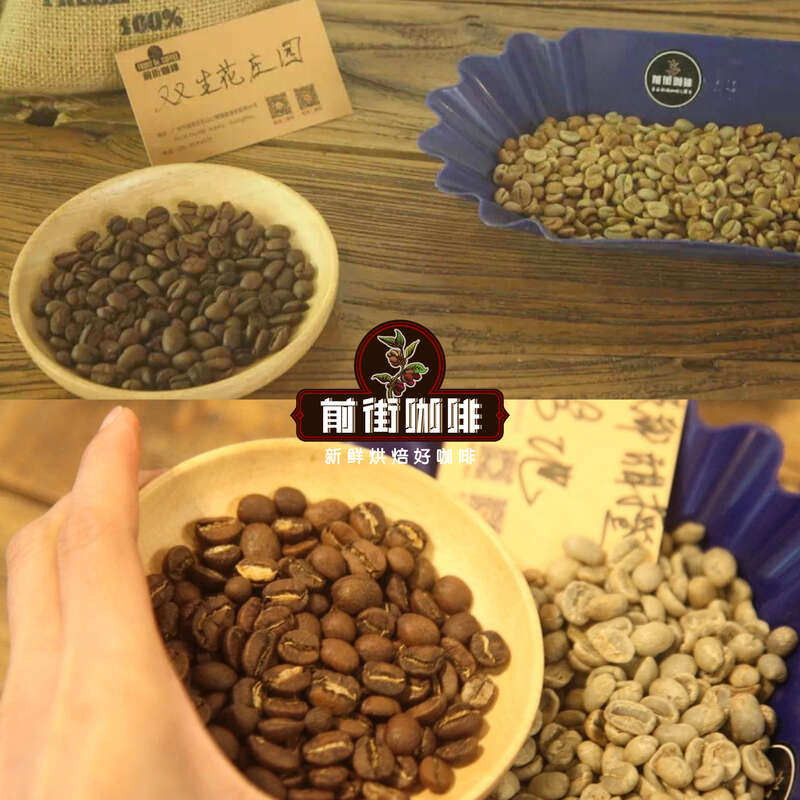
Sweet Orange Estate dry aroma: roasted peanuts, spices. Wet aroma: dark chocolate. Flavor: grapes, orange peel, almonds, brown rice tea, dark chocolate, caramel.
Las Gemelas Estate dry aroma: fermented aroma. Wet aroma: berries. Flavor: berry juice, grapes, ripe fruit fermented aroma, brown sugar.
FrontStreet Coffee brewing comparison
Dripper: V60#01
Water temperature: 91°C
Coffee-to-water ratio: 1:15
Grind size: medium-coarse / BG6s, 80% pass-through on a Chinese standard no. 20 sieve
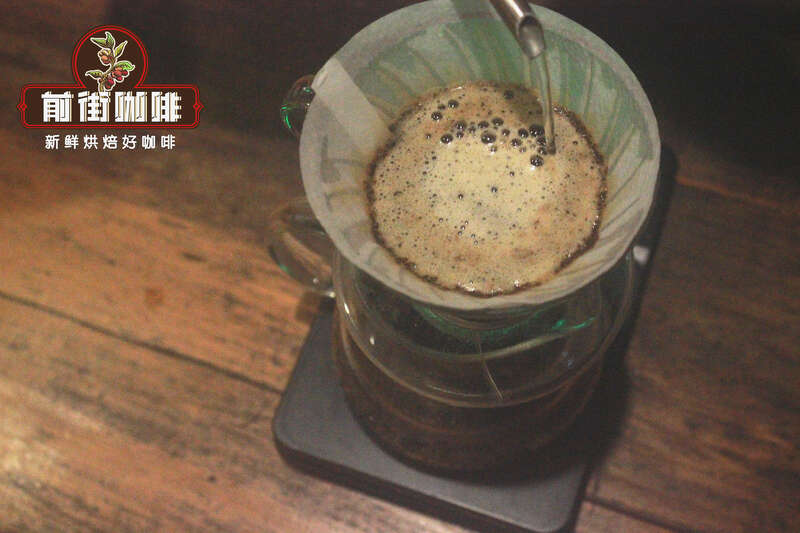
FrontStreet Coffee uses staged extraction: first pour 30g of water and bloom for 30 seconds; the second pour adds 95g of water (125g on the scale), completed in about 1 minute 5 seconds; the third pour adds 100g (225g on the scale), completed in about 1 minute 40 seconds; total extraction time is 2 minutes 10 seconds, then remove the dripper.
Brewing flavor: Sweet Orange Estate opens with orange peel aroma and the sweet-sour taste of grapes and oranges. The middle section brings almond and dark chocolate, with a caramel-like aftertaste and a clean mouthfeel. Las Gemelas Estate, meanwhile, has a full juice sensation on entry, with the fermented feeling of ripe berries, similar to the solid, full-bodied taste of wine, and a brown-sugar aftertaste.
FrontStreet Coffee Recommendation
Both of these Honduran lots turn on the same question: how much the variety and the process shape what ends up in the cup. Catuai gives structure and sweetness; washed processing keeps it clean and bright, natural processing pushes it toward ripe fruit and wine.
No variety illustrates that principle better than Geisha, and FrontStreet Coffee's Geisha selection spans both the country where it became famous and the country where it originated. Panama is where Geisha made its name, and the Emerald Estate line is the reference point. The Red Label, formally Esmeralda Special, is grown at 1,600-1,800 meters, must cup above 90 points for every batch, and is sold by individual lot, each with its own number from a single plot, so buyers can choose the precise flavor they want. The Green Label, or Private Collection, blends batches from several plots instead and expresses the estate's signature high-altitude Geisha profile at a more approachable price, which makes it excellent value. For a first taste of what people mean by "Geisha flavor," the entry-level Boquete Geisha from Panama delivers the classic citrus-honey character, oolong-tea impression, and delicate fruit acidity in distinct layers. On the Ethiopian side, Gesha Village grows Gori Gesha, Gesha 1931, and Illubabor Forest and grades its coffee into Gold Label Rarities, Red Label Growers Reserve, Green Label Single-Terroir, and Chaka batches. The Gold Label is Gesha 1931, about 10% of the village's production and the top coffee it produces outside auction, often chosen by competition baristas, while the Red Label is Gori Gesha, roughly 15% of production, scoring 88 or above on the SCA 100-point scale and sold as a single-terroir series with full traceability. For an entry-level Ethiopian Geisha, the Granja lot comes from a single-variety farm at the border of the Kochore and Granja Abaya areas, where the processing station was established in 2014, is run by Israel Degefa, and covers some 700 hectares of mostly uncultivated, fertile, shade-covered land; hand-picked ripe cherries are dried on raised beds for 14-20 days, and roasted medium-light the coffee shows bright citrus acidity, elegant ginger-flower aroma, and the ripe fruit sweetness of a finely textured Geisha.
Geisha is a medium-light, floral style with a hard bean, so it tends to sink and clog the dripper if you grind too fine. FrontStreet Coffee suggests a grind of about 78% pass-through on a China no. 20 sieve, roughly fine sugar, with 91°C water. For a pour-over, use 15g of coffee in a small Hario V60 at a 1:16 ratio, then brew in three stages: start the clock, pour to 30g and bloom for 30 seconds, then pour in a slow spiral to 125g, wait for the bed to drop halfway, and continue the spiral pour to 225g. Total extraction should finish in about 2 minutes 10 seconds to 2 minutes 20 seconds.
Important Notice :
FrontStreet Coffee is a long-established specialty coffee roaster in Guangzhou China, selling freshly roasted beans from its own farm in Yunnan as well as dozens of carefully selected single-origin beans from around the world for both pour-over and espresso. The products deliver consistently excellent quality and great value, with shipping within 24 hours. Guangzhou's FrontStreet Coffee shop is recommended by many coffee lovers, and the beans are now available online at the Tmall 。
FrontStreet Coffee has moved to a new address:
FrontStreet Coffee Address: 315,Donghua East Road,GuangZhou
Tel:020 38364473
 Scan and follow the En Gafei WeChat official account. Please indicate that the reprint comes from "En Gafei".

