19 Mesh Golden Mandheling: The Powerful Champion of Coffee Golden Mandheling Flavor Description: Strong Aftertaste
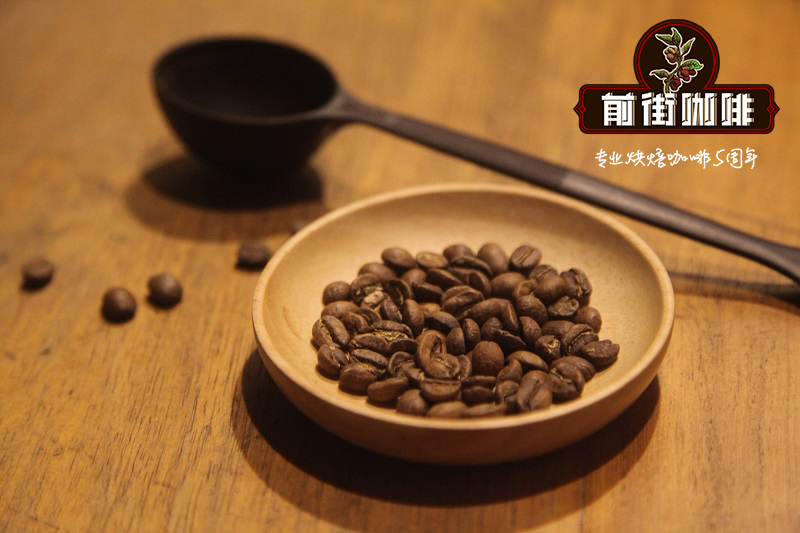
FrontStreet Coffee - Golden Mandheling Coffee Introduction
This time, the spotlight falls on the specialty bean known as Golden Mandheling—or "Golden Man," as we shorten it.
Golden Mandheling grows in the Lindong region of Sumatra, Indonesia, and belongs to the Typica variety. Elsewhere, Typica beans are nothing remarkable in size, but under Indonesia's distinctive geography and climate they grow exceptionally large; premium-grade Mandheling can even rival Maragogype beans.
The name "Mandheling" itself comes from an indigenous ethnic group in Indonesia. The story goes that a Japanese visitor, delighted by a cup of Mandheling coffee, asked the locals what it was called—but a mix-up over language and accent made the locals think he was asking about their ethnicity, so they answered "Mandheling." And a coffee name was born.
Mandheling beans are large and hard, but the trees are prone to defects during cultivation, so the raw beans need rigorous sorting after harvest. Indonesia's tropical humidity adds another wrinkle: the beans are processed by the wet-hulled method (semi-washed), in which the parchment is stripped while the beans still hold 30%-40% moisture. The exposed raw beans chip easily at the edges—hence the nickname "hoof beans." They are, frankly, the ugliest raw beans in the coffee world, and we like to joke that the uglier the Mandheling, the better it tastes.
What sets PWN's Golden Mandheling apart is that it passes through at least three rounds of hand selection, which is why it has long been synonymous with top quality and a matching price. The Golden Mandheling roasted at FrontStreet Coffee has gone through five rounds of hand selection—there's no need to sort out defective beans before roasting at all. From Sumatra to Mandheling, the name has gradually outgrown its origin; in our eyes it has become shorthand for a particular flavor, and just hearing those two words calls up its distinctive aroma.
Brewing Parameters
Equipment: Hario V60 dripper, Timemore Fish kettle
Grind size: Xiaogangpao 3.5
Water temperature: 85℃
Water-to-coffee ratio: 1:15
Coffee amount: 17g
Bloom for 25s with 35g of water. After blooming, use a medium water stream to slowly pour in circles to 120g. After the water level drops by 1/3, increase the water stream and slowly circle back to the center, then pour directly to 260g. Total time approximately 100s.
Tasting Notes
Wet aroma: Subtle detectable fruit acidity, rich mesona grass aroma, with pine notes and a slight sweet fragrance.
Sipping: Clean mouthfeel, high body and richness, strong aftertaste with bitterness giving way to sweet return. An elegant acidity that is deep yet not suppressed, followed by wild spices, creamy notes, dark chocolate, and clear caramel sweetness. The mouth is filled with aroma, extremely Eastern in charm.
FrontStreet Coffee Recommendation
Coffee may have originated in Ethiopia, but it only left that homeland as a beverage at the end of the 15th century. The Dutch brought seedlings to Java in the late 17th century, and coffee spread from there to Sumatra. When leaf rust devastated Java's trees in the early 20th century, Indonesian coffee cultivation pushed north to Sumatra, which now grows over 60% of the country's Arabica and Robusta. The traditional Mandheling heartland is the Lindong region around Lake Toba in North Sumatra, while the newer Aceh zone near the Gayo mountains by Lake Tawar produces beans prized for a more delicate aroma and a brighter cup.
Sumatra's rainy season overlaps with coffee harvest, which rules out the long 2-3 week natural drying used in Africa; with annual humidity of 70-90% and rainfall topping 2000mm, farmers developed the distinctly Sumatran wet-hulled process—peeling off skin and pulp, drying briefly, then machine-hulling the parchment while the beans are still half-dry. Exposure to the air and local microorganisms is what gives Mandheling its one-of-a-kind wild, earthy, herbal character.
Among all Mandhelings, PWN's Golden Mandheling is the benchmark. PWN selects only beans of 18 mesh and above, requires fewer than 3 defective beans per 300g sample to meet the top G1 grade, and applies three rounds of hand selection to remove every defect—raising both the cup's cleanliness and the intensity of its sweetness. FrontStreet Coffee's PWN Golden Mandheling comes with certification and the distinctive PWN-stamped bags, a mark of authenticity in a market where genuine Golden Mandheling is scarce outside Japan and the US. Roasted medium-dark to preserve its wild herbal character while bringing out dark chocolate and caramel, it is best brewed by hand: 87-88℃ water, 15g of coffee at a coarse-sugar grind, a 1:15 ratio, and a three-stage pour (30ml to bloom, 100ml to lift the bed and build the golden foam, then a gentle 95ml center pour to boost sweetness), yielding a full, heavy body with caramel sweetness, chocolate, and nuts.
Important Notice :
FrontStreet Coffee is a long-established specialty coffee roaster in Guangzhou China, selling freshly roasted beans from its own farm in Yunnan as well as dozens of carefully selected single-origin beans from around the world for both pour-over and espresso. The products deliver consistently excellent quality and great value, with shipping within 24 hours. Guangzhou's FrontStreet Coffee shop is recommended by many coffee lovers, and the beans are now available online at the Tmall 。
FrontStreet Coffee has moved to a new address:
FrontStreet Coffee Address: 315,Donghua East Road,GuangZhou
Tel:020 38364473
 Scan and follow the En Gafei WeChat official account. Please indicate that the reprint comes from "En Gafei".