Pour-Over Coffee Bean Recommendation: Balanced Flavor - Colombia

An introduction to Colombian coffee
Faced with FrontStreet Coffee's bean list, many beginners feel lost. The range is wide, but the bigger reason is that most newcomers do not yet know the flavor characteristics of the different growing regions, so choosing beans that suit them is hard. FrontStreet Coffee previously launched a daily-drinker series precisely so that anyone could enjoy the most representative regional flavors at the most affordable prices. If you have bought those daily beans, you probably already have a basic feel for the world's coffee regions. For those who do not, FrontStreet Coffee will now walk through the broad flavor directions region by region, starting with Colombia.
As the world's third-largest coffee producer by volume, Colombia guarantees both quantity and quality, which gives Colombian coffee a significant position worldwide. Colombia is the world's largest producer of washed Arabica and the only country that legally requires growing only Arabica varieties. Strong government support has also helped the country move from being a major heroin producer to today's coffee powerhouse.

Colombian coffee also fills a significant portion of FrontStreet Coffee's list, with varieties like Flower Moon Night, Rose Valley, San Jose, Sakura, Hanami, and the recent addition Orange Soda — each distinctive and praised by customers as highly memorable. Although Colombia is a major exporter of washed coffee, only one FrontStreet Colombian coffee, Hanami, is washed. It is a Geisha blend, and when dry it shows a clear spice and chamomile aroma. The first sip reveals a very bright acidity, and FrontStreet Coffee finds the sweet-tart sensation of citrus especially prominent.

By FrontStreet Coffee's understanding, more than 563,000 families in Colombia — nearly 800,000 people in total — are engaged in coffee cultivation, and 95% of growers farm less than 5 hectares. 60% of Colombian coffee growers cultivate less than one hectare, while those with more than 20 hectares account for only 0.5%. Total coffee area exceeds 881,000 hectares, or 24% of the country's arable land, and the national average is 1.7 hectares. Colombia has roughly 2.7 billion coffee trees, 66% of them planted using modern methods on plantations and the rest grown on traditionally managed small farms. Most coffee-growing families are in the middle of a generational handover to "Coffee 2.0," where a younger generation with better education and more exposure to outside cultures is updating traditional practice and becoming more open-minded.
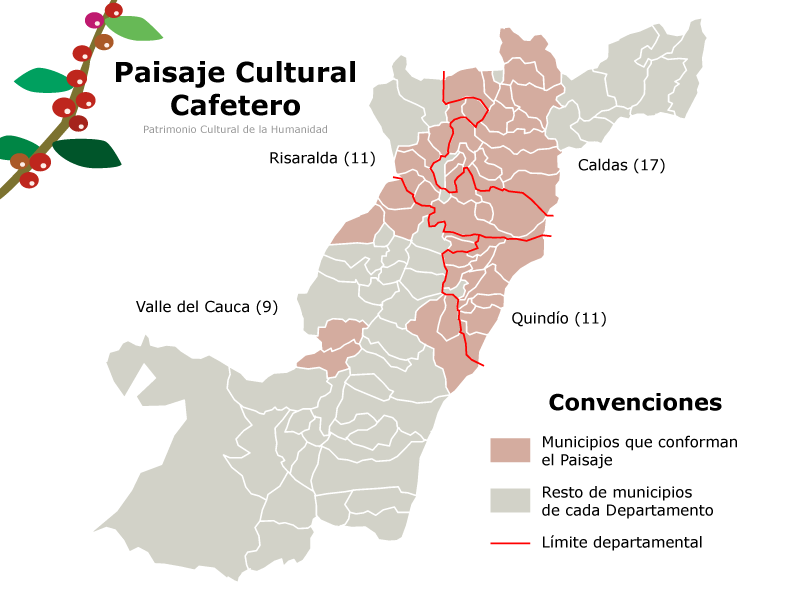
Why are so many people in Colombia involved in coffee? FrontStreet Coffee believes market demand and sales channels indirectly prove that Colombian beans are loved worldwide, and the reasons are obvious: superior quality and excellent flavor.
Colombia is said to have four treasures — flowers, gold, emeralds, and coffee — and FrontStreet Coffee agrees entirely, because the country has a uniquely advantageous natural environment for growing coffee. Located in the tropics, its climate varies with altitude, and its terrain is diverse, with low latitude and high elevation. Except for the relatively low altitude around Bucaramanga, most coffee grows between 1,200 and 1,900 meters. The main growing areas sit along the Andes, where vast numbers of coffee trees are planted in the highlands, and those mountain terraces give Colombian coffee a range of climates that make a year-round harvest possible, with different types ripening successively at different times. Fortunately, unlike Brazil, Colombia does not have to worry about frost.
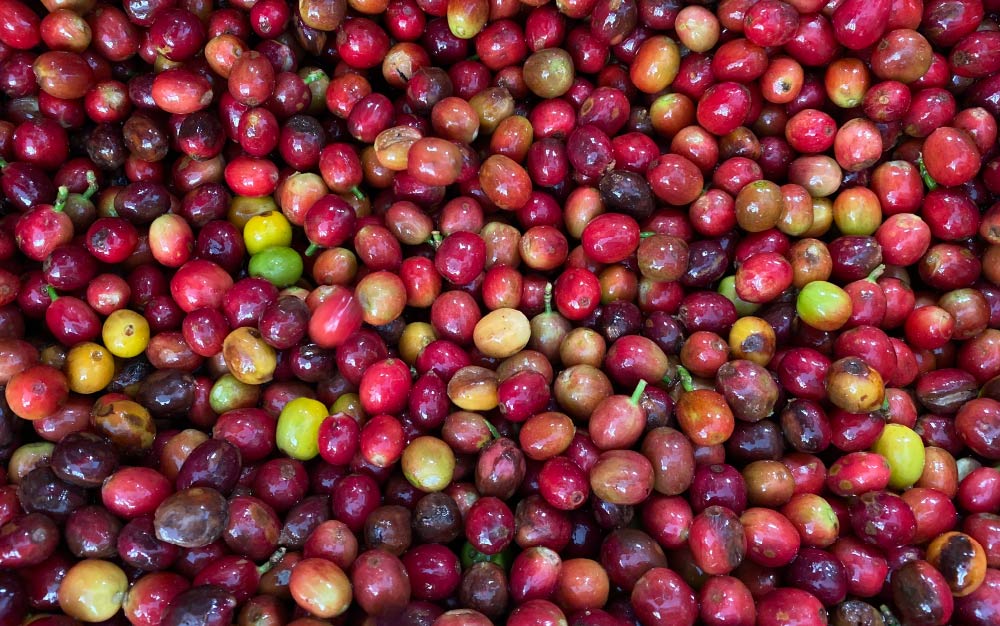
Colombia's southern eastern plains and Pacific coast have a tropical rainforest climate, while the northwest is tropical savanna. Average annual temperature ranges from 15.8 to 20.5 degrees Celsius, and in coffee regions it varies between 18°C and 22.5°C, with annual precipitation of 1,000-2,500 millimeters. Because of latitude differences and 86 distinct microclimates between production areas in the south and north, Colombian coffee has a strong regional character.
The natural environment is a major reason Colombian coffee is recognized worldwide, but beyond the most favorable growing conditions, the diligence of local farmers matters just as much. Colombian agriculture follows a small-farm model. Locals plant tall or banana trees around the coffee, and during the seedling stage they build shade structures to secure the cool, humid conditions the plants need. Because humidity is high and the temperature range inside the coffee forest is small, the beans mature slowly, which favors the accumulation of caffeine and aromatic compounds and leads to better quality.

Colombian coffee flavor profiles
FrontStreet Coffee will now cover the flavor characteristics of Colombian coffee through both daily beans and estate beans. First, Huila. FrontStreet Coffee's daily coffee is a washed Caturra from Colombia's Huila region. Huila Province lies in the southern part of the central mountain range in southern Colombia and is the country's most renowned specialty region. The area consists of hills ringed by mountains, with cultivation altitudes above 1,500 meters, and the country's most important rivers converge there, bringing abundant water.
Variety is another key point. Although Bourbon was the first coffee variety introduced to Colombia, the natural Bourbon mutation Caturra is also very popular there, and Caturra is believed to account for half of Colombian production. Now let's brew this bean.

FrontStreet Coffee brewing parameters:
V60 dripper
Water temperature: 91°C
Water-to-coffee ratio: 1:15
Coffee amount: 15g
Grind size: 80% pass-through on a China #20 standard sieve
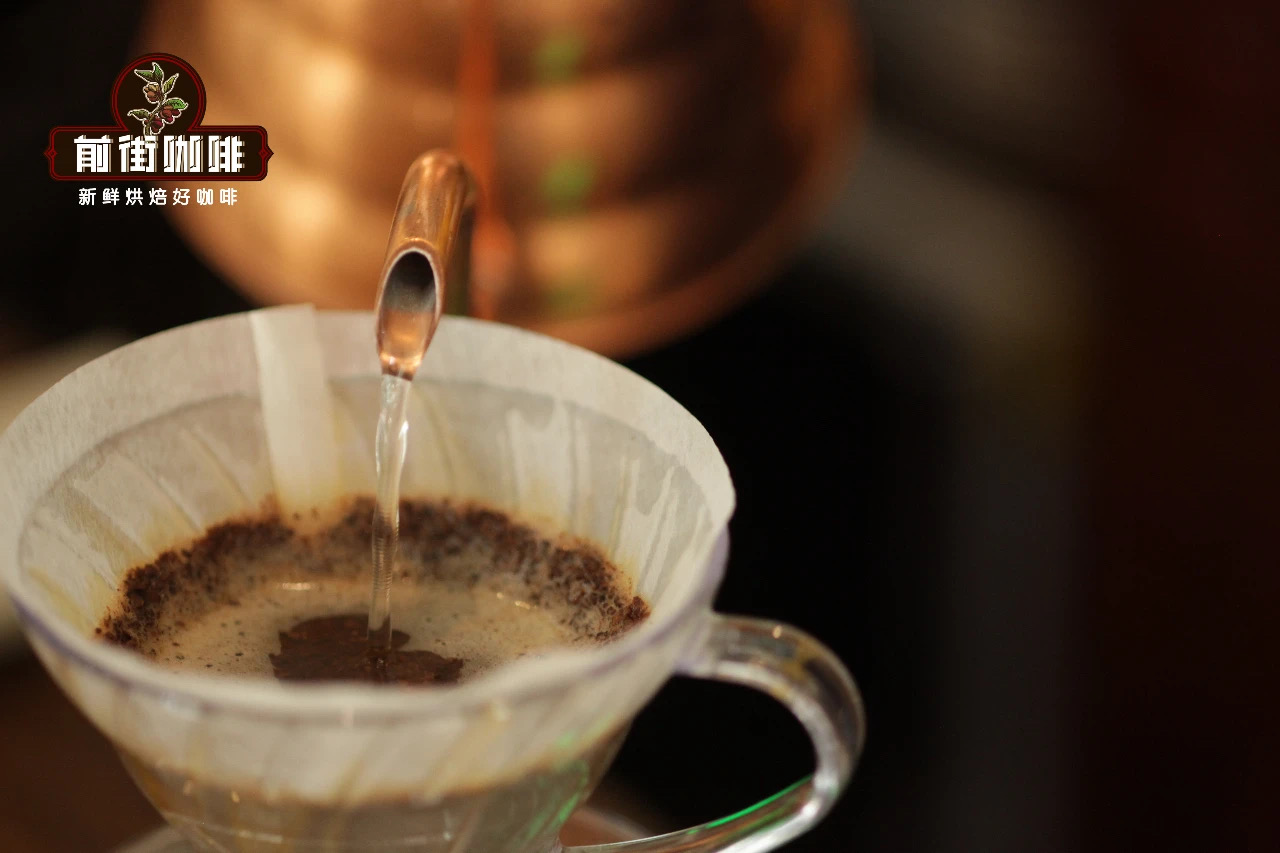
FrontStreet Coffee brewing technique: bloom with 30g of water for 30 seconds. Using a small stream, pour in a circular motion to 125g, then pause. When the water level drops and is about to expose the coffee bed, continue to 225g and stop. When the bed is about to be exposed again, remove the dripper. (Timing starts from the bloom.) Extraction time: 2'00". Colombian Huila flavor: the first sip brings nutty flavors with a high body, leaning toward caramel sweetness, with a subtle fruit acidity at lower temperatures.

Beyond daily beans, FrontStreet Coffee currently offers Flower Moon Night from the Huila region as well. Though from the same region, its flavor is significantly more refined. It comes from the El Diviso farm in Huila, and the anaerobic natural process extends fermentation, opening up more flavor possibilities. Using the same technique, FrontStreet Coffee found rich floral aromas, a very balanced flavor, a strawberry-jam-like mouthfeel, and dark cocoa on the finish; the fermented character is noticeable without overpowering.

FrontStreet Coffee loves Colombian beans partly for their quality, but also because the country has a complete system behind them. That is undoubtedly good for farmers, since guaranteed quality draws more green-bean buyers. The Colombian Coffee Growers Federation (FNC) is the country's only official coffee industry guild and, since its founding, has become one of the world's largest agricultural non-governmental organizations. It represents more than 540,000 coffee-farming families, promoting collaboration and joint decision-making while safeguarding the interests of growers and their families, helping Colombian farmers reach the consensus they need and secure appropriate welfare. The FNC also supports different areas of production — technology research and development, optimizing production costs, improving coffee quality, and providing technical assistance and cultivation quality assurance through extension services — and, as Colombia's largest green-bean exporter, it also carries responsibility for export quality control, ensuring every green bean exported from Colombia meets the standard.

FrontStreet Coffee Recommendation
Colombia's strength is its range: the same country can deliver a clean, balanced daily cup or an intense, fruit-driven competition lot, which is exactly why FrontStreet Coffee's Colombian line spans both ends.
For the balanced everyday end, FrontStreet Coffee Colombia Huila is the benchmark. Washed Caturra from Huila — the country's best-known specialty region, planted above 1,500 meters and watered by Colombia's most important rivers — it is roasted medium-dark to foreground dark chocolate and nutty sweetness, with moderate oils and a full body. It works as a pour-over, a French press, a moka pot, or an espresso machine, and makes an easy Americano or latte. When you want the vivid, modern side of Colombia, FrontStreet Coffee Colombia Finca La Divisoria Papayo delivers: grown at 1,650-1,800 meters, processed as an anaerobic natural, and roasted medium-light to preserve its native fruit character, it leads with jasmine and citrus on the dry aroma, then passion fruit, blueberry, grape, and apricot on the palate, a bright but soft acidity, a light spice note mid-cup, and a lasting cocoa sweetness on the finish; it suits pour-over, espresso SOE, and cold drip, and an iced pour-over best shows its fresh, smooth grape-juice quality. And for anyone with a home espresso machine or moka pot, FrontStreet Coffee House Blend is the practical recommendation — a blend built for coffee shops that combines Brazil's creamy nut sweetness with Colombia's dark chocolate bittersweetness, pulling a fine golden crema and making a rich, smooth latte.
Colombia is forgiving across brewers, but match the method to the roast. The washed, medium-dark lots like a slightly lower water temperature and a medium grind and will perform in almost any device; the anaerobic naturals reward a gentler hand — moderate water and a slow, even pour — so their tropical fruit stays lifted and the finish remains clean rather than heavy.
Important Notice :
FrontStreet Coffee is a long-established specialty coffee roaster in Guangzhou China, selling freshly roasted beans from its own farm in Yunnan as well as dozens of carefully selected single-origin beans from around the world for both pour-over and espresso. The products deliver consistently excellent quality and great value, with shipping within 24 hours. Guangzhou's FrontStreet Coffee shop is recommended by many coffee lovers, and the beans are now available online at the Tmall 。
FrontStreet Coffee has moved to a new address:
FrontStreet Coffee Address: 315,Donghua East Road,GuangZhou
Tel:020 38364473
 Scan and follow the En Gafei WeChat official account. Please indicate that the reprint comes from "En Gafei".