Panama Hartmann Estate Maragogipe Pacamara Winey Natural Process Pour-over Parameters Sharing
Panama Finca Hartmann Pacamara Winey
Basic Information
Country: Panama
Region: Chiriqui
Altitude: 1,260 - 1,500 meters
Farm Owner: Ratibor Hartmann
Variety: Pacamara
Processing Method: Winey/Natural drying, dried on African-style raised beds
Certifications: Bird Friendly, Shade-grown
The Story of Hartmann Estate
The Hartmanns are Panama's most storied coffee family, and Finca Hartmann was the first farm to grow coffee in the Volcán region. They take quality seriously and are always experimenting with new agricultural techniques.
The family patriarch, Ratibor Hartmann Troetsch, took over his father's coffee business in Santa Clara, in the Volcán region, and founded Hartmann Estate in the 1940s. He was, in many ways, the pioneer of what is now the celebrated Volcán coffee region. To put that in perspective: this year's "Best of Panama" natural Geisha champion "La Mula," last year's Geisha champion "Ironman" from Aurora Estate, and Ninety Plus's Geisha farms all come from Volcán, not Boquete. The two regions sit on opposite sides of the Barú Volcano—one facing the Atlantic, the other the Pacific—and their coffees taste strikingly different.
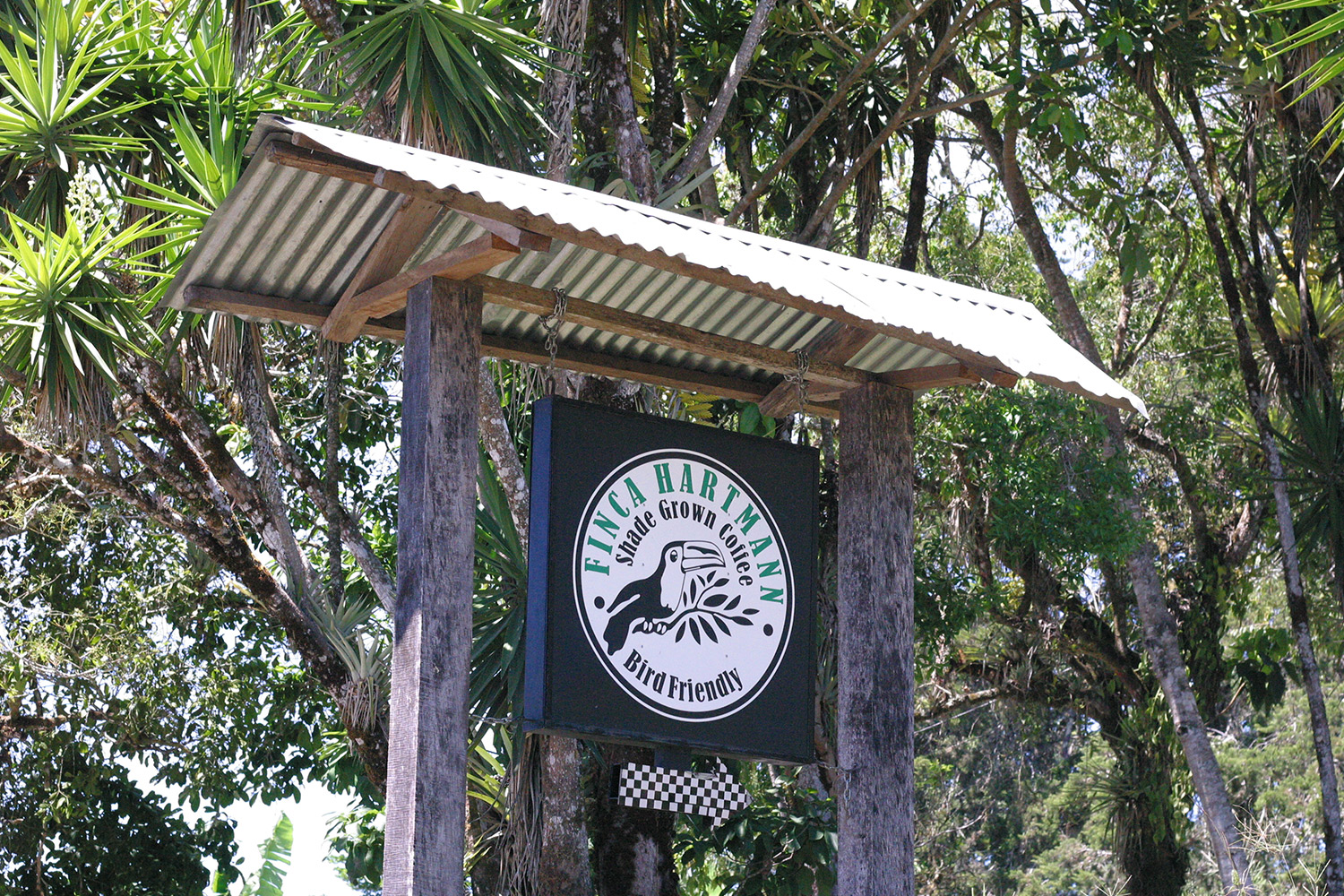
What set the elder Hartmann apart most of all was his respect for the natural environment. When his father bought 500 hectares of land, most of it was still forest. After inheriting the farm, friends urged Hartmann to clear the forest and plant coffee on a large scale to make real money. He ignored them and kept the original forest largely intact. From his generation onward, the family became research partners with the Smithsonian Tropical Research Institute and other wildlife conservation organizations. Scholars visiting the estate discovered numerous protected species and birds, publishing academic papers and even recording birdsong there. The third generation of Hartmanns grew up on the farm, and they have carried on both the coffee operation and the family's commitment to forest conservation—the estate trademark even uses the words "Bird Friendly."
Hartmann Estate sits in the Barú Volcano region on nutrient-rich volcanic soil, where tall primeval trees create ideal conditions for shade growing. Shade-grown coffee ripens more slowly, building higher sweetness and brighter acidity. The highland microclimate of Chiriquí Volcán gives Hartmann coffee an excellent foundation. The estate's lowest plots sit above 1,200 meters, temperatures are mild, and annual rainfall averages 175 inches. The family grows a wide range of varieties: Typica, Caturra, Catuaí, Bourbon, Paché, Pacamara, Maragogipe, and, in recent years, more and more Geisha. Processing spans washed, natural, and honey methods, and the pulp and skins removed during processing go back onto the plantation as fertilizer.
Today the estate is run by the patriarch's five children, led by the eldest, Ratibor Hartmann Jr., with each sibling in charge of their own area: Allan, Alexander, Allison, and Kelly. Allison is the only daughter and, quite possibly, the best English speaker of the bunch. Beyond producing outstanding coffee, Hartmann Estate also processes cherries for neighboring farms.
An Introduction to the Pacamara Variety
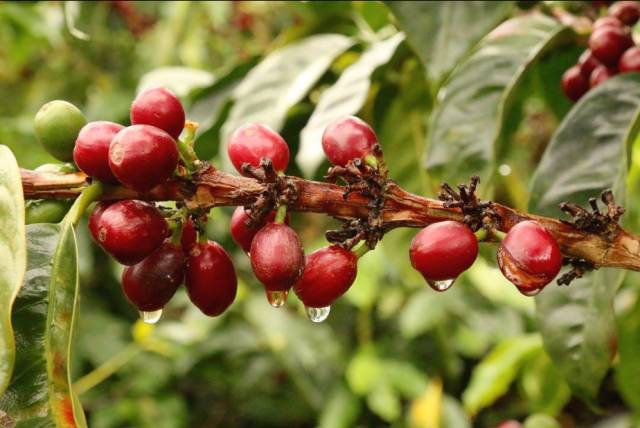
Pacamara is an artificially bred variety created in El Salvador in 1958, a cross between Pacas and Maragogype. It combines the strengths of both parents and then some: clean and smooth, mellow and silky, with lively acidity, rich flavor, and a surprisingly long finish. It has Pacas's excellent cup profile while inheriting Maragogipe's oversized beans—at least 70-80% the size of Maragogipe, with 100% of beans reaching screen size 17 and 90% reaching screen size 18. The average bean length is 1.03 cm (typical beans run about 0.8-0.85 cm), average width is 0.71 cm (typical: 0.6-0.65 cm), and thickness is 0.37 cm, giving the beans a full, round shape. The name simply fuses the first four letters of each "parent": Paca + mara = Pacamara.
At El Salvador's 2005 Cup of Excellence, Pacamara stunned everyone: among the top ten lots, Pacamara took second, fifth, sixth, and seventh place!
In 2007, Pacamara won back-to-back championships at the Cup of Excellence competitions in both Guatemala and El Salvador. From then on there was no stopping it—the variety has held top positions in major competitions ever since and is acclaimed internationally as a rising star on par with Geisha.
Consider Guatemala's Cup of Excellence alone: from 2008 to 2017, Pacamara claimed the championship throne in 7 out of 10 years.
Thanks to this extraordinary competition record, in 2017 the Best of Panama (BOP) committee decided to give Pacamara its own competition category.
Yet for all its success, Pacamara has real drawbacks: it demands more from soil, climate, environment, and altitude, yields are low, and resistance to coffee leaf rust is poor—so it remains far from widely planted.
Pacamara is no longer especially rare today, but it is still uncommon on the market. Pacamaras from Guatemala and El Salvador in particular are considered the benchmark and have many devoted followers internationally, which makes them all the rarer to find.
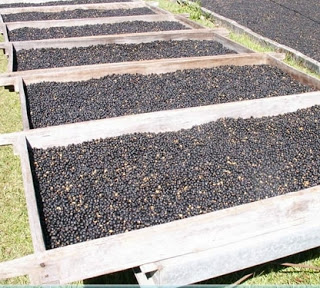
An Introduction to the Winey/Natural Process
Despite the name, no wine is added to the green beans in the winey natural process. Rather, the fermentation style and degree resemble wine fermentation. The steps are similar to those of ordinary natural processing, but the fermentation time is longer:
1. After harvest, farmers take fully ripe red cherries straight to the drying patios for sun drying;
2. Throughout drying, the degree of fermentation is monitored continuously;
3. After several days, the cherries are fully dried;
4. The dried cherries are hulled to strip away pulp and skin, releasing the green beans.
Advantages: Winey natural lots use a higher proportion of fully ripe red cherries and a longer fermentation than ordinary naturals, which boosts sweetness in the cup and builds richer layers of wine-like flavor.
Disadvantages: The process is labor- and time-intensive, so it cannot be scaled up. It is generally reserved for pricier coffees.
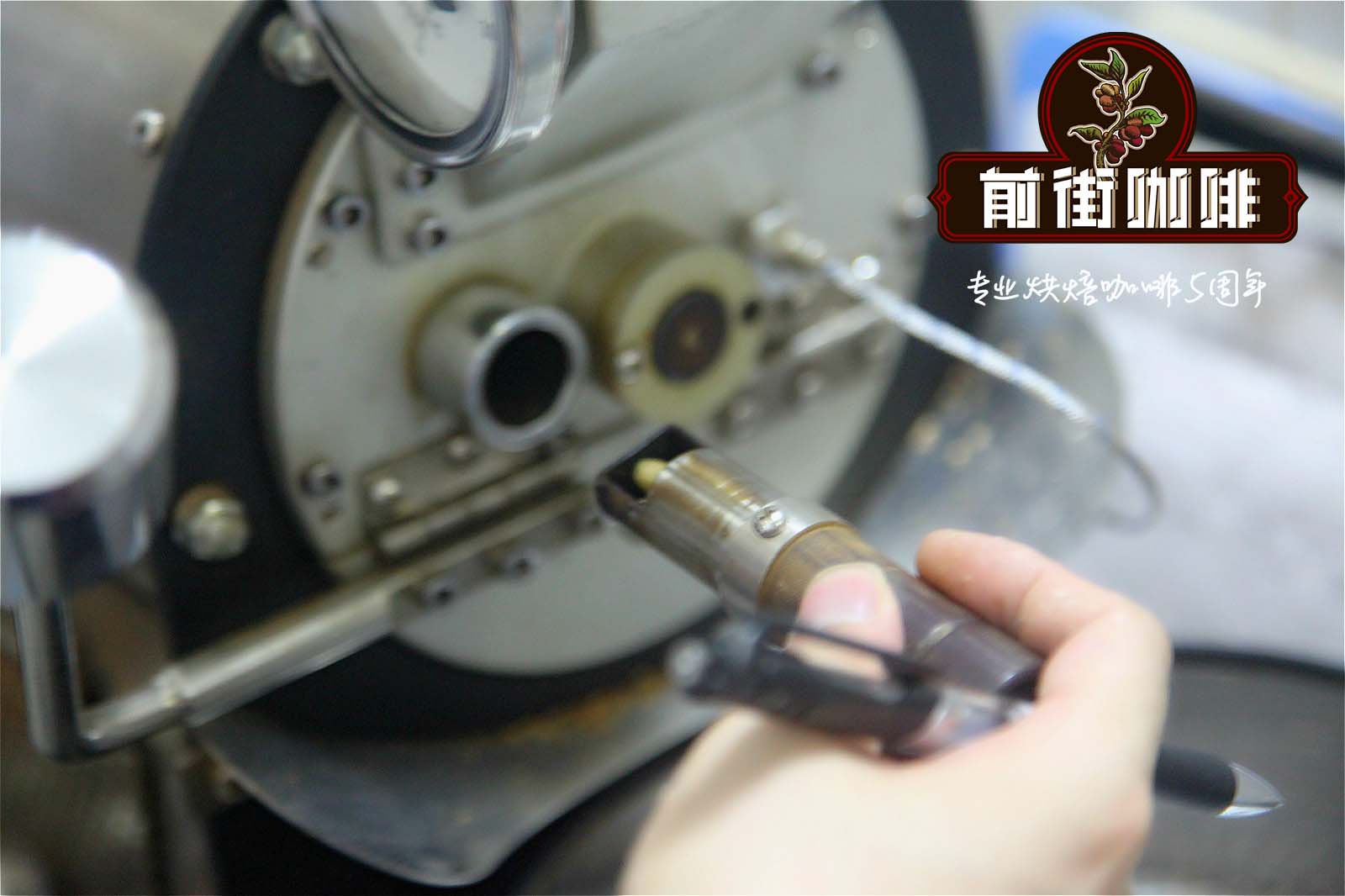
Roasting Suggestions/Analysis
This lot is the large-bean Pacamara: big particles, high density, and—since these are current-crop beans—a fairly high moisture content. During roasting it absorbs heat slowly, but the Maillard reaction moves quickly, with the yellowing point arriving around 5 minutes. For a first roast, try a slightly higher charge temperature, say 200°C, with relatively strong heat at the start, then taper the heat gradually as needed: once the beans pass the yellowing point, reduce heat to stretch the drying phase so the large beans dehydrate fully; from the end of drying to first crack, hold medium heat or nudge it up slightly to speed the Maillard reaction and build pressure before first crack. Just before first-crack signs appear, ease the heat back to avoid scorching the bean surface. With this approach, the drying phase runs relatively long, with the temperature climbing 6-8 degrees every thirty seconds, yet the beans still enter first crack between 8:30 and 9:30, preserving more of the floral and fruity aromatics and keeping the acidity clean and bright. As a rule, drop the beans between dense first crack and the end of first crack—roughly a medium roast.
Cupping Flavor Description
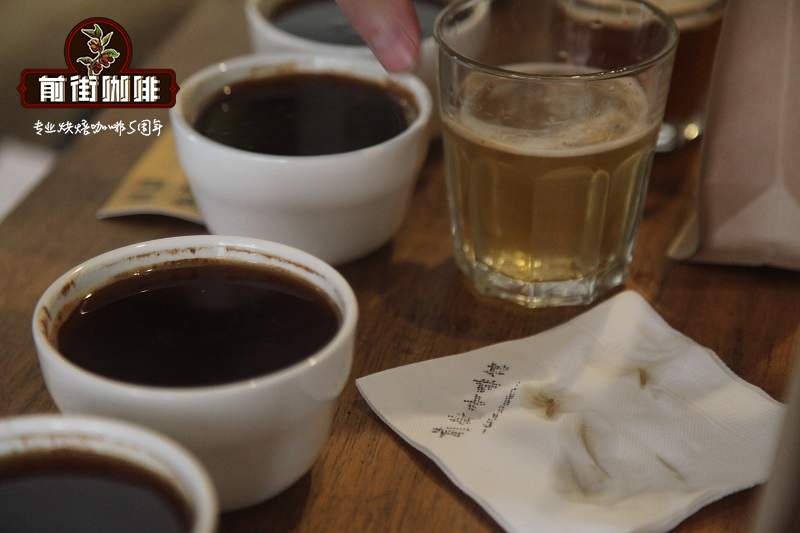
Flavor: Fresh florals and smoky, woody spice interweave with a full-bodied, robust strawberry-wine note and perfectly ripe peach. As the cup cools slightly, it is like savoring the sweet-tart notes of candied jackfruit, pineapple, guava, and passion fruit in bubur cha cha. The layers are rich and varied, finishing clean and clear.
Brewing Analysis
Here is FrontStreet Coffee's go-to method for hand-brewing Pacamara: the V60 three-pour method.
Segmented extraction, with all the brewing water divided into three pours.
Suited to light, medium-light, and medium roast coffees.
Uses a V60 dripper.
Lengthening the bloom or adding more pour breaks will intensify the coffee's flavor.
The three-pour segmented extraction method:
Advantages: More layered than a single continuous pour, clearly separating the coffee's front-, mid-, and back-end flavors. After each bloom you add more water, typically pouring again once the liquid drops to the level of the coffee bed, using small, medium, and large flows across the three stages.
Disadvantages: Demands good control of flow rate and water volume.
FrontStreet Coffee's Pour-Over Parameter Suggestions for Pacamara
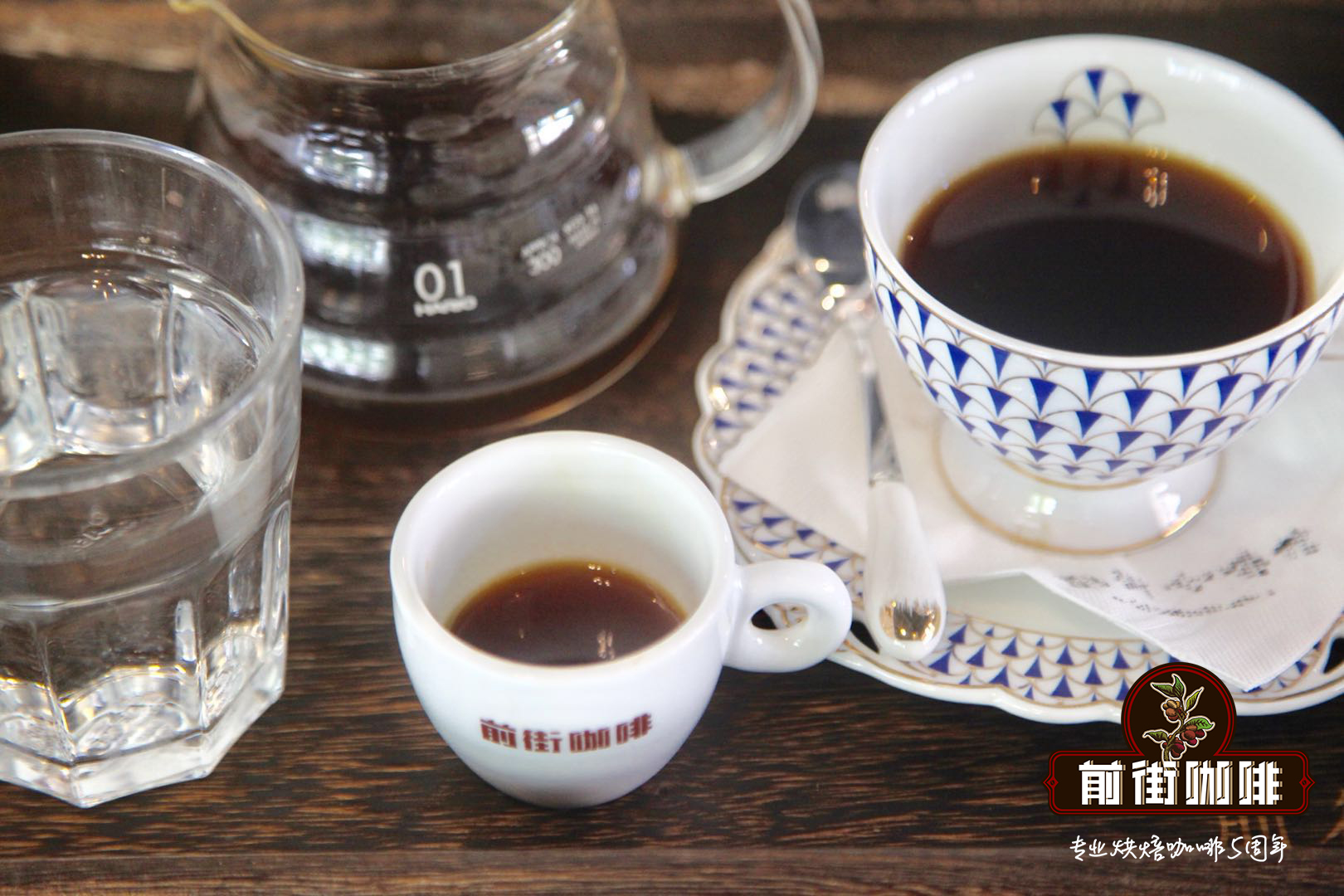
Brewing with a V60 brings out the layered character of a pour-over, making the cup richer and cleaner, and lets Pacamara's bright, uplifting aromatics shine.
15 g of coffee, water at 89-90°C, grind size BG 5R (64% pass rate on the Chinese standard 20-mesh sieve), and a water-to-coffee ratio close to 1:15-16.
Method: Start with 27 g of water for the bloom and let it sit 30 seconds. Pour hot water from the gooseneck kettle in clockwise circles around the center of the V60, starting the timer as soon as you begin pouring. Pour to 27 g, stop, and wait 30 seconds before the first main pour.
For the first pour, circle as before at a slightly slower pace, speeding up a touch as you reach the outer ring, and break the pour at around 1:15. Once the liquid level has dropped by a third, pour again. Keep the second pour focused on the center, avoiding the seam where the coffee bed meets the filter paper to prevent channeling. Finish the extraction around 2:05. You can skip the tail end—the longer you let it drag, the more astringency and rough texture creep in.
Segments: 30-125-230 g
FrontStreet Coffee Recommendation
If Pacamara's lush, layered cup has you curious about Panama's other great treasure, FrontStreet Coffee's Boquete Gesha is the natural next step. It is an entry-level Gesha that lets you taste the classic orange-blossom honeyed sweetness of high-quality Panamanian Gesha at a friendly price, with the gentle oolong-tea mouthfeel, delicate fruit acidity, and clearly defined layers that made this variety famous.
For the full Gesha experience, the FrontStreet Esmeralda Green Label (Private Collection) offers excellent value: a blend of batches from multiple high-altitude plots on the Esmeralda farm, it showcases the estate's signature high-altitude Gesha profile without the lot-by-lot price tag of the Red Label line.
Important Notice :
FrontStreet Coffee is a long-established specialty coffee roaster in Guangzhou China, selling freshly roasted beans from its own farm in Yunnan as well as dozens of carefully selected single-origin beans from around the world for both pour-over and espresso. The products deliver consistently excellent quality and great value, with shipping within 24 hours. Guangzhou's FrontStreet Coffee shop is recommended by many coffee lovers, and the beans are now available online at the Tmall 。
FrontStreet Coffee has moved to a new address:
FrontStreet Coffee Address: 315,Donghua East Road,GuangZhou
Tel:020 38364473
 Scan and follow the En Gafei WeChat official account. Please indicate that the reprint comes from "En Gafei".