Antigua Growing Area in Guatemala: Finca Bella Vista Processing Plant [Flower Peak / Hunapu] SHB Grade

Guatemala's Antigua: Hunapu SHB from the Bella Vista Mill - Flavor and Story
For professional coffee knowledge exchange and more coffee bean information, follow Cafe Style (WeChat public account: cafe_style).
What Are the Flavors of SHB-Grade Coffee from the Bella Vista Mill's Hunapu Brand?
Guatemala sits on the Central American isthmus, a land of high mountains and volcanic plateaus that produces superb, extremely hard, high-altitude Central American beans, ranking as the world's 9th largest coffee producer. This batch of Antigua volcanic Hunapu washed SHB comes from the Beneficio Bella Vista mill, where local farmers entrust their freshly harvested coffee for processing. This group of producers centers on Beneficio Bella Vista, sending their coffee there every year. The mill, owned by the Luis Pedro Zelaya family, also provides technical support and welfare facilities to farmers across the region. The quality is exceptionally stable: it earned a legendary 97-point score from Coffee Review in 2010, when scores generally ran low. To this day, Coffee Review's highest score remains 97 - still unbroken.
Guatemala's Rich Coffee Heritage
For over a hundred years, coffee has been the economic lifeline of Guatemala. The interwoven mountain terrain, volcanic lakes, plains, and highlands, combined with proximity to the Atlantic and Pacific oceans, create more than 300 microclimates - which is why each region's flavors are so distinct. Central America enjoys unique geographical advantages, linking North America in the north and South America in the south. Facing the Caribbean Sea and the Gulf of Mexico, its climate is relatively humid and tropical, making it one of the world's key coffee regions. Fertile volcanic soil, low humidity, abundant sunshine, and cool evening breezes define the area. This region is ringed by three volcanoes, and whenever the Fuego volcano erupts, mineral-rich volcanic ash mixes into the soil, compensating for the local rainfall shortfall and lending the coffee a special smoky aroma.
The Historical Development of Guatemalan Coffee
After Guatemala's independence in 1838, Spaniards introduced coffee cultivation, leveraging the diligence of the local Maya people and inexpensive labor to produce cheap coffee for all of Latin America. That situation persisted until the 1970s: after World War II, German merchants vigorously promoted Guatemalan coffee in Germany, raising its prominence. Before World War II, 60% of Guatemala's coffee was exported to Germany. But in 1942, Guatemala - allied with the United States - officially declared war on Germany and confiscated all German-owned coffee plantations in the country. In the 1950s, with the help of American coffee experts, the confiscated farms were divided into smaller units and distributed to the coffee-growing families who worked them.
Guatemala's Seven Major Coffee Regions
Guatemala's main coffee regions are Antigua, Huehuetenango, Atitlan, Coban, Fraijanes, San Marcos, and Acatenango - seven in all. Every bean from these regions is Arabica, grown in highland terrain under subtropical conditions. Rich, stable rainfall and fertile volcanic-ash soil provide ideal natural conditions for coffee nationwide. Each region has its own flavors - superior acidity, fruity aromas, and a smooth mouthfeel - placing Guatemalan coffee among the world's finest and making it ideal as a single origin. Antigua lies among Guatemala's crisscrossing mountains, primarily on the Madre plateau, and thanks to the region's natural conditions it has become the country's most famous growing area. Antigua sits in the country's southwest, facing south toward the three volcanic groups of Agua, Fuego, and Acatenango - an exceptionally advantageous environment that makes it a veritable sanctuary for coffee cultivation.
The Bella Vista Mill and the Hunapu Brand
The Beneficio Bella Vista mill is owned by the Luis Pedro Zelaya family; he is the fourth-generation successor managing it. Besides running his own plantation (Finca Bella Vista), he serves as a director of the Antigua Coffee Growers Association and works as a cultivation trainer and expert, guiding local production techniques. Hunapu is a brand established by Zelcafe, founded by Luis Pedro Zelaya, with about 30 groups of small-scale producers contributing coffee. It uses the traditional washed method, soaking the beans in water for about 24 hours while stirring to remove pulp and mucilage. "Hunapu" is the local Antigua name for Volcan de Agua, the Water Volcano - the largest of Antigua's three volcanoes. Hunapu means "mountain of flowers" in the local dialect; the volcano is visible from nearly every corner of the region, so the area's coffee is named after this beautiful nickname.
Coffee Details: Guatemala Antigua Bella Vista Mill Hunapu Washed SHB
Processing Method: Washed fermentation, sun-dried and finished with low-temperature drying.
Variety: Primarily Bourbon.
Grade: SHB.
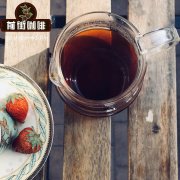
Coffee Flavor: Balanced sweet and sour with a characteristic cocoa aroma. When people discuss Guatemala's benchmark acidity, this region is often cited as the reference: lemon, apple juice, Murcott citrus, white grape - clean, refined flavors with varied fruity acidity and layered depth.
Flavor Description: Florals, alpine fir, tea fragrance, berries, cream, sweet lemon, caramel, sweetness, florals again, hazelnut chocolate, tea, almonds, honey. The entry shows delicate sweet-sour transitions, and the finish carries sweet chocolate with a berry tartness.
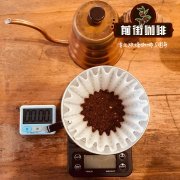
FrontStreet Coffee's Recommended Brewing Method:
Dripper: Hario V60
Water Temperature: 90 degrees C
Grind Size: Fuji Royal R-440 #3.5
Brewing Technique: Water-to-coffee ratio of 1:15 with 15g of coffee. First pour 25g of water and bloom for 25 seconds. Second pour to 120g, then pause. Once the water level drops to half, continue pouring slowly until you reach 225g total. Extraction time is approximately 2:00.
Analysis: The three-stage pour clearly defines the coffee's front, middle, and back-end flavors. Because the V60 has many ribs and drains quickly, pausing during the pour extends the extraction time.
FrontStreet Coffee Recommendation
Washing is a traditional, water-based way of processing coffee cherries: the usual steps are float sorting, de-pulping, soaking and fermenting to remove the mucilage, washing or further soaking, drying, and hulling. Because washed beans spend so long in water, chemical changes occur inside the bean and simple sugars (fructose and glucose) are substantially consumed, lowering sugar content while raising the level of various organic acids. Washed coffee therefore tends to preserve more of the bean's own aromatics while showing bright fruit acidity and a clean, fresh character - exactly what makes this Hunapu lot so refined.
Most people know Yirgacheffe, but fewer know that local smallholders, with their tiny harvests, send cherries to cooperatives for centralized processing and sale. FrontStreet's Guodingding Cooperative lot comes from a skilled processing team in Guodingding village, discovered and celebrated for the exceptional refinement and cleanliness of its coffee. The washed process lets it show jasmine florals and bright citrus acidity to the fullest; after a medium-light roast, green tea and honey tones emerge as well. It suits pour-over, cold brew, espresso, and more. When it comes to washed coffee, FrontStreet's Kenya Little Tomato is one of the most famous representatives of all, because Kenya excels at double-washed green coffee processing: an extra wash stage is layered on - float, soak, wash off the surface mucilage, soak again, dry, hull, store - and through all that repeated rinsing and soaking the juice-like quality is expressed to the extreme. The cup bursts with cherry tomato, smoked plum, snow pear, black plum, and raw sugar aromas, sweet-tart and juicy, a long-time favorite of coffee enthusiasts.
Washing was actually born in Jamaica. As one of the world's most famous coffee origins, Jamaica struggled with limited sunshine - its island climate brings shorter daylight hours than most regions - so to reduce the chance of beans spoiling, the washed method was developed. Its key difference from natural processing is that skin, pulp, and mucilage are all removed before drying, reducing the moisture wrapped around the bean and shortening drying time; the finished beans are bright in color with a low defect rate. That is what guarantees Blue Mountain's rich aroma: FrontStreet's Jamaica Blue Mountain No.1 pours out the pure character of hazelnut, cream, chocolate, and caramel with a perfectly balanced body in which no single flavor dominates or falls short - the same balanced elegance that makes the Guatemalan benchmark profile so beloved.
Important Notice :
FrontStreet Coffee is a long-established specialty coffee roaster in Guangzhou China, selling freshly roasted beans from its own farm in Yunnan as well as dozens of carefully selected single-origin beans from around the world for both pour-over and espresso. The products deliver consistently excellent quality and great value, with shipping within 24 hours. Guangzhou's FrontStreet Coffee shop is recommended by many coffee lovers, and the beans are now available online at the Tmall 。
FrontStreet Coffee has moved to a new address:
FrontStreet Coffee Address: 315,Donghua East Road,GuangZhou
Tel:020 38364473
 Scan and follow the En Gafei WeChat official account. Please indicate that the reprint comes from "En Gafei".